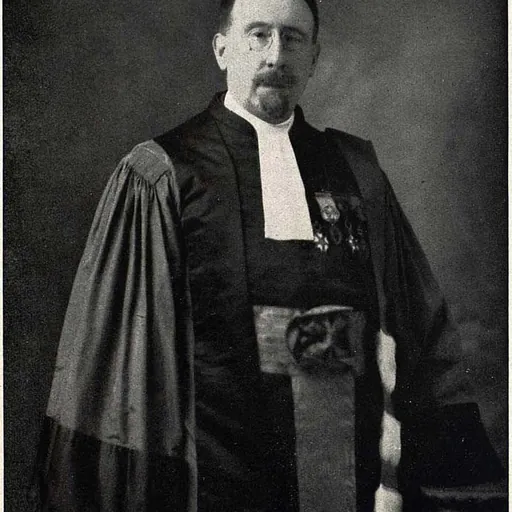
About René Maire
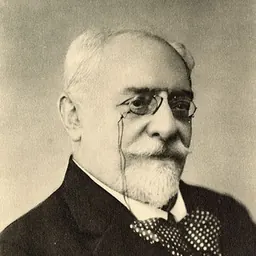
Lived 1878 – 1949 (aged 71). René Maire was a French botanist, university teacher and mycologist.
René Charles Joseph Ernest Maire (; 29 May 1878, Lons-le-Saunier – 24 November 1949) was a French botanist and mycologist. His major work was the Flore de l'Afrique du Nord in 16 volumes published posthumously in 1953. He collected plants from Algeria, Morocco, France, and Mali for the herbarium of the National Botanic Garden of Belgium.
Biography His botanical career began very early. At 18, he penned a work on the local flora of the Haute-Saône, currently on display at the Natural History Museum of Gray. He collected plants for study in Algeria and Morocco between 1902 and 1904. He was the author of numerous works, including important contributions between 1918 and 1931 on the flora of North Africa. Maire issued the exsiccatae Exsiccata Hypodermearum Galliae orientalis 1896 with succeeding series and Mycotheca Boreali-Africana (1912–1919). He ended his career as the Rector of the University of Algiers. His magnum opus was The Flora of North Africa, a 16-volume work published posthumously in 1953.
Named species Among species he named or renamed are: Amanita codinae (Maire) Singer Argyrocytisus battandieri (Maire) Raynaud Campanula monodiana Maire Gymnopilus sapineus (Fr.) Maire Hygrophoropsis aurantiaca (Wulfen: Fr.) Maire Hygrophorus reai Maire Hypomyces vuilleminianus Maire Laccaria bicolor (Maire) P.D. Orton Lentinellus vulpinus (Fr.) Maire & Kühner Psathyrella candolleana (Fr.) Maire Psathyrella hydrophila (Fr.) Maire Xeromphalina campanella (Bataille: Fr.) Maire & Kühner
He also erected the family Paxillaceae, noting its affinities with boletes, in 1902, based on anatomical similarities. This was confirmed many years later by molecular studies firmly placing the genera Paxillus and Gyrodon at the base of the clade containing the members of the genus Boletus.
Legacy The French Academy of Sciences awarded him the Prix Montagne for 1903.
Several species were named in his honour, including fungi, such as the beechwood sickener (Russula mairei), Maireella (which is a genus of fungi in the class Dothideomycetes), René Maire's ringless Amanita (Amanita mairei) from Egypt, Clitocybe mairei, Conocybe mairei, Clavicorona mairei, Cortinarius mairei, Galerina mairei, Hemimycena mairei, and Lactarius mairei, among others, as well as some North African plants such as the ornamental grass Atlas fescue (Festuca mairei). The genus Mairetis from the Canary Islands and Morocco, (in the Boraginaceae family) is also named after him.
Species names for Maire typically end in .
Don’t just read it —
keep it.
Full-length biographies made to live with: read them, listen on the way to work, watch them tonight.
- E-book
- Audio
- Video
Instant download · yours to keep · every purchase keeps this site free
Important facts
Related people
Same field, nearest in time


Contemporaries
People whose lives overlapped René Maire's





Frequently asked questions
Who was René Maire?
French botanist and mycologist (1878–1949)
When was René Maire born?
René Maire was born on 29 May 1878 in Lons-le-Saunier, France.
When did René Maire die?
René Maire died on 24 November 1949 in Algiers.
What was René Maire's occupation?
René Maire was a botanist, university teacher and mycologist.
What nationality was René Maire?
René Maire was French.
Sources & further reading
Cite this page
APA: Biography.guide. (2026). René Maire. https://biography.guide/rene-maire/
MLA: "René Maire." Biography.guide, https://biography.guide/rene-maire/.
Chicago: "René Maire." Biography.guide. https://biography.guide/rene-maire/.
Data last updated: 2026-09-20 · Spot an error? Report a correction.
Portrait: Wikimedia Commons · author & licence
Page generated 2026-09-27 04:58 UTC