
About René-Joseph Kimber
Lived 1786 – 1843 (aged 57). René-Joseph Kimber was a Canadian politician.
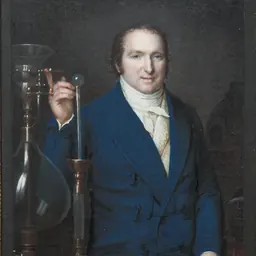
René-Joseph Kimber (November 26, 1786 – December 22, 1843) was a physician and political figure in Lower Canada and Canada East, in the Province of Canada (now Quebec). He represented Trois-Rivières in the Legislative Assembly of Lower Canada, as a member of the Parti patriote, although he opposed the use of force in the Lower Canada Rebellion. After the creation of the Province of Canada, which he opposed, he was the member for the district of Champlain in the Legislative Assembly of the Province of Canada. He was briefly a member of the Legislative Council, prior to his death in 1843.
Family and personal life
Kimber was born in Quebec City in 1786, the son of a merchant, René Kimber, and Marie-Josette Robitaille. His grandfather, Joseph-Antoine Jékimbert, was a gardener from Aix-la-Chapelle who emigrated to the colony of Canada in New France in the early 1750s, as part of a company of French colonial marines. After some ten or fifteen years in Quebec, he changed the spelling of his name to "Kimbert" or "Kimber" to give it a more French sound.
From 1801 to 1806, Kimber studied at the Collège Saint-Raphaël at Montreal, and then in Europe for two years, from 1806 to 1808. He then apprenticed in medicine at Trois-Rivières, where his family had relocated. He qualified to practise medicine in 1811 and set up practice at Trois-Rivières, including as physician to the local Ursuline convent.
In 1811, he married Apolline, the daughter of Montreal merchant and entrepreneur, Pierre Berthelet, and Marguerite Viger, at old Notre-Dame in Montreal.
Kimber was a charitable man, known for his donations for those in need. In one case, he bought a house for a former servant and arranged for a regular monthly payment. When he was preparing his will, he set aside the debts which several poor people owed to him.
Although recognised as a leader of the Patriotes in the Trois-Rivières area, he did not support the use of force, and remained committed to constitutional solutions, which helped ensure that Trois-Rivières remained relatively peaceful during the Lower Canada Rebellion of 1837–1838. In September 1837, prior to the outbreak of the Rebellion, he chaired a meeting with local notables to discuss the possible approaches to take. He urged prudence, and proposed options for Papineau to consider, but did not consider joining the Rebellion.
As a result of the Rebellion, the British government suspended the constitution of Lower Canada, including the Parliament, ending Kimber's position in the Legislative Assembly.
Kimber opposed the union of Upper Canada and Lower Canada, but stood for election to the new Legislative Assembly in the first general election, in 1841. He was elected for the Champlain riding. In the first session of the new Parliament, he voted against the union. Kimber generally aligned with the French-Canadian Group, in the sessions of 1841 and 1842.
In September 1843, he was named to the Legislative Council and his seat in the Assembly was vacated automatically. His son-in-law, Henry Judah, won the subsequent by-election to replace him. However, Kimber died only a few months later, in Montreal in December 1843.
Family and relations
After the death of her first husband, Kimber's sister Clotilde married Charles Langevin, who represented Hampshire in the Legislative Assembly of Lower Canada.
His daughter Harline married Henry Judah, who represented Champlain in the Legislative Assembly after Kimber was named to the Legislative Council.
His son René became the Gentleman Usher of the Black Rod of the Legislative Council of the Province of Canada.
His cousin, Timothée Kimber, was also a doctor, practising at the town of Chambly, south of Montreal. Timothée Kimber supported the Patriotes in the Rebellion in 1837 and was imprisoned for half a year afterwards.
In his will, Kimber left his gold watch, chain and seals to his friend, Dr Wolfred Nelson, who had been a leader of the Patriotes and had taken up arms in the Rebellion. At the time of the bequest, Nelson had just recently been permitted to return from exile in Bermuda.
Don’t just read it —
keep it.
Full-length biographies made to live with: read them, listen on the way to work, watch them tonight.
- E-book
- Audio
- Video
Instant download · yours to keep · every purchase keeps this site free
Important facts
People in René-Joseph Kimber's life
Named in this biography and alive at the same time




Related people
Same field, nearest in time


Contemporaries
People whose lives overlapped René-Joseph Kimber's

Frequently asked questions
Who was René-Joseph Kimber?
Canadian politician
When was René-Joseph Kimber born?
René-Joseph Kimber was born on 26 November 1786 in Quebec City.
When did René-Joseph Kimber die?
René-Joseph Kimber died on 22 December 1843 in Montreal.
What was René-Joseph Kimber's occupation?
René-Joseph Kimber was a politician.
What nationality was René-Joseph Kimber?
René-Joseph Kimber was Canadian.
Sources & further reading
· Wikipedia: René-Joseph Kimber
Cite this page
APA: Biography.guide. (2026). René-Joseph Kimber. https://biography.guide/rene-joseph-kimber/
MLA: "René-Joseph Kimber." Biography.guide, https://biography.guide/rene-joseph-kimber/.
Chicago: "René-Joseph Kimber." Biography.guide. https://biography.guide/rene-joseph-kimber/.
Data last updated: 2026-09-20 · Spot an error? Report a correction.
Page generated 2026-09-27 05:10 UTC