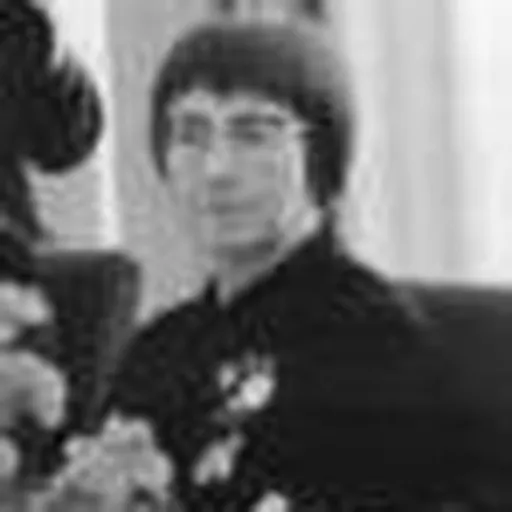
About Renate Drucker
Lived 1917 – 2009 (aged 92). Renate Drucker was a German historian, archivist and university teacher.
Renate Drucker (11 July 1917 – 23 October 2009) was a German archivist. She was in charge of the university archives at Leipzig University for 27 years between 1950 and 1977.
She was qualified as a philologist and was also for many years an officer of the Liberal Democratic Party of (East) Germany ("Liberal-Demokratische Partei Deutschlands" / LDPD), one of several "bloc parties" controlled by the ruling East German Socialist Unity Party ("Sozialistische Einheitspartei Deutschlands" / SED) which were intended to broaden the régime's constitutional legitimacy.
Life
Provenance and early years Renate Margarethe Drucker was born in Leipzig during the First World War, the youngest daughter of the lawyer Martin Drucker and his wife Margarethe (born Margarethe Mannsfeld). Both her grandfathers had also been Leipzig lawyers. Her mother's younger brother, Karl Mannsfeld, also had a legal background and at one stage served as the Justice Minister for the "Free State of Saxony". By the time the doctorate was awarded, in February 1945, Drucker, along with those of the university teaching staff still not conscripted into the army, had been successfully evacuated to Tübingen which is where the doctorate was actually issued.
Academic and archivist War ended, formally, in May 1945, and with it the Nazi régime. Drucker had successfully, and not without the odd adventure along the way, made her way back to the bombed-out city of Leipzig. In terms of the future, the US and Soviet governments had already agreed that Germany would be divided into zones of occupation: Leipzig would be administered as part of the Soviet occupation zone. When the war ended, however, it was the US army that had captured the city, while the Red army concentrated on military objectives further to the north including, notably, Berlin. In the early summer of 1945 the Drucker family found themselves in danger in what remained of Leipzig. Before the Nazi power seizure Martin Drucker had worked as a public prosecutor and had also gained a reputation as a criminal defence lawyer. There were still plenty of Nazis in the city who detested him, and the family accordingly moved to Jena and went into hiding for several weeks. It was only in June 1945, as order began to be restored, that the family were able to move back into Leipzig. On her appointment in 1950, Renate Drucker was one of the first women to be appointed to such a leadership role in any Germany university. She rapidly collected together items of historical interest that had been scattered by the predations of Nazism and war. A high point, backed by the easing of political tensions within the Soviet bloc that accompanied Nikita Khrushchev's time as first party secretary, was the repatriation in 1958 of large amounts of material from the Soviet Union that had been removed either for safe keeping or else as booty in 1945.
In parallel with her responsibilities for the university archive, Drucker increasingly supported the university's work with advice and through her own teaching activities. Between 1950 and 1960 she held a formal teaching contract covering Medieval Latin and Auxiliary history sciences. a new political party of which her father was a co-founder. By the time the Soviet occupation zone gave way to the Soviet sponsored German Democratic Republic in October 1949 the LDPD had become the largest of several "bloc parties" controlled by the ruling East German Socialist Unity Party ("Sozialistische Einheitspartei Deutschlands" / SED), but in 1945 the assumption was widespread that the era of one-party dictatorship in Germany was over. Drucker remained a party member for many years and was, between 1957 and 1989, listed as a member of the LDPD national executive and regional executive.
Personal Renate Drucker bought up her daughter, Constanze, as a single mother which was unusual in the context of the time and place. One relatively eulogistic source refers to certain male colleagues who addressed her with an ill-concealed smirk as "Miss Drucker" at this time. In later years she was also able - apparently slightly to her own surprise - to become a devoted grandmother.
Awards and honours
1959 Ernst Moritz Arndt Medal 1960 Wilhelm Külz Badge of honour 1960 German Democratic Republic Merit Medal 1962 Patriotic Order of Merit (Bronze) 1964 DFD Badge of Honour (Gold) 1964 National Front Badge of honour (Gold) 1967 Clara Zetkin Medal 1970 Society for German–Soviet Friendship Badge of honour (Gold) 1977 Patriotic Order of Merit (Silver) 1977 Badge of honour: Alma mater Lipsiensis 1996 Order of Merit of the Free State of Saxony
Don’t just read it —
keep it.
Full-length biographies made to live with: read them, listen on the way to work, watch them tonight.
- E-book
- Audio
- Video
Instant download · yours to keep · every purchase keeps this site free
Important facts
People in Renate Drucker's life
Named in this biography and alive at the same time



Related people
Same field, nearest in time



Contemporaries
People whose lives overlapped Renate Drucker's

Frequently asked questions
Who was Renate Drucker?
German historian and archivist (1917–2009)
When was Renate Drucker born?
Renate Drucker was born on 11 July 1917 in Leipzig.
When did Renate Drucker die?
Renate Drucker died on 23 October 2009 in Leipzig.
What was Renate Drucker's occupation?
Renate Drucker was a historian, archivist and university teacher.
What nationality was Renate Drucker?
Renate Drucker was German.
Sources & further reading
Cite this page
APA: Biography.guide. (2026). Renate Drucker. https://biography.guide/renate-drucker/
MLA: "Renate Drucker." Biography.guide, https://biography.guide/renate-drucker/.
Chicago: "Renate Drucker." Biography.guide. https://biography.guide/renate-drucker/.
Data last updated: 2026-09-22 · Spot an error? Report a correction.
Portrait: Wikimedia Commons · author & licence
Page generated 2026-09-27 05:01 UTC