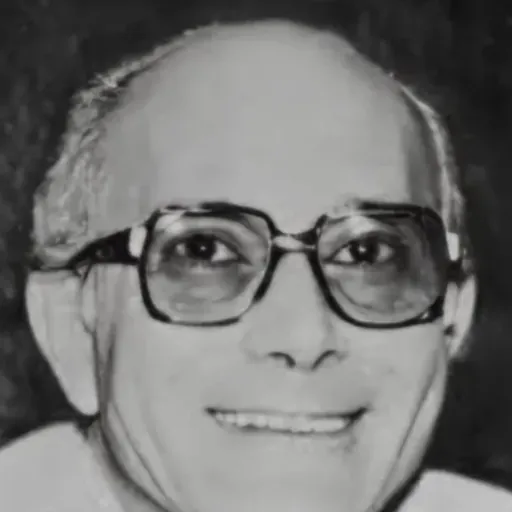
About Refaat Al-Gammal
Lived 1927 – 1982 (aged 54). Refaat Al-Gammal was an Egyptian spy and businessperson.
Refaat Ali Suleiman al-Gammal (; born on July 1, 1927 — died on January 30, 1982), better known for his code name "Raafat al-Haggan" , was an Egyptian intelligence officer regarded as one of the most prominent agents of the Egyptian General Intelligence Directorate (EGID). He was operating under the alias "Jacques Bitton" (Hebrew: ), and he lived in Israel for 17 years and embedded himself in local society. Egyptian intelligence selected the surname "Bitton" because it is common among Jews of Moroccan and other North African origins, which strengthened the plausibility of his cover.
According to Israeli intelligence records, "Jacques Bitton" was regarded as a highly skilled Egyptian agent. He was credited for reporting the start date of the 1967 Six-Day War and technical details regarding the Bar Lev Line used in planning for the October 1973 War.
Celebrated in Egypt as a national hero, Raafat al-Haggan's story was contested in Israel. Some Israeli accounts described him as a double agent, a claim Egyptian officials rejected as disinformation. After his mission, he retired, lived in West Germany, and died in 1982. His identity became public when Egyptian state television aired Raafat al-Haggan in 1988, with Mahmoud Abdel Aziz in the lead role. Israeli officials initially dismissed the series as fiction, later acknowledging that Jacques Bitton had spied for Egypt while contending that Israeli security suffered limited damage. Early intelligence statements characterized Egypt's version as a fabricated tale, yet former Mossad chief Isser Harel later said authorities sensed a deep penetration at high levels without suspecting Bitton.
Since 1988, Israeli media have sought to identify Bitton/Al-Haggan. The Jerusalem Post reported that he was Refaat al-Gammal, an Egyptian Jew born in Mansoura in 1919 who arrived in Israel in 1955 and left in 1973. Golda Meir, Moshe Dayan, and Ezer Weizman, and that he even considered running for the Knesset. He was born into a well-off family that worked in the wholesale coal trade. His father, Ali al-Gammal , was a coal merchant, while his mother, Rateeba Ali Abu Awad , was a well-educated homemaker from an upper-class background who was fluent in both English and French. Sami worked as a private English tutor for the brothers of Queen Farida, the consort of Egypt's King Farouk,
At fourteen, under family pressure and because of his practical interests, he enrolled in a commercial secondary school. During the mid-1940s he followed news of the World War II and expressed admiration for the British war effort. He studied English to near-native fluency with a British accent and improved his French with a Parisian teacher.
Infiltration into Israel Accounts differ on who recruited and handled Refaat al-Gammal for insertion into Israel. Some sources credit Hassan Helmy Bulbul, with Abdel Mohsen Faqih as his assistant. Others name Major General Abdel Aziz El-Toudy, who is said to have maintained contact with al-Gammal during the mission. A third view holds that the operation was a team effort rather than the work of a single officer. He began his mission in Egypt by establishing a cover in Alexandria. He lived in a Jewish neighborhood and presented himself as a European Jew from West Germany and northern France. In his memoirs, he states that while still in Alexandria he infiltrated Unit 131, a covert cell formed by Avraham Dar for Israeli military intelligence service (Aman), and that he worked with figures later known to Israeli operations, including Marcelle Ninio, Meir Max Bineth, and Eli Cohen.
According to the Egyptian narrative, al-Gammal's intelligence was pivotal in several major historical events. He reportedly warned Egyptian authorities in advance of the 1956 tripartite attack, though his alert was not acted upon with sufficient urgency. However, some within the Egyptian leadership misinterpreted this as referring solely to Syria, and Sinai defenses were not adequately reinforced.
His role in the Lavon Affair
The Lavon Affair refers to the scandal over a failed Israeli covert operation in Egypt known as Operation Susannah, in which Egyptian, American and British-owned targets in Egypt were bombed in the summer of 1954. It became known as the Lavon Affair after the Israeli defense minister Pinhas Lavon, who was forced to resign because of the incident, or euphemistically as the Unfortunate Affair (Hebrew: עסק הביש Esek HaBish). Israel admitted responsibility in 2005. In his diaries, al-Gammal mentions that he joined Unit 131, which was to carry out the operation, along with many names which later proved to be of great importance, such as Eli Cohen, an Israeli spy who became an adviser to the defense minister in Syria. According to the EGID, al-Gammal had the major role in the discovery and arrest of the unit.
Exposing the Eli Cohen network
Execution of Eli Cohen by hanging at Marjeh Square, 18 May 1965. One of the most remarkable episodes in al-Haggan's intelligence career that several accounts credited him with aiding the exposure of the Israeli agent Eli Cohen in Syria. According to his German wife who did not know that he was working for the EGID that during a trip back to Europe he saw a newspaper photo of a Syrian official named Kamel Amin Thaabet standing with officers. Al-Gammal recognized the man as "Eli Cohen", whom he had met in an Egyptian prison in 1954 when both were detained on suspicion before being released. He reported to Egyptian intelligence that Thaabet was Cohen.
According to The Spies and reporting in Yedioth Ahronoth, Egyptian intelligence recruited Refaat al-Gammal in the early 1950s after legal troubles and gave him the identity "Jacques Bitton". He entered Israel among Egyptian Jewish immigrants with instructions to settle, start a business, and collect information. Israel's internal security service, Shin Bet, is said to have flagged him for background irregularities, including unusually fluent French for a putative Egyptian Jew. A search allegedly uncovered invisible ink and a radio codebook. Senior officials from Shin Bet, Aman, and Mossad then decided to try to run him as a double agent.
The book states that in 1956 he opened a small travel agency, Sitour, on Brenner Street in Tel Aviv. Also, it was funded partly by Egyptian intelligence and partly by Shin Bet, which the authors cite as evidence of dual control. It also describes a personal life marked by frequent relationships. On a trip to Europe in October 1963 he met Waltraud, a divorced German woman with a young daughter, Andrea, and married her ten days later in a church ceremony.
Rashad further stated that al-Gammal embedded in Israeli society after systematic training and that he recruited senior military figures; other officials likewise asserted that ongoing monitoring never indicated compromise. Public discussion in Egypt largely favors this view, presenting Raafat al-Haggan as a national intelligence figure. Waltraud was a 22-year-old German divorcée with a four-year-old daughter, Andrea.
Throughout the marriage, Waltraud knew her husband as Jacques Bitton, and believed he was a Jewish Israeli businessman. In late 1981 he was diagnosed with lung cancer, and his health declined rapidly. Some sources refer to a second wife named "Ally Walford", but later clarifications indicate this is another rendering of Waltraud's name and not a different person.
Al-Gammal did not disclose his identity to his wife before his death. In his final months he handwrote a memoir and left it with his lawyer in Germany. He told him to give it to Waltraud three years after he died. In 1985 she received a box containing the manuscript and a farewell letter in which he revealed his identity and explained his reasons for keeping it secret. In 1988 the Egyptian service publicized his case as part of an effort to honor previously unnamed personnel, and some accounts state that a training facility adopted his codename. Israeli commentary remains divided on his role, but some former officials have described the long-running "Jacques Bitton" episode as a setback for Israeli counterintelligence because it allowed an operative to remain in place for years.
Since the 1990s, fan groups, magazines, and online communities have circulated material on Raafat al-Haggan together with popular novels that dramatize his activities and social-media pages that share anecdotes and summaries of his case. His story has appeared in Israeli television as well, for example in the 2018 documentary series Spies in Tel Aviv, which briefly treated the affair from a Mossad perspective. In Egyptian colloquial speech, his name is sometimes used jokingly for someone who seems unusually shrewd or covert. On 4 February 1987, the writer Saleh Morsi described how he came to tell the story: after a chance meeting with a young Egyptian intelligence officer who urged him to read a case summary, he consulted Mohsen Moqtamas (ʿAbd al-Muḥsin Fāʾiq), who declined to reveal further identifying details, and then met ʿAbd al-ʿAzīz al-Tūdī (who used the pseudonym ʿAzīz al-Jabbālī); over ten handwritten chapters totaling 208 pages, al-Tūdī outlined nearly two decades of operations.
Don’t just read it —
keep it.
Full-length biographies made to live with: read them, listen on the way to work, watch them tonight.
- E-book
- Audio
- Video
Instant download · yours to keep · every purchase keeps this site free
Important facts
People in Refaat Al-Gammal's life
Named in this biography and alive at the same time

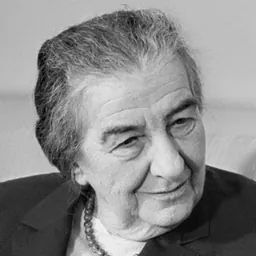

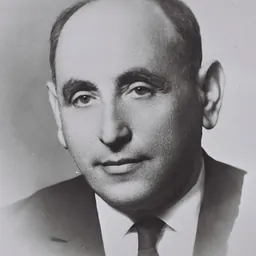
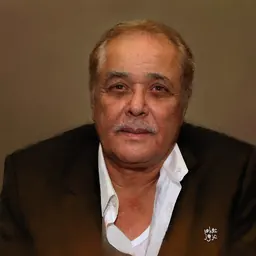
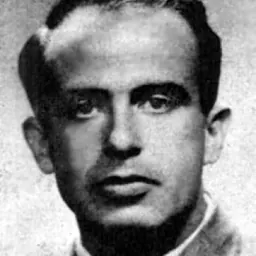
Related people
Same field, nearest in time



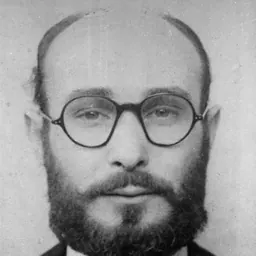


Contemporaries
People whose lives overlapped Refaat Al-Gammal's
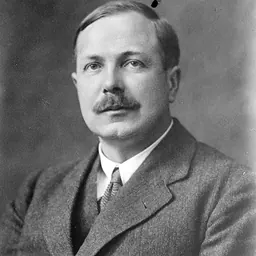
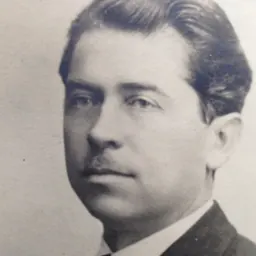


Frequently asked questions
Who was Refaat Al-Gammal?
Egyptian spy hero (1927-1982)
When was Refaat Al-Gammal born?
Refaat Al-Gammal was born on 1 July 1927 in Damietta.
When did Refaat Al-Gammal die?
Refaat Al-Gammal died on 30 January 1982 in Darmstadt.
What was Refaat Al-Gammal's occupation?
Refaat Al-Gammal was a spy and businessperson.
What nationality was Refaat Al-Gammal?
Refaat Al-Gammal was Egyptian.
Sources & further reading
Cite this page
APA: Biography.guide. (2026). Refaat Al-Gammal. https://biography.guide/refaat-al-gammal/
MLA: "Refaat Al-Gammal." Biography.guide, https://biography.guide/refaat-al-gammal/.
Chicago: "Refaat Al-Gammal." Biography.guide. https://biography.guide/refaat-al-gammal/.
Data last updated: 2026-09-20 · Spot an error? Report a correction.
Page generated 2026-09-27 05:10 UTC