
About Redcliffe N. Salaman
Lived 1874 – 1955 (aged 80). Redcliffe N. Salaman was a British botanist, geneticist and anthropologist.
Redcliffe Nathan Salaman (12 September 1874 – 12 June 1955) was a British physician, biologist who pioneered the breeding of blight-free potatoes, Jewish nationalist, race scientist and key figure in the Anglo-Jewish community in the 20th century. His groundbreaking 1949 book The History and Social Influence of the Potato established the history of nutrients as a new literary genre.
Early life and education
Salaman was born in Kensington, London, and was the ninth of fifteen children born to Sarah and Myer Salaman. His father was a wealthy merchant who traded in ostrich feathers at the height of the plume trade. The Salaman family were Ashkenazi Jews, who according to Salaman, migrated to Britain from either Holland or the Rhineland in the early 18th century.
He was educated at St Paul's School, London, where he studied classics and science, and became head boy of the school's Science Side. He obtained a scholarship at Trinity Hall, Cambridge in 1893 and graduated with a first class degree in Natural Sciences in 1896, having studied physiology, zoology and chemistry. he was influenced by Michael Foster and was tutored and advised by the physiologist W. H. Gaskell, who later became a good friend of Salaman. While at Cambridge, he learned German from Solomon Schechter's wife. He moved to the London Hospital in 1896 to study medicine and remained there until he qualified in 1900.
Research In 1903, Salaman was appointed Director of the Pathological Institute at the London Hospital, but in 1904 he developed tuberculosis and had to stop practising medicine and spend six months in a Swiss sanitorium. It took him over two years to fully recover from the illness. He purchased a house in Barley, Hertfordshire and, because he could not return to practising medicine, began experimenting in the emerging science of genetics under the guidance of his friend William Bateson.
In 1910, he published a paper on the inheritance of colour in potato in the first issue of the Journal of Genetics. Later papers in the Journal of Agricultural Science examined male sterility, methods for estimating yields detecting viruses in seed potatoes and a study of how the size of seed tubers affected the yield and size of tubers of the crop. He wrote the book Potato Varieties in 1929. In conjunction with Paul A. Murphy of Dublin. a large stock of virus-free potatoes was built up and multiplied in greenhouses, a practice which continued after his death and was adopted in other countries. and revised under the guidance of his former doctoral student Jack Hawkes in 1987. The book covers every aspect of the history of the potato with a particular focus on Ireland, about which he wrote "in no other country can [potato's] influence on the domestic and economic life of the people be studied to greater advantage".
The historian Eric Hobsbawm referred to the work as "that magnificent monument of scholarship and humanity". A 1999 paper in Potato Research noted that because of Salaman's "unprecedented" book, we "know more about the impact of the diffusion of potato on the welfare of people, particularly the poor, than about such consequences following the introduction of any other major food plant."
Eugenics
Salaman also took an interest in eugenics with a special interest in Jews and the supposed unique genetic traits. He tried to characterize the typical Jewish face and considered that the separation of Sephardis and Ashkenazis had led to divergent characters. He published these ideas in the first volume of the newly founded Journal of Genetics in 1911. His work was critiqued by Harold Laski who writing in Biometrika in 1912, called it "scientifically ludicrous".
Political affiliations and other memberships Salaman was a proponent of Zionism and Jewish causes, and in 1907, he was elected president of the English Zionist Federation.
In his academic life, he was president of the Jewish Historical Society, a council member for the Jews’ College (today the London School of Jewish Studies), a founder of the Jewish Health Organization of Great Britain, and a member of the board of governors of the Hebrew University of Jerusalem.
In 1933, he was a founding member of the Academic Assistance Council, which helped scientists fleeing the Nazi regime, and in 1945 was chairman of the Jewish Committee for Relief Abroad as it worked to rehabilitate survivors of the extermination camps. They had six children including the pathologist , the doctor Arthur Gabriel Salaman, the engineer Raphael Salaman, the artist Ruth Collet and the singer . They settled in the country, in the village of Barley in Hertfordshire, where they lived with their six children (one of whom died in childhood). Nina Salaman continued to pursue her interest in medieval Hebrew poetry. Despite Barley's distance from London, she maintained a kosher home and Sabbath observance. For the festivals, the family traveled to London, where they stayed with one of Redcliffe's siblings and attended the New West End Synagogue. She took personal responsibility for the Hebrew education of her children until they left for boarding school. —who survived him.
Biographical works
Salaman's life is recalled in the 2022 biographical work The Last Anglo-Jewish Gentleman: The Life and Times of Redcliffe Nathan Salaman by Todd Endelman, as part of a series entitled "The Modern Jewish Experience" by Indiana University Press.
Don’t just read it —
keep it.
Full-length biographies made to live with: read them, listen on the way to work, watch them tonight.
- E-book
- Audio
- Video
Instant download · yours to keep · every purchase keeps this site free
Important facts
People in Redcliffe N. Salaman's life
Named in this biography and alive at the same time

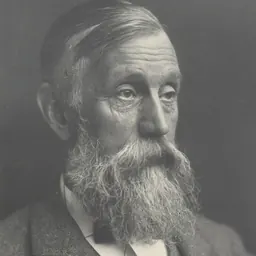


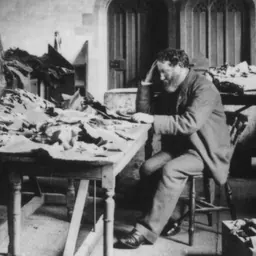
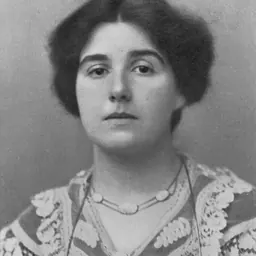


Related people
Same field, nearest in time
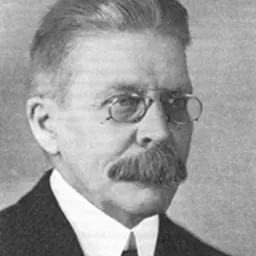


Contemporaries
People whose lives overlapped Redcliffe N. Salaman's

Frequently asked questions
Who was Redcliffe N. Salaman?
British botanist (1874-1955)
When was Redcliffe N. Salaman born?
Redcliffe N. Salaman was born on 12 September 1874 in Kensington, Redcliffe Gardens.
When did Redcliffe N. Salaman die?
Redcliffe N. Salaman died on 12 June 1955 in United Kingdom, Homestall And Flats 1 And 2.
What was Redcliffe N. Salaman's occupation?
Redcliffe N. Salaman was a botanist, geneticist and anthropologist.
What nationality was Redcliffe N. Salaman?
Redcliffe N. Salaman was British.
Sources & further reading
· Wikipedia: Redcliffe N. Salaman
Cite this page
APA: Biography.guide. (2026). Redcliffe N. Salaman. https://biography.guide/redcliffe-n-salaman/
MLA: "Redcliffe N. Salaman." Biography.guide, https://biography.guide/redcliffe-n-salaman/.
Chicago: "Redcliffe N. Salaman." Biography.guide. https://biography.guide/redcliffe-n-salaman/.
Data last updated: 2026-09-20 · Spot an error? Report a correction.
Page generated 2026-09-27 05:25 UTC