
Reba Dickerson-Hill
African American artist and educator who lived and worked in Philadelphia.
About Reba Dickerson-Hill
Lived 1918 – 1994 (aged 75–76). Reba Dickerson-Hill was an American artist, educator and university teacher.
Reba Dickerson-Hill was a self-taught Philadelphia artist who painted in the ancient Japanese ink-and- brush technique called sumi-e. She was also a watercolorist and oil painter who primarily produced landscapes and portraits.
Early life and education Dickerson-Hill was born in West Philadelphia on February 18, 1918, to Evan Thomas Dickerson and Reba Henrietta Tyree Dickerson. One of six children, she started drawing when she was about 4 years old. Her father and an elementary school principal recognized her talent. As a youth, she spent some time sketching along Benjamin Franklin Parkway near the Philadelphia Museum of Art.
She attended Overbook High School and enrolled at Cheyney State Teachers College. She graduated in 1940 with a Bachelor of Science degree in education. A 1940 article in the Baltimore Afro American newspaper about Cheyney's graduates noted that she was an artist and planned to make it her career. She taught elementary grades in the Philadelphia School District starting around 1949. During the 1960s, she was an assistant professor of fine arts at Cheyney. She gave up teaching around 1966 to become a full-time artist.
Her career as painter Dickerson-Hill worked in several mediums: watercolor, oil, collage, mixed media, pen and ink, ink and brush, sumi-e, sculpture, calligraphy and acrylics. She also produced prints.
She was a self-taught artist, with no formal art-school degree. In Philadelphia, she learned painting techniques from Claude Clark (in the mid-1940s) and Paul Keene; printing from printmaker/painter/illustrator Jerome Kaplan; calligraphy from Marvin Bileck, and kinesthetic Chinese watercolor techniques from Ramon Fina, known for his expertise in the ancient tradition of Chinese brush painting. In 1959, she attended a presentation by Fina at the Plastic Club, a women’s art organization, in Philadelphia.
Dickerson-Hill studied at Temple University, the University of Pennsylvania, the University of the Arts/Philadelphia College of the Arts, Pendle Hill in Wallingford, PA, and the University of Exeter, England. In 1950, she was a member of Les Beau Arts, a group of African Americans in the arts, music and literature. Artist Benjamin Britt was also a member.
In 1946, Dickerson-Hill was in a show to support young Black artists sponsored by the Henry O. Tanne r Memorial Fund. The exhibit was held at the Wharton Centre, a social service agency in North Philadelphia that hosted a youth arts program and exhibits. The artworks were donated to various community organizations. Her painting “Still Life” went to St. Christopher's Hospital for Children and “Study No. 2” to the Crime Prevention Association.
She participated in a series of exhibitions at Cheyney in 1956 as an alumna and in 1966 as a faculty member. The 1966 exhibit was the college's first Fine Arts Festival, and she was one of three faculty members represented. Among her entries were watercolors, according to an unidentified newspaper article that appeared to be a campus publication. The watercolors were “The Boatman,” “The Bay” and “What is Man.” Two of her oil paintings were also shown, “Metropolis” and “Nisi Dominus Frustra,” as well as a portrait of William P. Young, who was Pennsylvania's second Black cabinet member as secretary of Labor and Industry.
Dickerson-Hill's oil painting “Study in Copper and Bronze” won first prize by popular vote in a 1969 art exhibit at the branch office of Liberty Federal Savings and Loan Association in the Germantown section of Philadelphia. She had exhibited at the bank before, in 1960, in a solo show of 45 paintings and drawings. In 1971, she was featured in an Aesthetic Dynamics' exhibit organized by artist Percy Ricks in Wilmington, DE, which drew 75 artists from New York to Washington, DC. Also in 1971, she participated in the National Exhibition of Black Artists at the Smith-Mason Gallery in Washington, DC.
In 1960, she also was featured at the Pyramid Club, a social organization of Black professional men that held an annual art exhibit starting in 1941. Others on hand were Howard N. Watson, Benjamin Britt, Robert Jefferson, Samuel J. Brown Jr. and Dox Thrash.
She was a member of the Philadelphia Watercolor Club (where she was board member and life member) and the Philadelphia Print Club. Sidney Rothman's The Gallery in Barnegat Light, NJ, exhibited and sold her works.
She received a National Design Award and in 1980, the Andrew Wyeth watercolor prize. She served as a judge at several art exhibitions, conducted workshops on sumi-e and served on several exhibition-planning committees.
Mastering the Japanese art of sumi-e Dickerson-Hill learned sumi-e painting from Fina while at the Barnes.
She did not go to Japan until 1986, where she spent 19 days in Tokyo, Kyoto and Nara. The process is very focused and precise, with its own ritual, she explained to a newspaper writer. It required clearing of the mind, using the traditional tools (special ink, bowl, animal-hair brush and rice paper ) and adhering to the process, including no altering of lines on paper after they have been painted.
In 1992, the Sumi-e Society of America honored her for the painting “Into the Light,” awarded during its 27th annual competition and exhibition in Mobile, AL. Some years before, she had won the society's purchase award for the painting “The Mountain.” In 2015, the Woodmere Art Museum included her work in a group show titled “We Speak: Black Artists in Philadelphia, 1920s-1970s.” In 2021, the Delaware Art Museum featured her work in a re-creation of Percy Ricks’ 1971 Aesthetic Dynamics show.
Selected collections According to the Reba Dickerson-Hill website, her works are in the following collections, among others: First Pennsylvania Bank, Philadelphia; Atlanta University; Cheyney University; American Frame Corp.; Philadelphia International Airport and private individuals. The Free Library of Philadelphia has two of her prints, including "The Philosopher."
Selected exhibitions Philadelphia Urban League Guild, 1960 Southwest-Belmont YWCA, Philadelphia, 1967 Black, Hispanic, Native American Arts Festival, Pittsburgh, 1981 Cheyney University, 1982, 2001 Bell Atlantic Building, Philadelphia, 1984 Salmagundi Club, New York, 1984 Peirce Junior College, 1986 Temple University, 1986 October Gallery, 1986, 1987 Crockett Atelier art space, 1988 Gloucester County College, 1990 University of the Arts, 1991 Free Library of Philadelphia, 1992 The Gallery, Sidney Rothman, 1992
Don’t just read it —
keep it.
Full-length biographies made to live with: read them, listen on the way to work, watch them tonight.
- E-book
- Audio
- Video
Instant download · yours to keep · every purchase keeps this site free
Important facts
People in Reba Dickerson-Hill's life
Named in this biography and alive at the same time


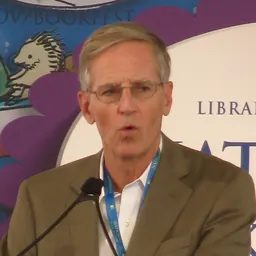
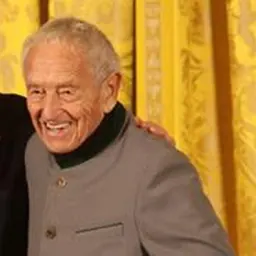



Related people
Same field, nearest in time


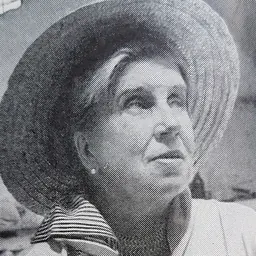
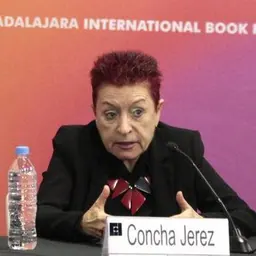

Contemporaries
People whose lives overlapped Reba Dickerson-Hill's


Frequently asked questions
Who was Reba Dickerson-Hill?
African American artist and educator who lived and worked in Philadelphia. (1918–1994)
When was Reba Dickerson-Hill born?
Reba Dickerson-Hill was born on 17 February 1918 in Philadelphia.
When did Reba Dickerson-Hill die?
Reba Dickerson-Hill died in 1994 in Philadelphia, PA.
What was Reba Dickerson-Hill's occupation?
Reba Dickerson-Hill was an artist, educator and university teacher.
What nationality was Reba Dickerson-Hill?
Reba Dickerson-Hill was American.
Sources & further reading
· Wikipedia: Reba Dickerson-Hill
· DBpedia: Reba Dickerson-Hill
Cite this page
APA: Biography.guide. (2026). Reba Dickerson-Hill. https://biography.guide/reba-dickerson-hill/
MLA: "Reba Dickerson-Hill." Biography.guide, https://biography.guide/reba-dickerson-hill/.
Chicago: "Reba Dickerson-Hill." Biography.guide. https://biography.guide/reba-dickerson-hill/.
Data last updated: 2026-09-20 · Spot an error? Report a correction.
Page generated 2026-09-27 05:33 UTC