
About Rayner Taylor
Lived 1747 – 1825 (aged 77–78). Rayner Taylor was an American composer.
Raynor Taylor (1747 – 17 August 1825) was an English organist, music teacher, composer, and singer who lived and worked in the United States after emigrating in 1792. Active in composing music for the theater, outdoor pleasure garden, and the Anglican Church and Protestant Episcopal Church of the United States, he was one of the first notable composers active in America.
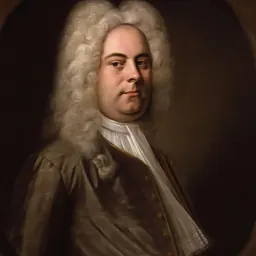
Biography Raynor Taylor was born in Soho, in Westminster, London, England, between August and November 1747. As a boy he sang in the choir at the Chapel Royal for many years, notably singing at the funeral of George Frideric Handel in 1759. Music historian J. R. Parker reported that Taylor's hat accidentally dropped into the composer's grave during the funeral ceremony. He studied organ, singing, and music composition with Samuel Arnold in London as a teenager, and at the age of eighteen became the organist at Chelmsford. In 1765 he was appointed the resident composer and musical director for the Sadler's Wells Theatre and the Marylebone Gardens, serving in both positions for more than 25 years.
In 1792 Taylor immigrated to the United States, partially due to the encouragement of his pupil Alexander Reinagle. He initially settled in Baltimore where he taught music and gave musical extravaganzas. Music historian O. G. Sonneck wrote of these concerts, "As a specialty he cultivated burlesque olios or 'extravaganzas' which came dangerously near being music hall skits." Taylor then briefly worked as the organist for St Anne's Church in Annapolis before moving to Philadelphia in 1795 to become the organist at St. Peter's Church, serving in that capacity until 1813.
Selected works Capocchio and Dorinna, (1793) Old Woman of Eighty Three (1793) The Kentucky Volunteer (1794) The American Captives Emancipation (1806) The Beech Tree's Petition / the words by Campbell (1810 and 1815) Bonny Willy / the words by Mr. C. Harford (1798 and 1804) The Camel's Bell (1813 or 1814) Hark Hark the Joy Inspiring Horn (1805 and 1809) The Lass of the Cot (1795) Ma Chere, et Mon Cher (1798 and 1804) The Queen of Flowers: as sung at the Amateurs concert by Mr. Gillingham (1812) Rustic Festivity (1807 and 1811) The Wand'ring Village Maid (1795) When Death's Gloomy Angel Was Bending His Bow (1814) The Wounded Soldier (1794) The Iron-Chest The Shipwreck'd Mariner Monody (1799) Buxom Joan (1778) Songs Amyntor: a pastoral song (1795) The Merry Piping Lad: a ballad in the Scots taste (1795) Nancy of the Vale: a pastoral ballad (1795) Vive la Liberté: a new song (1795) While the Morn is Inviting to Love: a favorite song (1797 and 1799) Operas Pizarro, or The Spaniards in Peru (opera, 1800) The Aethiop, or The Child of the Desert (opera, 1813, premiered on January 1, 1814)
Don’t just read it —
keep it.
Full-length biographies made to live with: read them, listen on the way to work, watch them tonight.
- E-book
- Audio
- Video
Instant download · yours to keep · every purchase keeps this site free
Important facts
People in Rayner Taylor's life
Named in this biography and alive at the same time


Related people
Same field, nearest in time

Contemporaries
People whose lives overlapped Rayner Taylor's





Frequently asked questions
Who was Rayner Taylor?
American composer
When was Rayner Taylor born?
Rayner Taylor was born in 1747 in London.
When did Rayner Taylor die?
Rayner Taylor died on 17 August 1825 in Philadelphia.
What was Rayner Taylor's occupation?
Rayner Taylor was a composer.
What nationality was Rayner Taylor?
Rayner Taylor was American.
Sources & further reading
Cite this page
APA: Biography.guide. (2026). Rayner Taylor. https://biography.guide/rayner-taylor/
MLA: "Rayner Taylor." Biography.guide, https://biography.guide/rayner-taylor/.
Chicago: "Rayner Taylor." Biography.guide. https://biography.guide/rayner-taylor/.
Data last updated: 2026-09-20 · Spot an error? Report a correction.
Page generated 2026-09-27 05:20 UTC