
About Raymond Vanier
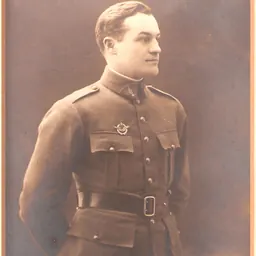
Lived 1895 – 1965 (aged 70). Raymond Vanier was a French aircraft pilot and flieger.
Raymond Lucien Vanier (6 August 1895 – 15 August 1965) was a pioneering French aviator. Vanier played a key role in the development of French and Spanish civil aviation, despite being less well-known to the general public than Jean Mermoz, Henri Guillaumet or Antoine de Saint-Exupéry.
Career Vanier was born in Orléans. During the First World War, he began as an NCO in the artillery before transferring to become a fighter pilot on 15 March 1917. He gained a strong reputation and was highly decorated. After the end of the war, in 1919, Vanier was hired as a pilot for the newly developing airline of Pierre-Georges Latécoère, Aéropostale, which was based in Toulouse. He became its station manager in Málaga, and then in Barcelona. In the same year, he opened up Spanish routes, and beginning in 1927 set up connections to South America.
On 30 August 1933, Air France was created when Aéropostale merged with Air Orient, Air Union, Compagnie Internationale de Navigation Aérienne (CIDNA), and Société Générale des Transports Aériens (SGTA). Vanier's first task for the new airline was to determine an appropriate location in Cape Verde for a new airfield, which would serve as an emergency landing location for the Company's aircraft flying the Dakar-Natal route. In 1934, he determined that a plot of land in Praia, Santiago, would be most appropriate. The current international airport is only a few hundred metres away from the original site chosen by Vanier. In 1939, he piloted the first night-time postal flights for the airline, until they were shut down by World War II. In 1945, he was integral to restarting these flights, this time for Air France. He is buried in Division 3 of the Père-Lachaise cemetery in Paris.
Founder of Barcelona International Airport
On 25 December 1918, Latécoère took off from Toulouse - Montaudran and arrived after a 2h 20min flight in Barcelona, landing on the Can Tunis racetrack, used since 1910 for air shows. After this flight, Latécoère outlined the need for Barcelona to have adequate facilities to receive and refuel Aéropostale aircraft. The Volateria airfield, located in the town of El Prat de Llobregat, was initially chosen. It had been used since 1916 by the Pujol Comabella Hereter School of Aviation and included the school’s workshops. On 7 January 1919, Beppo de Massimi signed a cooperation agreement with the workshops at Hereter. But in December 1919, following a disagreement over the financial conditions of using Volateria, Raymond Vanier, then Chief of Aerodromes for Latécoère, was charged with finding another suitable location nearby.
In March 1920, a new location was chosen. 800 metres long, it was on a floodplain, in very poor condition and lacking facilities. It was drained and flattened, then gradually equipped with workshops, hangars, telephone and radio telegraph. Later, night-time lighting was installed and in 1932 a passenger terminal was opened. Known as "El Frances Camp", it in turn bore the names in Spanish "Aerodromo Latécoère", "Aerodromo of Aeropostale," then "Aerodromo Air France." The land that made up the original site is now fully covered by the Barcelona International Airport.
Night-time postal flights (La Postale de nuit) As chief pilot of Air Bleu, Vanier was the pilot of the first French night-time postal service flight, which took place on 10 May 1939, using a two-engine Caudron Goéland. The flight left Paris in the afternoon and featured stop-overs in Bordeaux and Mont de Marsan before arriving at the final destination of Pau the following morning. On 26 October 1945, the Paris-Bordeaux-Mont de Marsan-Pau night-time postal route was reinstated, followed on 2 July 1946 by a Paris-Lyon-Marseille-Nice service.
Autobiography “Tout pour la ligne”
The summary published in the 2006 re-edition of Vanier’s autobiography is as follows: ″Many books have been devoted to the pioneering of aviation in France. Often these are written a posteriori by researchers, journalists or novelists, exalting their heroic exploits. “Tout pour la ligne” on the other hand, was written by a pioneer himself. According to his personal notes, Raymond Vanier speaks directly with modesty and rigor of his working day life of more than forty years. He describes the history of the establishment of regular and reliable commercial airlines. His book is written in a spare style making us re-live the story with simplicity and passion.″
Vanier's tomb in Père-Lachaise - Division 3, portrays a bas relief of his portrait and his awards.
Don’t just read it —
keep it.
Full-length biographies made to live with: read them, listen on the way to work, watch them tonight.
- E-book
- Audio
- Video
Instant download · yours to keep · every purchase keeps this site free
Important facts
People in Raymond Vanier's life
Named in this biography and alive at the same time

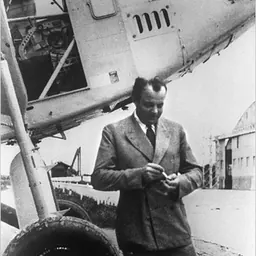


Related people
Same field, nearest in time

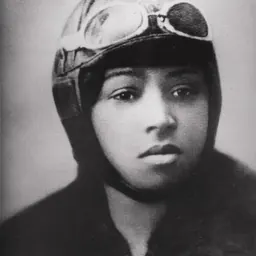
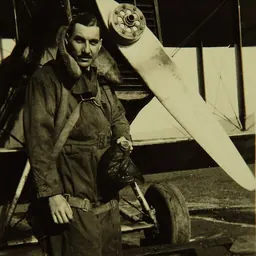
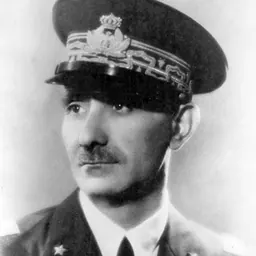
Contemporaries
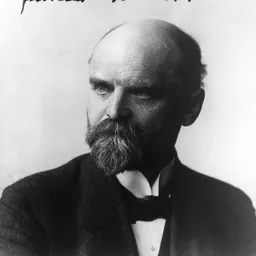
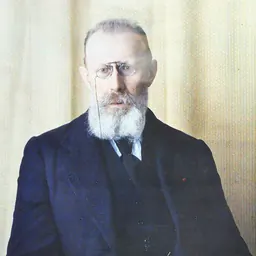
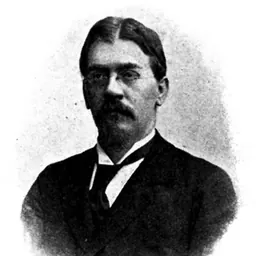
People whose lives overlapped Raymond Vanier's

Frequently asked questions
Who was Raymond Vanier?
French aviator (1895-1965)
When was Raymond Vanier born?
Raymond Vanier was born on 6 August 1895 in Orléans.
When did Raymond Vanier die?
Raymond Vanier died on 15 August 1965 in Paris.
What was Raymond Vanier's occupation?
Raymond Vanier was an aircraft pilot and flieger.
What nationality was Raymond Vanier?
Raymond Vanier was French.
Sources & further reading
Cite this page
APA: Biography.guide. (2026). Raymond Vanier. https://biography.guide/raymond-vanier/
MLA: "Raymond Vanier." Biography.guide, https://biography.guide/raymond-vanier/.
Chicago: "Raymond Vanier." Biography.guide. https://biography.guide/raymond-vanier/.
Data last updated: 2026-09-25 · Spot an error? Report a correction.
Page generated 2026-09-27 05:07 UTC