
About Raymond Paley
Lived 1907 – 1933 (aged 26). Raymond Paley was a British mathematician and university teacher, known for Littlewood–Paley theory, Paley construction and Paley graph.
Photograph of Paley's grave in The Old Banff Cemetery. The main gate is visible on the left. Raymond Edward Alan Christopher Paley (7 January 1907 – 7 April 1933) was an English mathematician who made significant contributions to mathematical analysis before dying young in a skiing accident.
Life Paley was born in Bournemouth, England, the son of an artillery officer who died of tuberculosis before Paley was born. He was educated at Eton College as a King's Scholar and at Trinity College, Cambridge. He became a wrangler in 1928, and with J. A. Todd, he was one of two winners of the 1930 Smith's Prize examination.
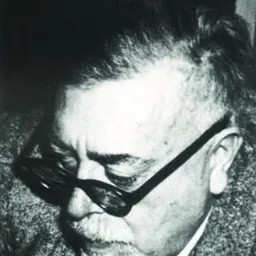
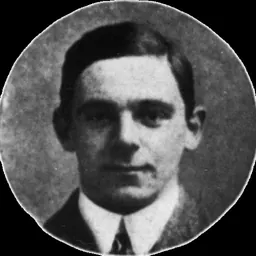
He was elected a Research Fellow of Trinity College in 1930, edging out Todd for the position, and continued at Cambridge as a postgraduate student, advised by John Edensor Littlewood. After the 1931 return of G. H. Hardy to Cambridge he participated in weekly joint seminars with the other students of Hardy and Littlewood. He traveled to the US in 1932 to work with Norbert Wiener at the Massachusetts Institute of Technology and with George Pólya at Princeton University, and as part of the same trip also planned to work with Lipót Fejér at a seminar in Chicago organized as part of the Century of Progress exposition.
He was killed on 7 April 1933 in a skiing trip to the Canadian Rockies, by an avalanche on Deception Pass.
Contributions Paley's contributions include the following. His mathematical research with Littlewood began in 1929, with his work towards a fellowship at Trinity, and Hardy writes that "Littlewood's influence dominates nearly all his earliest work". Their work became the foundation for Littlewood–Paley theory, an application of real-variable techniques in complex analysis. The Walsh–Paley numeration, a standard method for indexing the Walsh functions, came from a 1932 suggestion of Paley. Paley collaborated with Antoni Zygmund on Fourier series, continuing the work on this topic that he had already done with Littlewood. His work in this area also led to the Paley–Zygmund inequality in probability theory. In a 1933 paper, he published the Paley construction for Hadamard matrices. In the same paper, he first formulated the Hadamard conjecture on the sizes of matrices for which Hadamard matrices exist. The Paley graphs and Paley tournaments in graph theory are closely related, although they do not appear explicitly in this work. In the context of compressed sensing, frames (partial bases of Hilbert spaces) derived from this construction have been called "Paley equiangular tight frames". His collaboration with Norbert Wiener included the Paley–Wiener theorem in harmonic analysis. Paley was originally selected as the 1934 American Mathematical Society Colloquium Lecturer; after his death, Wiener replaced him as speaker, and spoke on their joint work, which was published as a book.
Selected publications For the short span of his research career, Paley was very productive; Hardy lists 26 of Paley's publications, and more were published posthumously. These publications include:
Don’t just read it —
keep it.
Full-length biographies made to live with: read them, listen on the way to work, watch them tonight.
- E-book
- Audio
- Video
Instant download · yours to keep · every purchase keeps this site free
Important facts
People in Raymond Paley's life
Named in this biography and alive at the same time



Related people
Same field, nearest in time
Contemporaries
People whose lives overlapped Raymond Paley's


Frequently asked questions
Who was Raymond Paley?
English mathematician (1907–1933)
When was Raymond Paley born?
Raymond Paley was born on 7 January 1907 in Bournemouth.
When did Raymond Paley die?
Raymond Paley died on 7 April 1933 in Banff.
What was Raymond Paley's occupation?
Raymond Paley was a mathematician and university teacher.
What was Raymond Paley known for?
Raymond Paley was known for Littlewood–Paley theory, Paley construction, Paley graph, Paley–Wiener theorem, Paley–Zygmund inequality and Walsh function.
What nationality was Raymond Paley?
Raymond Paley was British.
Sources & further reading
Cite this page
APA: Biography.guide. (2026). Raymond Paley. https://biography.guide/raymond-paley/
MLA: "Raymond Paley." Biography.guide, https://biography.guide/raymond-paley/.
Chicago: "Raymond Paley." Biography.guide. https://biography.guide/raymond-paley/.
Data last updated: 2026-09-20 · Spot an error? Report a correction.
Page generated 2026-09-27 05:21 UTC