
About Raymond E. Peters
Lived 1903 – 1973 (aged 69). Raymond E. Peters was a judge.
Raymond Elmer Peters (April 17, 1903 – January 2, 1973) was an Associate Justice of the Supreme Court of California from March 26, 1959 to January 2, 1973.
Biography Peters was born in Oakland on April 17, 1903, and educated in the public schools. After high school, he continued his education at the University of California, Berkeley School of Law, and graduated with an LL.B. degree. In 1939, Governor Culbert Olson appointed Peters the Presiding Justice of the then District Court of Appeal, First District, Division One, replacing John F. Tyler. In December 1940, Peters was retained by the voters in the election. In November 1948, he was president of the conference of California judges, and led a study on Code of Conduct for judicial proceedings. In February 1949, Chief Justice Phil S. Gibson appointed Peters to a two-year term on the State Judicial Council. His notable cases on the appellate bench include a September 1958 decision holding San Benito County's "right to work" ordinance to be "unconstitutional and contrary to the state's public policy."
In 1959, by appointment of Governor Pat Brown, Peters became an associate justice of the California Supreme Court. At the same time, Governor Brown appointed Absalom Francis Brown as the new Presiding Justice of the appellate court's First District, Division One, and Mathew O. Tobriner to take Peter's seat as an associate justice on that court. A liberal lion on the court led by Roger J. Traynor, Peters' notable cases include In People v. Belous (1969), a landmark abortion decision that protected the constitutional right of a woman to control her own body. In December 1967, he wrote the majority opinion striking down the loyalty oath required in the state constitution of public employees. In 1971, he authored an opinion prohibiting discrimination on the basis of sex.
On January 2, 1973, Peters passed while still in office. The governor at the time, Ronald Reagan, appointed William P. Clark Jr. not long after to fill the vacant seat.
Personal life Peters was married to Marion Estabrook and had one daughter, Janet E. (Peters) Garrison, and one son Douglas who died at the age of 16.
Footnotes
Don’t just read it —
keep it.
Full-length biographies made to live with: read them, listen on the way to work, watch them tonight.
- E-book
- Audio
- Video
Instant download · yours to keep · every purchase keeps this site free
Important facts
People in Raymond E. Peters's life
Named in this biography and alive at the same time




Related people
Same field, nearest in time

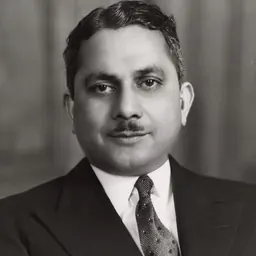

Contemporaries
People whose lives overlapped Raymond E. Peters's
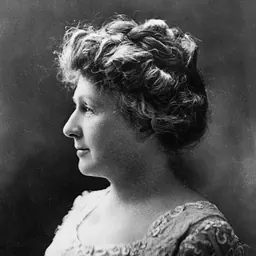
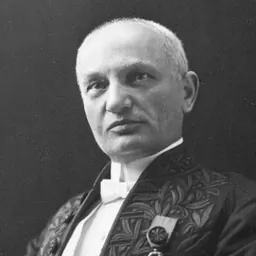
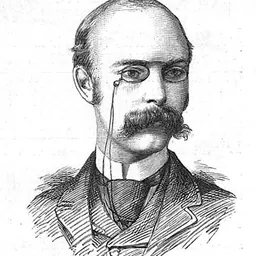
Frequently asked questions
Who was Raymond E. Peters?
American judge
When was Raymond E. Peters born?
Raymond E. Peters was born on 17 April 1903 in California, Oakland, United States.
When did Raymond E. Peters die?
Raymond E. Peters died on 2 January 1973 in Berkeley, California, United States.
What was Raymond E. Peters's occupation?
Raymond E. Peters was a judge.
Sources & further reading
· Wikipedia: Raymond E. Peters
Cite this page
APA: Biography.guide. (2026). Raymond E. Peters. https://biography.guide/raymond-e-peters/
MLA: "Raymond E. Peters." Biography.guide, https://biography.guide/raymond-e-peters/.
Chicago: "Raymond E. Peters." Biography.guide. https://biography.guide/raymond-e-peters/.
Data last updated: 2026-09-20 · Spot an error? Report a correction.
Page generated 2026-09-27 05:26 UTC