
About Raymond Burr
Lived 1917 – 1993 (aged 76). Raymond Burr was a Canadian stage actor, film actor, actor and television actor.
Raymond William Stacy Burr (May 21, 1917 – September 12, 1993) was a Canadian actor who had a lengthy Hollywood film career and portrayed the title roles in the television dramas Perry Mason and Ironside.
Burr's early acting career included roles on Broadway, radio, television, and film, usually as the villain. He portrayed the suspected murderer in the Alfred Hitchcock thriller Rear Window (1954), and he also had a role in the 1956 film Godzilla, King of the Monsters!, which he reprised in the 1985 film Godzilla 1985. He won Emmy Awards for acting in 1959 and 1961 for the role of Perry Mason, which he played for nine seasons (1957–1966) and reprised in a series of 26 Perry Mason TV movies (1985–1993). His second TV series, Ironside, earned him six Emmy and two Golden Globe nominations.
Burr died from liver cancer in 1993, and his personal life came into question, as many details of his biography appeared to be unverifiable. his mother, Minerva Annette (née Smith, 1892–1974), was a pianist and music teacher.
When Burr was six, his parents divorced. He moved to Vallejo, California, with his mother and younger siblings Geraldine and James, He made his stage debut at age 12 in a Vancouver stock company, and did some acting in his teens. By his own account, in 1934 he joined a repertory theatre company in Toronto that toured throughout Canada, then joined another company that toured India, Australia, and England. He briefly attended Long Beach Junior College and taught for a semester at San Jose Junior College, working nights as a radio actor and singer. Burr began his association with the Pasadena Playhouse
Burr moved to New York in 1940 and made his first Broadway appearance in Crazy With the Heat, a two-act musical revue produced by Kurt Kasznar. Despite the veteran cast of stars Willie Howard, Luella Gear, and Gracie Barrie, the show folded after three months.
Film
"I was just a fat heavy," Burr told journalist James Bawden. "I split the heavy parts with Bill Conrad. We were both in our twenties playing much older men. I never got the girl but I once got the gorilla in a 3-D picture called Gorilla at Large. I menaced Claudette Colbert, Lizabeth Scott, Paulette Goddard, Anne Baxter, Barbara Stanwyck. Those girls would take one look at me and scream and can you blame them? I was drowned, beaten, stabbed and all for my art. But I knew I was horribly overweight. I lacked any kind of self esteem. At 25 I was playing the fathers of people older than me."
Burr's occasional roles on the right side of the law include the aggressive prosecutor in A Place in the Sun (1951).
Working steadily in radio since the 1940s, often uncredited, He had a regular role in Jack Webb's first radio show, Pat Novak for Hire (1949), and in Dragnet (1949–50) he played Joe Friday's boss, Ed Backstrand, chief of detectives.
From March 1951 through June 1952 Burr used the name of Ray Hartman approximately 30 times when appearing on radio, mostly on Dangerous Assignment, The Lineup and Yours Truly, Johnny Dollar. This was verified by perusing the scripts for both series.
In 1956, Burr was the star of CBS Radio's Fort Laramie, an adult Western drama produced, written and directed by the creators of Gunsmoke. He played the role of Lee Quince, captain of the cavalry, in the series set at a post-Civil War military post where disease, boredom, the elements and the uncharted terrain were the greatest enemies of "ordinary men who lived in extraordinary times". The half-hour transcribed program aired Sundays at 5:30 pm. ET January 22 – October 28, 1956. Burr told columnist Sheilah Graham that he had received 1,500 fan letters after the first broadcasts, and he continued to receive letters praising the show's authenticity and presentation of human dignity.
In August 1956, CBS announced that Burr would star in the television series Perry Mason. Although the network wanted Burr to continue work on Fort Laramie as well, the TV series required an extraordinary commitment and the radio show ended.
Known for his loyalty and consciousness of history, Burr went out of his way to employ his radio colleagues in his television programs.
Television Burr emerged as a prolific television character actor in the 1950s. He made his television debut in 1951, appearing in episodes of Stars Over Hollywood, The Bigelow Theatre, He went on to appear in such programs as Gruen Playhouse, Four Star Playhouse, Ford Theatre, Lux Video Theatre, Mr. and Mrs. North, Schlitz Playhouse of Stars and Playhouse 90. Burr told associate producer Sam White, "If you don't like me as Perry Mason, then I'll go along and play the part of the district attorney, Hamilton Burger." Executive producer Gail Patrick Jackson had been impressed with Burr's courtroom performance in A Place in the Sun (1951), and she told Burr that he was perfect for Perry Mason but at least overweight. He went on a crash diet over the following month; he then tested as Perry Mason and was cast in the role. While Burr's test was running, Gardner reportedly stood up, pointed at the screen, and said, "That's Perry Mason." The series also starred Barbara Hale as Della Street, Mason's secretary, William Talman as Hamilton Burger, the district attorney who loses nearly every case to Mason, and Ray Collins as homicide detective Lieutenant Arthur Tragg. Burr received three consecutive Emmy Award nominations and won the award in 1959 and 1961
One last attempt to launch a series followed on CBS. The two-hour premiere of The Jordan Chance aroused little interest.
On January 20, 1987, Burr hosted the television special that later served as the pilot for the long-running series Unsolved Mysteries. The same week, Burr recalled, he was asked to reprise the role he played in Godzilla, King of the Monsters! (1956), in a low-budget film that would be titled Godzilla 1985. Although Burr is best remembered for his role as Perry Mason, a devoted following continues to appreciate him as the actor that brought the Godzilla series to America.
He agreed to appear in the Mason movie if Barbara Hale returned to reprise her role as Della Street. Hale agreed, and when Perry Mason Returns aired in December 1985, her character became the defendant.
After several of the TV movies, Burr's age and health issues forced him to use a cane onscreen, which was jokingly explained as a "skiing accident". By 1993, when Burr signed with NBC for another season of Mason films, he was using a wheelchair full-time because of his failing health. In his final Perry Mason movie, The Case of the Killer Kiss, he was shown either sitting or standing while leaning on a table, but only once standing unsupported for a few seconds. Twelve more Mason movies were scheduled before Burr's death, including one scheduled to film the month he died.
As he had with the Perry Mason TV movies, Burr decided to do an Ironside reunion movie. The Return of Ironside aired in May 1993, reuniting the entire original cast of the 1967–75 series. Like many of the Mason movies, it was set and filmed in Denver. on January 10, 1948. They met in 1943 while she was a student at the Pasadena Playhouse where Burr was teaching. They met again in 1947 when she was in California with a theater company. They were married shortly before Burr began work on the 1948 film noir Pitfall. In May 1948, they appeared on stage together in a Pasadena Playhouse production based on the life of Paul Gauguin. They owned and operated an orchid business and then a vineyard in California's Dry Creek Valley. They were domestic partners until Burr's death in 1993. (reportedly against Burr's wishes) and managed it as a commercial enterprise.
Although Burr had not revealed that he was homosexual during his lifetime, it was reported in the press upon his death.
Biographical contradictions At various times in his career, Burr and his managers and publicists offered spurious or unverifiable biographical details to the press and public. Burr's obituary in The New York Times states that he entered the U.S. Navy in 1944, after The Duke in Darkness, and left in 1946, weighing almost . that he sustained battle injuries at Okinawa. and by his first biographer, Ona Hill. —killed, Burr said, in the same 1943 plane crash that claimed the life of actor Leslie Howard. However, multiple sources have reported that no one by that name appears on any of the published passenger manifests from the flight. Yet no evidence exists of either marriage, nor of a son's birth, other than Burr's own claims. Burr reportedly resented Warner Bros.' decision to promote her attachment to another gay actor, Tab Hunter, rather than him. Robert Benevides later said, "He was a little bitter about it. He was really in love with her, I guess."
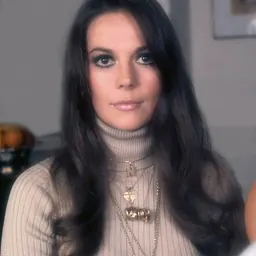
Arthur Marks, a producer of Perry Mason, recalled Burr's talk of wives and children: "I know he was just putting on a show. ... That was my gut feeling. I think the wives and the loving women, the Natalie Wood thing, were a bit of a cover." He was interested in flying, sailing, and fishing. According to A&E Biography, Burr was an avid reader with a retentive memory. He was also among the earliest importers and breeders of Portuguese Water Dogs in the United States.
Burr developed his interest in cultivating and hybridizing orchids into a business with Benevides. Over 20 years, their company, Sea God Nurseries, had nurseries in Fiji, Hawaii, the Azores, and California, and was responsible for adding more than 1,500 new orchids to the worldwide catalog. Burr named one of them the "Barbara Hale Orchid" after his Perry Mason costar. Burr and Benevides cultivated Cabernet Sauvignon, Chardonnay, and grapes for Port wine, as well as orchids, at Burr's farm/estate in Sonoma County, California.
In 1965, Burr purchased Naitauba, a island in Fiji, rich in seashells. There, he and Benevides oversaw the raising of copra (coconut meat) and cattle, as well as orchids.
Philanthropy Burr was a well-known philanthropist. He gave enormous sums of money, including his salaries from the Perry Mason movies, to charity. He was also known for sharing his wealth with friends. He sponsored 26 foster children through the Foster Parents' Plan or Save the Children, many with the greatest medical needs.
Burr was an early supporter of the Bailey-Matthews National Shell Museum in Sanibel, Florida, raising funds and chairing its first capital campaign.
In 1993, Sonoma State University awarded Burr an honorary doctorate. He supported medical and educational institutions in Denver, and in 1993, the University of Colorado awarded him an honorary doctorate for his acting work.
Burr made repeated trips on behalf of the United Service Organizations (USO). He toured both Korea and Vietnam during wartime and once spent six months touring Korea, Japan, and the Philippines. He sometimes organized his own troupe and toured bases both in the U.S. and overseas, often small installations that the USO did not serve, like one tour of Greenland, Baffin Island, Newfoundland and Labrador.
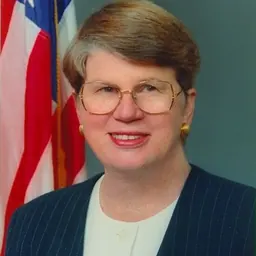
Illness and death Raymond Burr's grave marker with his family in New Westminster, Canada. During the filming of his last Perry Mason movie in the spring of 1993, Burr became ill. A Viacom spokesman told the media that the illness might have been related to the renal cell carcinoma (malignant kidney tumour) that had been removed from Burr that February. Burr held several "goodbye parties" before his death on September 12, 1993, at his Sonoma County ranch near Healdsburg. He was 76 years old. The New York Times reported that Perry Mason had been named second—after F. Lee Bailey, and before Abraham Lincoln, Thurgood Marshall, Janet Reno, Ben Matlock and Hillary Clinton—in a 1993 National Law Journal poll that asked Americans to name the attorney, fictional or not, they most admired.
Burr was interred with his parents and sister Geraldine (1920-2001) at Fraser Cemetery, New Westminster, British Columbia. On October 1, about 600 family members and friends paid tribute to Burr at a private memorial service at the Pasadena Playhouse.
Burr bequeathed his estate to Robert Benevides, and excluded all relatives, including a sister, nieces, and nephews. His will was challenged, without success, by two of the ten children of his late brother, James E. Burr.
Accolades For his work in the TV series Perry Mason, Burr received the Emmy Award for Best Actor in a Leading Role (Continuing Character) in a Dramatic Series at the 11th Primetime Emmy Awards in 1959. Nominated again in 1960, he received his second Emmy Award for Outstanding Performance by an Actor in a Series (Lead) at the 13th Primetime Emmy Awards in 1961. Burr was named Favorite Male Performer, for Perry Mason, in TV Guide magazine's inaugural TV Guide Award readers poll in 1960. He also received the second annual award in 1961.
In 1960, Burr was awarded a star on the Hollywood Walk of Fame at 6656 Hollywood Boulevard. Burr received six Emmy nominations (1968–72) for his work in the TV series Ironside. A benefactor of legal education, Burr was principal speaker at the founders' banquet of the Thomas M. Cooley Law School in Lansing, Michigan, in June 1973. The Raymond Burr Award for Excellence in Criminal Law was established in his honor.
Burr was ranked No. 44 on TV Guides 50 Greatest TV Stars of All Time in 1996. Completed in 1996, a circular garden at the entrance to the Bailey-Matthews National Shell Museum in Sanibel, Florida, honored Burr for his role in establishing the museum. Burr was a trustee and an early supporter who chaired the museum's first capital campaign, and made direct contributions from his own shell collection. A display about Burr as an actor, benefactor and collector opened in the museum's Great Hall of Shells in 2012.
From 2000 to 2006, the Raymond Burr Performing Arts Society leased the historic Columbia Theatre from the city of New Westminster, and renamed it the Raymond Burr Performing Arts Centre. Although the nonprofit organization hoped to raise funds to renovate and expand the venue, its contract was not renewed. The group was a failed bidder when the theater was sold in 2011.
In 2008, Canada Post issued a postage stamp in its "Canadians in Hollywood" series featuring Burr. Burr received the 2009 Canadian Legends Award and a star on Canada's Walk of Fame in Toronto. The induction ceremony was held on September 12, 2009. A 2014 article in The Atlantic that examined how Netflix categorized nearly 77,000 different personalized genres found that Burr was rated as the favorite actor by Netflix users, with the greatest number of dedicated microgenres.
Acting credits Theatre Date Title Role Notes December 26, 1940 Crazy With the Heat Boston January 14–18, 1941 Crazy With the Heat 44th Street Theatre, New York City November 11–22, 1942 Quiet Wedding Pasadena Playhouse, directed by Lenore Shanewise December 23, 1942 – January 3, 1943 Charley's Aunt Pasadena Playhouse February – February 21, 1943 Arsenic and Old Lace Pasadena Playhouse March–April 1943 Jason Pasadena Playhouse, directed by Onslow Stevens July 1943 Pasadena Playhouse, directed by Lenore Shanewise July–August 1943 Monsieur Beaucaire Pasadena Playhouse January 24 – February 12, 1944 Voulain Playhouse Theatre, New York City May - August 1944Multiple productionsVariousElitch Gardens Theater, Denver, Colorado, Additional Citation: June 12–23, 1946 While the Sun Shines Pasadena Playhouse December 1, 1946 – Murder Without Crime Pasadena Playhouse, directed by Raymond Burr (also actor) May 26, 1948 – Gauguin Pasadena Playhouse, directed by Catherine Turney June 11 – July 15, 1962 Critic's Choice Suburbs of Detroit and Chicago 1983 Underground Tour including Royal Alexandra Theatre, Toronto, Theatre Royal, York and Prince of Wales Theatre, London
Film Year Title Role Notes 1940 Earl of Puddlestone Mrs. Millicent Potter's chauffeur Uncredited 1947 Code of the West Boyd Carter 1962 "When Sally Fell" Himself (introduction, conclusion) Short film on home safety 1962 "Look Alive" Himself Short film on pedestrian safety 1980 Dr. Kramer 1982 Airplane II: The Sequel The Judge 1991 The Legend of Kootenai Brown Judge Webster 1991 Delirious Carter Hedison October 18, 1948 "The Case of the Eager Victim" October 26, 1948 Favorite Story "The Jest of Hahalaba" December 25, 1948 Wrigley Christmas Party January 23, 1949 Screen Directors Playhouse "The Exile" February 13 – June 26, 1949 Pat Novak, for Hire February 17, 1949 Suspense "Catch Me If You Can" July 16, 1949 Dangerous Assignment "Sunken Ships" August 24, 1949 Family Theater "Robert of Sicily" September 21, 1949 "The Paul Conrad Case" September 27, 1949 – Dr. Kildare Repertory cast Eight transcribed episodes October 17, 1949 Screen Directors Playhouse MacDonald "Pitfall" May 9, 1950 Yours Truly, Johnny Dollar "The Harold Trandem Matter" October 7, 1950 Yours Truly, Johnny Dollar "The Richard Splain Matter" October 28, 1950 Yours Truly, Johnny Dollar "The Joan Sebastian Matter" December 6, 1950 Family Theater "Robert of Sicily" January 4, 1951 Screen Directors Playhouse "Prince of Foxes" April 24, 1951 "The Brommel and Bellows Bloody Bullet Case" October 28, 1951 "The Case of the Rubber Gloves" November 8, 1951 Hallmark Playhouse "Twenty-Thousand Leagues Under the Sea" 1951 "The Mischianza" March 9, 1952 "Breakaway" April 7, 1952 "The Homecoming" June 10, 1952 "Lobdell's Poodle-Cut Tomato Case" July 22, 1952 "The Drinkler Kidnapping Case" January 30, 1953 Yours Truly, Johnny Dollar "The Kay Bellamy Matter" September 26, 1953 Romance "Treadmill" September 30, 1953 Family Theater "Journey of the Pegasus" March 24, 1954 Family Theater "Night Caller" March 9, 1956 CBS Radio Workshop "Report on ESP" May 25, 1956 CBS Radio Workshop Narrator "The Little Prince" August 24, 1969 Special Delivery: Vietnam "History's First Nationwide Radiothon"
Television Date Title Role Notes March 14, 1951 Stars Over Hollywood "Prison Doctor" December 16, 1951 Dragnet "The Human Bomb" (series debut) November 21, 1951 Family TheaterSimon the Cyrenean March 21, 1952 Rebound "Joker's Wild" April 11, 1952 Rebound Gomez "The Wreck" September 9, 1952 Gruen Playhouse "The Leather Coat" January 2, 1953 Tales of Tomorrow "The Mask of Medusa" January 16, 1953 Your Favorite Story "How Much Land Does a Man Need?" April 28, 1953 Chevron Theatre "No Escape" December 10, 1953 Four Star Playhouse "The Room" January 28, 1954 Lux Video Theatre "A Place in the Sun" November 2, 1955 "The Ox-Bow Incident" December 1, 1955 Lux Video Theatre "The Web" March 1, 1956 Climax! "The Sound of Silence" March 1, 1956 Ford Theatre "Man Without a Fear" May 24, 1956 Climax! "The Shadow of Evil" December 6, 1956 Climax! "Savage Portrait" 1956 Chevron Hall of Stars Jud "The Lone Hand" January 31, 1957 Playhouse 90 "The Greer Case" March 12, 1957 Celebrity Playhouse George "No Escape" September 21, 1957 – May 22, 1966 Perry Mason 271 episodes Winner, Primetime Emmy Award, Outstanding Lead Actor in a Drama Series, 1959 and 1961; nominee in 1960 June 5, 1958 Playhouse 90 Host "The Innocent Sleep" May 6, 1959 11th Emmy Awards Host November 5, 1961 "Jack On Trial for Murder" June 3, 1962 What's My Line? Mystery guest March 28, 1967 Ironside World premiere television film Nominee, Primetime Emmy Award, Outstanding Single Performance by an Actor in a Leading Role in a Drama (1968) September 14, 1967 – January 16, 1975 Ironside 194 episodes Nominee, Primetime Emmy Award, Outstanding Lead Actor in a Drama Series, 1968, 1969, 1970, 1971 and 1972 January 9, 1968 It Takes a Thief "A Thief Is a Thief" (series premiere) September 19, 1972 "Five Days in the Death of Sgt. Brown" February 8, 1976 Mallory July 3, 1976 The Inventing of America Co-host NBC–BBC co-production for the U.S. Bicentennial, co-hosted by James Burke September 15, 1976 Kingston: The Power Play October 16–18, 1977 79 Park Avenue Miniseries December 12, 1978 October 1, 1978 – Centennial Miniseries October 23, 1979 December 18, 1980 Mayor April 12 + 14, 1981 Peter and Paul Herod Agrippa May 25, 1986 Perry Mason: The Case of the Notorious Nun February 23, 1987 Perry Mason: The Case of the Lost Love January 21, 1990 Perry Mason: The Case of the Poisoned Pen May 21, 1993 Perry Mason: The Case of the Telltale Talk Show Host November 29, 1993 Perry Mason: The Case of the Killer Kiss
Released posthumously; features an in-memory notice at the end of film.
Don’t just read it —
keep it.
Full-length biographies made to live with: read them, listen on the way to work, watch them tonight.
- E-book
- Audio
- Video
Instant download · yours to keep · every purchase keeps this site free
Important facts
People in Raymond Burr's life
Named in this biography and alive at the same time





Related people
Same field, nearest in time


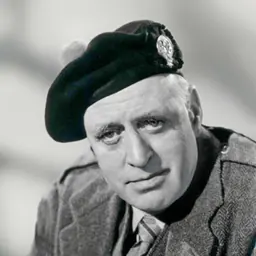

Contemporaries
People whose lives overlapped Raymond Burr's

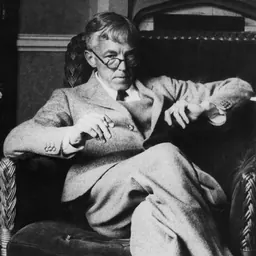
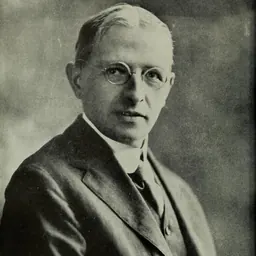
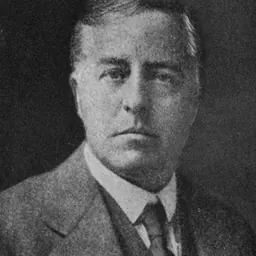
Frequently asked questions
Who was Raymond Burr?
Canadian actor (1917–1993)
When was Raymond Burr born?
Raymond Burr was born on 21 May 1917 in New Westminster.
When did Raymond Burr die?
Raymond Burr died on 12 September 1993 in Sonoma.
What was Raymond Burr's occupation?
Raymond Burr was a stage actor, film actor, actor and television actor.
What nationality was Raymond Burr?
Raymond Burr was Canadian.
Sources & further reading
Cite this page
APA: Biography.guide. (2026). Raymond Burr. https://biography.guide/raymond-burr/
MLA: "Raymond Burr." Biography.guide, https://biography.guide/raymond-burr/.
Chicago: "Raymond Burr." Biography.guide. https://biography.guide/raymond-burr/.
Data last updated: 2026-09-22 · Spot an error? Report a correction.
Page generated 2026-09-27 05:32 UTC