
About Raul Lino
Lived 1879 – 1974 (aged 94). Raul Lino was a Portuguese architect, designer and writer.
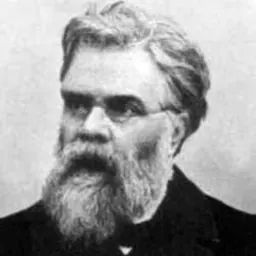
Raul Lino (21 November 1879 – 13 July 1974) was a Portuguese architect, designer, architectural theorist, and writer. Lino's architectural theses and studies revolved around the theory of the Casa Portuguesa (Portuguese: Portuguese house), an idealized concept of Portuguese residential architecture, planning, and lifestyle.
The cities of Cascais and Sintra, along the Portuguese Riviera, boast the largest concentration of Lino's constructions out of anywhere, as part of the Summer architecture movement there. Lino played an active part in the cosmopolitanization of Cascais as a summer resort for the wealthy and notable and in the continuation of Sintra as a historicist's and romanticist's haven.
Early life
Raul Lino da Silva was born in Lisbon, Portugal, on 21 November 1879, to a well-off construction materials merchant. His family's financial standing allowed Lino to leave Portugal, in 1890, to study in Windsor, England, for three years.
Following his studies in Britain, Lino moved to Germany, where he would study under and eventually work in the atelier of German revivalist architect, Albrecht Haupt, until 1897, when Lino returned to Portugal to finish his degree in architecture.
Early career
After returning to Portugal and finishing his studies in architecture, Lino began to work in his father's construction materials business, in 1897. During this time, Lino began his travels across Portugal and his studies of the regionalisms in architecture and style, paying particular note initially to the Alentejo region.
Back to Portugal, he designed and built more than 700 projects. Many were in the Mediterranean Revival and Soft Portuguese styles.
He was a founding member of the National Academy of Fine Arts and served as its secretary in 1946.
Lino was a habitual guest writer for various Portuguese newspapers and journals, including the Diário de Notícias, the Diário Popular, and Atlantida.
A Casa Portuguesa
Lino also wrote many books and texts about the theory of the architecture of the Portuguese house, including: A Casa Portuguesa - The Portuguese House (1929) Casas Portuguesas - Portuguese Houses (1933) L'Evolution de l'Architecture Domestique au Portugal - The Evolution of Domestic Architecture in Portugal (1937)
Selected works
Some of his most important projects were: House in Castilho street, 64 and 66 (Valmor Award 1930), Lisbon Casa dos Patudos, Alpiarça Teatro Tivoli, Lisbon João de Deus Museum and Kindergarten, Lisbon Gardénia Shop, Lisbon St. Patrick Tower, Estoril - now the Museum of Portuguese Music Montsalvat House, Estoril Silva Gomes House, Estoril Brazil Pavilion in the Portuguese World Exhibition, Lisbon House of Quinta da Comenda, Arrábida Casa de Santa Maria, Cascais Casa do Cipreste, Sintra Casa dos Penedos, Sintra Casa Branca, Azenhas do Mar Casa Branca, Oeiras
Don’t just read it —
keep it.
Full-length biographies made to live with: read them, listen on the way to work, watch them tonight.
- E-book
- Audio
- Video
Instant download · yours to keep · every purchase keeps this site free
Important facts
People in Raul Lino's life
Named in this biography and alive at the same time


Related people
Same field, nearest in time



Contemporaries
People whose lives overlapped Raul Lino's


Frequently asked questions
Who was Raul Lino?
Portuguese architect (1879-1974)
When was Raul Lino born?
Raul Lino was born on 21 November 1879 in Lisbon.
When did Raul Lino die?
Raul Lino died on 13 July 1974 in Lisbon.
What was Raul Lino's occupation?
Raul Lino was an architect, designer and writer.
What nationality was Raul Lino?
Raul Lino was Portuguese.
Sources & further reading
Cite this page
APA: Biography.guide. (2026). Raul Lino. https://biography.guide/raul-lino/
MLA: "Raul Lino." Biography.guide, https://biography.guide/raul-lino/.
Chicago: "Raul Lino." Biography.guide. https://biography.guide/raul-lino/.
Data last updated: 2026-09-20 · Spot an error? Report a correction.
Page generated 2026-09-27 05:25 UTC