
About Rapp Brush
Lived 1889 – 1958 (aged 68). Rapp Brush was a military personnel.
Isaac Rapp Brush (November 7, 1889 – March 6, 1958) was a decorated officer in United States Army with the rank of Major General. Brush commanded the 40th Infantry Division from 1942 to 1945 during its World War II involvement in the United States armed forces' liberation of the Philippines.
Early career
Isaac Rapp Brush was born on November 7, 1889, at Fort D.A. Russell, Wyoming as the son of Brigadier general Daniel H. Brush Jr. and Harriet Rapp. His family had wide military background while his father was a career Army officer and veteran of Civil War, Indian conflicts and also served in the Philippines during Spanish-American War. His paternal grandfather was a Union Army officer Daniel H. Brush Sr., who was brevetted Brigadier General, U.S. Volunteers on March 13, 1865, for "gallant and meritorious services at the Battles of Fort Donelson and Shiloh" during American Civil War. A maternal grandfather, Isaac Rapp was also a Civil war veteran who served for Union as Second Lieutenant with Company "D", 81st Illinois Infantry. His maternal uncle was his namesake Isaac Rapp, an architect who has been called the "Creator of the Santa Fe style." Brush's sister Harriet married late Brigadier general Clarence Deems Jr.
He was commissioned second lieutenant of Infantry on February 11, 1911, and ordered to Fort Sheridan for basic training. Brush completed the training few months later and embarked for the Philippines, where he joined Company "K", 8th Infantry Regiment at Pettit Barracks, Mindanao. He remained in that assignment for three years and took part in the Battle of Bud Bagsak under General John J. Pershing against Moro rebels on June 11–15, 1913.
Following the return stateside in early January 1915, Brush joined the Company "H", 11th Infantry Regiment at Texas City, Texas. After three months with that outfit, he was transferred to the Company "C", 26th Infantry Regiment and took part in the patrols along the Mexican border during Pancho Villa Expedition.
In July 1915, Brush was transferred to the United States Disciplinary Barracks at Fort Leavenworth, Kansas, and joined First Company of local Guard Battalion. He was promoted to first lieutenant in July 1916 and assumed duty as Adjutant of 1st Disciplinary Battalion at Fort Leavenworth under Major Dwight W. Ryther.
Upon the American entry into World War I in April 1917, Brush was promoted to captain in May 1917 and assumed duty as Barracks Adjutant, United States Disciplinary Barracks at Fort Leavenworth. He was promoted to the temporary rank of Major in June 1918 and joined the 53rd Infantry Regiment at Camp Forrest, Georgia. Brush participated in the training of new recruits and formation of new units at Camps Pike and Wadsworth, South Carolina, and did not deploy overseas during World War I.
Interwar period Following the Armistice, Brush was transferred to the War Department General Staff in Washington, D.C., and joined the Publication Division of the Adjutant General's Department. He served there for two years and his rank of Major was made permanent during that time.
He was transferred to the Training Center of Ninth Corps Area at Presidio of San Francisco, California, in October 1920 and served as Post Adjutant under Brigadier general Chase W. Kennedy until his departure for the instruction at the Army Command and General Staff School at Fort Leavenworth, Kansas, in August 1922. Brush graduated as Distinguished Graduate in June 1923 and returned to the Presidio of San Francisco for duty as an Instructor, Organized Reserves, Ninth Corps Area.
In September 1925, Brush was ordered to the Army War College in Washington, D.C., and upon graduation following June, he assumed duty as Commanding Officer, 2nd Battalion, 13th Infantry Regiment at Fort Devens, Massachusetts. He was later transferred to the Fort Strong, Massachusetts and served as Commanding Officer, 1st Battalion his regiment until August 1927, when returned to Washington, D.C.
Brush was subsequently assigned to the Office of the Assistant Chief of Staff for Operations (G-3) and served consecutively under Brigadier generals Frank Parker and Edward L. King until May 1931, when he was transferred to Vancouver Barracks, Washington for duty with 7th Infantry Regiment. While in this capacity, he served again under Colonel Dwight W. Ryther, a decorated veteran of Spanish-American War whom he met during World War I and also with Charles H. Corlett future general officer in the Pacific War.
One year later, Brush assumed command of the 1st Battalion of his regiment and following establishing of the Civilian Conservation Corps (CCC), a voluntary government work relief program for unemployed, unmarried men, in early 1933, he was given additional duty as Commanding officer, Baker District, CCC in Baker, Oregon. Brush later served as an Executive Officer, CCC District at Vancouver Barracks under Brigadier general James K. Parsons until the end of 1934.
In January 1935, Brush was ordered back to Washington, D.C., where he joined the Office of Chief of Infantry under Major general George A. Lynch. He was assigned to the Detachment of Enlisted Men under lieutenant colonel Oscar Griswold, another future general and his superior in the Pacific War and upon departure of Grisswold in March 1937, Brush replaced him as Chief of the Detachment. He was meanwhile promoted to lieutenant colonel himself on August 1, 1935.
Following the opening of Golden Gate International Exposition in San Francisco in February 1939, Brush was appointed Liaison Officer with that Exposition, being stationed at the headquarters of Ninth Corps Area at Presidio of San Francisco, California. He served in this capacity until September 1939, when he assumed duty as an Executive Officer, 30th Infantry Regiment at Presidio. Brush served under then-Colonel Robert L. Eichelberger and took part in a series of major training exercises with Fourth Army.
Upon his promotion to Colonel, Brush was ordered to Hawaii in July 1940 and assumed command of 21st Infantry Regiment at Schofield Barracks. He was promoted to the temporary rank of Brigadier general in April 1941 and moved to Fort Shafter, Hawaii, for command of 22nd Infantry Brigade, a part of the Hawaiian Division under Major general Maxwell Murray.
Brush was tasked with the transformation of the Division into combat effective force and after several months of intensive training in California, he departed with his division to Hawaii in September 1942. The 40th Division was tasked with the defense of outer islands of Hawaii while Brush assumed additional duty as Commanding general, Kauai District. The training continued as defensive positions were improved and maintained and Brush supervised division's intensive amphibious and jungle training in late 1943.
In order to capture the Visayas Islands, an Island group in the Central Philippines, the islands of Panay and Negros were supposed to be captured first. Brush landed with his division on March 18, 1945, and after two days in the mountainous terrain, they successfully captured the island of Panay. The landing on Negros was commenced on March 29 and the 40th Division capture the city of Bacolod the following day. The capture of Talisay by Brush's division followed on April 2, and then all three regiments of the 40th Division pushed east into the rugged, mountainous interior of the island. The Japanese resisted stubbornly, aided by booby-trapped terrain, defended their fortified positions by day, and conducted harassing attacks at night. Soon, the 40th Division started using small infiltrating units to creep past tank traps and minefields, then scrambled uphill across open fields of fire to attack Japanese positions. Brush (right) with Commander, Sixth Army, lieutenant general Walter Krueger at the airport in the Philippines in early 1945. The capture of Negros Island was completed on June 2, 1945, and Lieutenant General Robert L. Eichelberger, commander of the Eighth Army, praised Brush and his division, decorating him with the Silver Star for bravery. Brush's division then continued in the operations against the Japanese Army on Cebu and Bohol and enemy suffered 14,300 killed and 1,230 wounded in contrast to 835 killed and 1,905 wounded on Allied side.
Decorations Here is the list of Brush's decorations with ribbon bar:
1st RowArmy Distinguished Service MedalSilver StarLegion of Merit 2nd RowBronze Star Medal Air Medal Philippine Campaign Medal Mexican Service Medal 3rd RowWorld War I Victory MedalAmerican Defense Service MedalAmerican Campaign MedalAsiatic–Pacific Campaign Medal with four 3/16 inch service stars4th RowWorld War II Victory MedalNorwegian Order of St. Olav, CommanderPhilippine Legion of Honor, CommanderPhilippine Liberation Medal with two starsPresidential Unit Citation
Don’t just read it —
keep it.
Full-length biographies made to live with: read them, listen on the way to work, watch them tonight.
- E-book
- Audio
- Video
Instant download · yours to keep · every purchase keeps this site free
Important facts
People in Rapp Brush's life
Named in this biography and alive at the same time


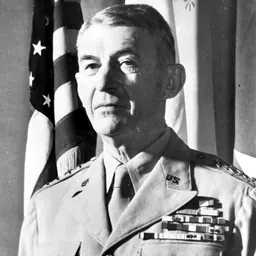
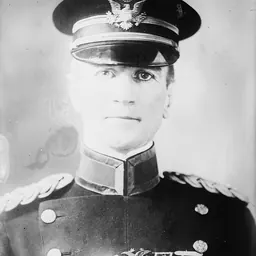



Related people
Same field, nearest in time


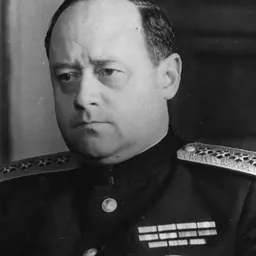


Contemporaries
People whose lives overlapped Rapp Brush's
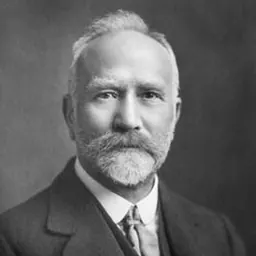



Frequently asked questions
Who was Rapp Brush?
American general (1889–1958)
When was Rapp Brush born?
Rapp Brush was born on 7 November 1889 in Fort D.A. Russell.
When did Rapp Brush die?
Rapp Brush died on 6 March 1958 in San Francisco.
What was Rapp Brush's occupation?
Rapp Brush was a military personnel.
Sources & further reading
Cite this page
APA: Biography.guide. (2026). Rapp Brush. https://biography.guide/rapp-brush/
MLA: "Rapp Brush." Biography.guide, https://biography.guide/rapp-brush/.
Chicago: "Rapp Brush." Biography.guide. https://biography.guide/rapp-brush/.
Data last updated: 2026-09-20 · Spot an error? Report a correction.
Page generated 2026-09-27 05:25 UTC