
About Ramiro Arrue
Lived 1892 – 1971 (aged 78). Ramiro Arrue was a Spanish painter.
Ramiro Arrue y Valle (20 May 1892 – 1 April 1971) was a Spanish Basque painter, illustrator and ceramist whose work is strongly associated with the Basque Country. He was a co-founder of the Musée Basque in Bayonne and is regarded as one of the most representative painters of the region.
Biography
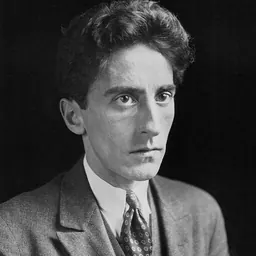
Ramiro Arrue was born in Bilbao, into an artistic family: his three older brothers, Alberto, Ricardo, and José, were also artists and frequently held joint exhibitions with him. He also had two sisters. Their father, Lucas Arrue, was an art collector who sold his collections (including a Goya) to pay for the artistic training of his sons. At the age of nineteen, Ramiro travelled to Paris to take courses at the Académie de la Grande Chaumière. Living in Montparnasse, he became an associate of his countrymen Ignacio Zuloaga and Paco Durrio, as well as the sculptor Antoine Bourdelle, who became a close friend. He was also associated with Picasso, Modigliani, and Jean Cocteau. In 1911, Arrue exhibited at the Salon des Artistes français.
In 1922, along with his friends Philip Veyrin and Commandant William Boissel, he founded the Musée Basque at Bayonne.
In 1925 Arrue won a gold medal at the Exposition Internationale des Arts Decoratifs. He exhibited in Bayonne, Pau, Strasbourg, Bilbao, and Cordoba. Along with his brother José, he travelled and exhibited in South America, to Buenos Aires and Montevideo. He often, however, returned to the Basque Country, particularly to Saint-Jean-de-Luz, where he settled in 1917 and where he found his main inspiration for landscapes, portraits, and everyday scenes. In 1929, he married Suzanne; they went on honeymoon in St. Tropez.
Arrue produced illustrations for Francis Jammes (La Noce basque), Pierre Loti (Ramuntcho), Joseph Peyré (Jean le basque), and Jean Poueigh (Le Folklore des Pays d'oc). He also designed sets and costumes for the Bordeaux Opera's production Perkain, and produced many murals.
In 1943, Ramiro Arrue, who had not become a naturalized French citizen, was arrested with other Spanish Basques and imprisoned in the fortress of Saint-Jean-Pied-de-Port. He resumed painting after the war.
The end of Arrue's life was marred by loneliness and financial hardship. He died in Saint-Jean-de-Luz in April 1971 of lung cancer.
Ramiro Arrue remains one of the most representative painters of the Basque Country. His style is figurative, featuring simple lines with an almost monumental quality and muted colour harmonies. The academic Hélène Saule-Sorbé wrote: "The colours of Ramiro Arrue's brush are a trilogy: green, white, red. The permanence of heraldry, a sign of belonging, the palette of a country of green hills, of bright white houses whose roofs and woodwork is red."
Don’t just read it —
keep it.
Full-length biographies made to live with: read them, listen on the way to work, watch them tonight.
- E-book
- Audio
- Video
Instant download · yours to keep · every purchase keeps this site free
Important facts
more
Ramiro Arrue y VallePeople in Ramiro Arrue's life
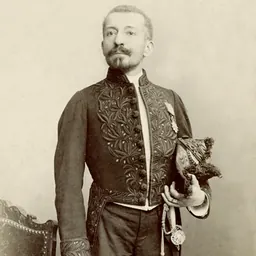
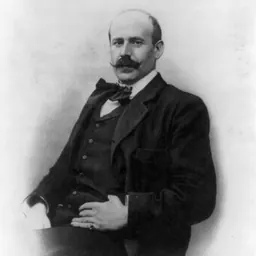
Named in this biography and alive at the same time


Related people
Same field, nearest in time


Contemporaries
People whose lives overlapped Ramiro Arrue's




Frequently asked questions
Who was Ramiro Arrue?
Spanish artist (1892-1971)
When was Ramiro Arrue born?
Ramiro Arrue was born on 20 May 1892 in Bilbao.
When did Ramiro Arrue die?
Ramiro Arrue died on 1 April 1971 in Saint-Jean-de-Luz.
What was Ramiro Arrue's occupation?
Ramiro Arrue was a painter.
What nationality was Ramiro Arrue?
Ramiro Arrue was Spanish.
Sources & further reading
Cite this page
APA: Biography.guide. (2026). Ramiro Arrue. https://biography.guide/ramiro-arrue/
MLA: "Ramiro Arrue." Biography.guide, https://biography.guide/ramiro-arrue/.
Chicago: "Ramiro Arrue." Biography.guide. https://biography.guide/ramiro-arrue/.
Data last updated: 2026-09-20 · Spot an error? Report a correction.
Page generated 2026-09-27 05:03 UTC