
About Ralph Wewitzer
Lived 1748 – 1825 (aged 77). Ralph Wewitzer was a British actor.
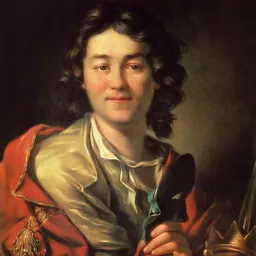
Ralph Wewitzer (1748–1825) was an English actor. He won critical acclaim in supporting parts, but was never given leading roles. He had a 44-year acting career, and is thought to have learned over 400 speaking parts.
Early roles at Covent Garden He was born on 17 December 1748 in Salisbury Street, Strand, London, to Peter and Ann Wewitzer; his parents were involved in the theatre, and his father was Swiss or Norwegian. He is identified by Gerald Reitlinger and Kalman Burnim as Jewish by background.
Wewitzer was once apprenticed to a jeweller. He made his first appearance at Covent Garden Theatre in May 1773 as Ralph in The Maid in the Mill, it is said for the benefit of his sister Sarah Wewitzer. On 21 November 1775 he was the original Lopez, a Spanish manservant in The Duenna by Richard Brinsley Sheridan. For 14 years he remained at Covent Garden.
Wewitzer had many parts, mainly as servants or similar, in minor comedies of Thomas Holcroft, John O'Keeffe, Pilon, and others. In Omar, or a Trip round the World, by O'Keeffe, with music by William Shield, produced at Covent Garden on 20 December 1785, Wewitzer delivered an effective harangue in what purported to be the language of a Polynesian chief.
Later life After the Drury Lane Theatre fire of 1809, Ralph Wewitzer went with the company to the Lyceum Theatre. There he was on 30 September 1811 the first La Fosse in Thomas Moore's M.P., or the Blue Stocking. On the reopening night of Drury Lane (10 October 1812) he was one of the gravediggers in Hamlet. Soon after this time his name disappeared from theatre bills.
Harriot Coutts after 1822 was left with Thomas's large fortune and bank partnership, but also with the hostility of Coutts's family from his first marriage. She was mercilessly lampooned.
In his later years, Wewitzer drew a pension from the Covent Garden fund. He died in poverty at lodgings in Wild Passage, Drury Lane, on 1 January 1825. His body was removed by his landlady, to whom he was in debt, from an expensive coffin supplied by his sister. Wewitzer played accented Jewish roles. On the other hand, Anthony (John Williams) wrote of Wewitzer suggesting his acting range was limited, but his performances masterly: Yet his Caius and clowns we may see and admire, And his Bellair, like glass, is engendered by fire. Frenchmen are free from unpleasant grimace, And his Jews you would swear were all born in Duke's Place. The last line may reference the central Dukes Place synagogue in the City of London.
Works Wewitzer wrote for the Haymarket Theatre The Gnome a pantomime acted in 1788 (not printed); and for the Covent Garden Theatre The Magic Cavern, a pantomime played 27 December 1784, published 1785. He also published:
Pedigree of King George III, lineally deduced from King Egbert 1812 A jest book, School for Wits, a Choice Collection of Bons Mots, Anecdotes, and other Poetical Jeux d'Esprit, 1815 Dramatic Reminiscences, by Ralph Wewitzer, Comedian Theatrical Pocket-book, or brief Dramatic Chronology, 1814 A brief Dramatic Chronology of Actors, &c., to which is added a Miscellaneous Appendix, 1817.
Family Wewitzer married, firstly, in Liverpool in 1776, Mary Daniels (they had one daughter), and secondly a Miss Brangin, in 1787.
Selected roles Lopez in The Duenna by Richard Brinsley Sheridan (1777) Charles in Know Your Own Mind by Arthur Murphy (1777) French servant in The Belle's Stratagem by Hannah Cowley (1780) Vandervelt in Duplicity by Thomas Holcroft (1781) Von Irkin in The World as it Goes by Hannah Cowley (1781) Le Gout in More Ways Than One by Hannah Cowley (1783) Squad in The Campaign by Robert Jephson (1785) Colonel Staff in Fashionable Levities by Leonard MacNally (1785) Count Pierpont in He Would Be a Soldier by Frederick Pilon (1786) Lord Bonton in The Ton by Eglantine Wallace (1788) Count Fripon in The Prisoner at Large by John O'Keeffe (1788) Pavot in The Toy by John O'Keeffe (1789) Corporal Smack in Cross Partners by Elizabeth Inchbald (1792) Barebones in The London Hermit by John O'Keeffe (1793) Tony in False Colours by Edward Morris (1793) Herbert in The Man of Ten Thousand by Thomas Holcroft (1796) Squire Abel in The Last of the Family by Richard Cumberland (1797) Mr Taunton in Knave or Not?by Thomas Holcroft (1798) Pedro in Aurelio and Miranda by James Boaden (1798) Friponeau in The East Indian by Matthew Lewis (1799) Lounge in Indiscretion by Prince Hoare (1800) Lapierre in Fashionable Friends by Mary Berry (1802) Bailiff in Hear Both Sidesby Thomas Holcroft (1803) Peter in The Land We Live In by Francis Ludlow Holt (1804) Abrahams in The Vindictive Manby Thomas Holcroft (1806)
Don’t just read it —
keep it.
Full-length biographies made to live with: read them, listen on the way to work, watch them tonight.
- E-book
- Audio
- Video
Instant download · yours to keep · every purchase keeps this site free
Important facts
People in Ralph Wewitzer's life
Named in this biography and alive at the same time
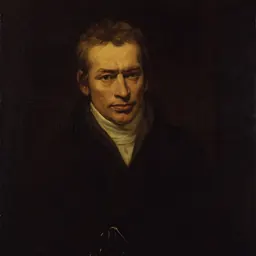
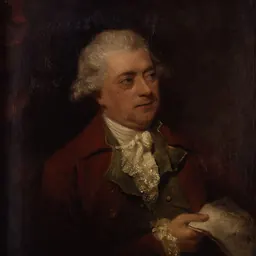

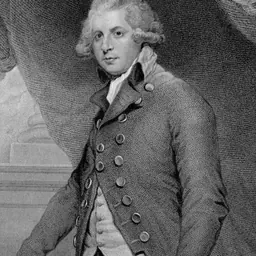



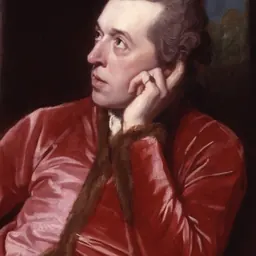
Related people
Same field, nearest in time


Contemporaries
People whose lives overlapped Ralph Wewitzer's




Frequently asked questions
Who was Ralph Wewitzer?
English actor
When was Ralph Wewitzer born?
Ralph Wewitzer was born on 17 January 1748.
When did Ralph Wewitzer die?
Ralph Wewitzer died on 17 January 1825.
What was Ralph Wewitzer's occupation?
Ralph Wewitzer was an actor.
What nationality was Ralph Wewitzer?
Ralph Wewitzer was British.
Sources & further reading
Cite this page
APA: Biography.guide. (2026). Ralph Wewitzer. https://biography.guide/ralph-wewitzer/
MLA: "Ralph Wewitzer." Biography.guide, https://biography.guide/ralph-wewitzer/.
Chicago: "Ralph Wewitzer." Biography.guide. https://biography.guide/ralph-wewitzer/.
Data last updated: 2026-09-20 · Spot an error? Report a correction.
Page generated 2026-09-27 05:24 UTC