
About Ralph LaPointe
Lived 1922 – 1967 (aged 45). Ralph LaPointe was an American baseball player.
Raoul Robert "Ralph" LaPointe (January 8, 1922 – September 13, 1967) was an American professional baseball player. In a playing career that spanned eight teams, ten years, and seven seasons, LaPointe played for the Philadelphia Phillies of Major League Baseball in 1947, and the St. Louis Cardinals in 1948. He was officially listed as standing and weighing .
Early life LaPointe was born on January 8, 1922, in Winooski, Vermont. He attended Winooski High School and then matriculated at the University of Vermont in 1941 He joined the military during World War II and served stateside until 1945, undertaking specialized linguistic training at Haverford College and serving three years at Camp Ritchie in Maryland. On May 28 of that year, LaPointe was involved in an incident in a game between the Blue Rocks and the Cleveland Indians-affiliated Harrisburg Senators, in which he ran into second baseman Dale Lynch after several players had been ejected for arguing with umpire Max Shindler. LaPointe also played a key role in the season's playoffs, where the Blue Rocks faced the Senators again; he hit a two-run home run with the Blue Rocks behind in the bottom of the ninth inning to score Joe Scheldt and give the Rocks the walk-off victory on their way to the 1946 league championship.
1947: Philadelphia Phillies and minor league Orioles LaPointe made the Phillies' Opening Day roster in the 1947 season, entering Philadelphia's first game of the year as a defensive replacement for starting second baseman Emil Verban. He notched his first major-league hit in his second appearance, a 5–2 loss to the Brooklyn Dodgers on April 23. His first major-league start, run scored, and run batted in (RBI) all came in the same contest, an 11–4 loss to the Pittsburgh Pirates on April 30 wherein LaPointe led off for Philadelphia and reached base once, by means of a walk. He played five games for the Phillies in May, including both halves of doubleheaders on May 4 and 8, including one in his first at-bat in Baltimore. —before hitting a walk-off home run in the ninth inning Between August 17 and 21, he hit safely 13 times in 30 at-bats, raising his average to .315 and scoring eight runs while batting in two over the stretch. Serving as a utility backup to regulars Marty Marion and Red Schoendienst, Although a three-hit performance on May 16 raised his average and a double, a single, and two RBI on May 19 helped his cause, his average was still a struggling .214 at the end of May and dropped below the Mendoza Line to .192 by the end of June, in which he only hit safely in one game. —including five sets of doubleheaders; he notched seven multi-hit games in the month, He raised his average to .213 by late July and amassed a seven-game hitting streak in mid-August—with four of those being two-hit contests—which raised his average as hit as .231. and finished the year batting .225 with 27 runs scored and 15 RBI in 87 games played.
Return to the minors LaPointe was assigned to the AAA-level Rochester Red Wings by St. Louis for the 1949 season. Although he had played in only one career game as a third baseman at the major-league level, As Rochester's primary leadoff hitter, After batting .270 in 68 games for the Tulsa Oilers of the Texas League in 1951, LaPointe retired from professional baseball. playing third base as the team finished second to the Québec Braves. He led the Catamounts within one game of the College World Series during the 1956 season, and was honored by both the Vermont Sportscasters and Sportswriters Association—for "outstanding contribution to Vermont sports" —and by the National Collegiate Athletic Association, who named him the Coach of the Year in 1967, his final season.
Death and legacy Less than two months after the conclusion of his final season, LaPointe died on September 13, 1967, dying of cancer. Thereafter, the university's baseball field house at Centennial Field was renamed the Ralph LaPointe Field House, which was restored and re-dedicated in 1988. LaPointe was elected to the American Baseball Coaches Association Hall of Fame in 1978 and named to Sports Illustrateds list of the top 50 athletes from Vermont in the 20th century in 1999. LaPointe was inducted into the Vermont Sports Hall of Fame in 2013.
Don’t just read it —
keep it.
Full-length biographies made to live with: read them, listen on the way to work, watch them tonight.
- E-book
- Audio
- Video
Instant download · yours to keep · every purchase keeps this site free
Important facts
People in Ralph LaPointe's life
Named in this biography and alive at the same time
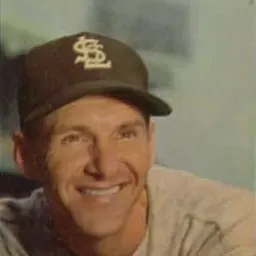
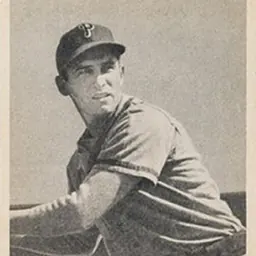

Related people
Same field, nearest in time

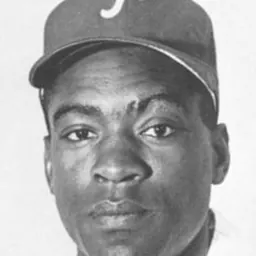
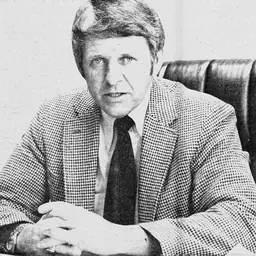
Contemporaries
People whose lives overlapped Ralph LaPointe's


Frequently asked questions
Who was Ralph LaPointe?
American baseball player and coach (1922–1967)
When was Ralph LaPointe born?
Ralph LaPointe was born on 8 January 1922 in Winooski.
When did Ralph LaPointe die?
Ralph LaPointe died on 13 September 1967 in Burlington.
What was Ralph LaPointe's occupation?
Ralph LaPointe was a baseball player.
What nationality was Ralph LaPointe?
Ralph LaPointe was American.
Sources & further reading
Cite this page
APA: Biography.guide. (2026). Ralph LaPointe. https://biography.guide/ralph-lapointe/
MLA: "Ralph LaPointe." Biography.guide, https://biography.guide/ralph-lapointe/.
Chicago: "Ralph LaPointe." Biography.guide. https://biography.guide/ralph-lapointe/.
Data last updated: 2026-09-20 · Spot an error? Report a correction.
Page generated 2026-09-27 05:00 UTC