
About Ralph H. Scott
Lived 1903 – 1989 (aged 85). Ralph H. Scott was an American politician, dairy farmer, legislator and businessperson.
Ralph Henderson Scott (December 12, 1903 – April 2, 1989) was an American politician and businessman.
Early life Ralph Scott was born on December 12, 1903, near Haw River, North Carolina, United States to Robert Walter Scott and Elizabeth Jessie Hughes Scott. He was the 11th of 14 children, and a younger brother of NC Governor Kerr Scott. In his youth Scott worked on his father's farm and participated in The Corn Club, a predecessor to 4-H.
Scott attended North Carolina State College (now NC State University). He graduated in 1924. He married Hazeleene Tate the following year and had three children with her. During the 1963 session the North Carolina General Assembly began sitting in the new North Carolina State Legislative Building. Scott, due to his seniority, was assigned an office with a view of the building grounds. When another legislator complain of his own small, windowless office, Scott traded places with him, and kept the smaller office through the rest of his Senate tenure. He became a leading critic of the Speaker Ban Law.
During the Democratic primaries of the 1964 North Carolina gubernatorial election, Scott supported progressive L. Richardson Preyer and frequently criticized conservative candidate Dan K. Moore. His criticism was so intense that his nephew Bob, who was running for the office of Lieutenant Governor and attempting remain neutral in the gubernatorial contest, had to issue a public statement distancing himself from Ralph.
In 1968 Bob Scott was elected Governor of North Carolina. Ralph used his position in the legislature to assist his nephew's agenda, and in returned asked for the governor to help grant favors to his constituents. Ralph's demands were so frequent that Bob once complained that "there is not a soul in jail from Alamance County" due to his interventions. During the 1969 legislative session, many legislators complained of the student unrest and introduced bills to increase penalties for student civil disobedience. Ralph Scott proposed the only bill that was supportive of the students, a measure which would establish their representation on the boards of trustees of state-supported schools. The bill failed to pass.
Scott was targeted by Republicans for his support of the governor's tobacco tax and narrowly won reelection by 13 votes in 1970. He shrugged aside the close contest, saying, "I got twelve more votes than I needed." In 1975 Scott chaired the Committee on Appropriations. In order to secure money for vocational rehabilitation projects for disabled persons, he appointed a subcommittee on the matter which met once and voted to recommend increased funding. He repeated this recommendation to the Senate and the appropriations were passed.
In 1977 Scott suffered a heart attack. Upon his return to the Senate floor, he said, "Hell is just as crowded as Central Prison. I can't get in." The following year he defeated Republican Cary D. Allred in his bid for reelection. However, Scott's political support in Alamance County continued to decline, as local farmers and mill workers increasingly supported the Republican Party. In 1979 he voted for ratification of the Equal Rights Amendment. Allred challenged Scott again in 1980, accusing him of impropriety for lobbying for the paving of an access road to a Holiday Inn hotel while he held stock in the company. Scott also fainted while attending a local school board meeting, prompting a bystander to call for medical assistance. Allred won the November election with 52% of the vote.
Later life In his later life Scott suffered from a series of minor strokes. He died on April 2, 1989, at the North Carolina Memorial Hospital in Chapel Hill. His funeral was held three days later and attended by hundreds of people, including many former state officials. Sanford dubbed him "the conscience of the legislature" while former Senator Robert Burren Morgan said that he had wielded as much influence "as any single individual ever in the state, including governors." Scott had prepared remarks to be read at his funeral, and they contained a story of an unnamed black tenant farmer who had voted in 1903 in Haw River to support a bond referendum, allowing it to succeed by one vote to establish funding for a local school. His gravestone's epitaph read, "A champion for those who had no champion."
Don’t just read it —
keep it.
Full-length biographies made to live with: read them, listen on the way to work, watch them tonight.
- E-book
- Audio
- Video
Instant download · yours to keep · every purchase keeps this site free
Important facts
People in Ralph H. Scott's life
Named in this biography and alive at the same time

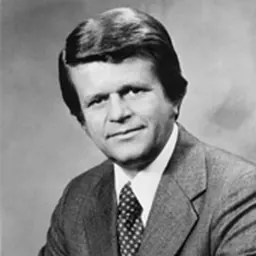
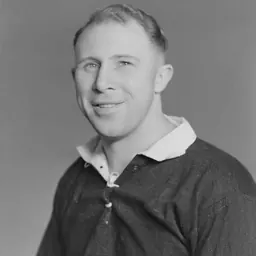
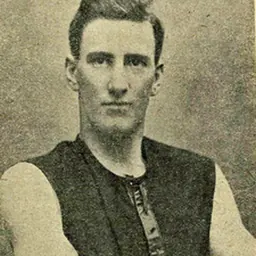
Related people
Same field, nearest in time






Contemporaries
People whose lives overlapped Ralph H. Scott's
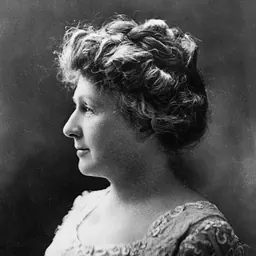
Frequently asked questions
Who was Ralph H. Scott?
American politician and businessman
When was Ralph H. Scott born?
Ralph H. Scott was born on 12 December 1903 in Alamance County.
When did Ralph H. Scott die?
Ralph H. Scott died on 2 April 1989.
What was Ralph H. Scott's occupation?
Ralph H. Scott was a politician, dairy farmer, legislator and businessperson.
What nationality was Ralph H. Scott?
Ralph H. Scott was American.
Sources & further reading
Cite this page
APA: Biography.guide. (2026). Ralph H. Scott. https://biography.guide/ralph-h-scott/
MLA: "Ralph H. Scott." Biography.guide, https://biography.guide/ralph-h-scott/.
Chicago: "Ralph H. Scott." Biography.guide. https://biography.guide/ralph-h-scott/.
Data last updated: 2026-09-20 · Spot an error? Report a correction.
Page generated 2026-09-27 05:24 UTC