
About Rajendrasinhji Jadeja
Lived 1899 – 1964 (aged 64–65). Rajendrasinhji Jadeja was an Indian military personnel.
General Maharaj Shri Rajendrasinhji Jadeja (15 June 1899 – 1 January 1964), also known as K.S. Rajendrasinhji, was the first Chief of Army Staff of the Indian Army after independence and the second Indian, after Field Marshal K. M. Cariappa.
Personal life Rajendrasinhji was born on 15 June 1899, at Sarodar in the Kathiawar region of what is now the western Indian state of Gujarat. The family belonged to the ruling Jadeja Rajput dynasty of Nawanagar State (now Jamnagar). K.S. Ranjitsinhji, uncle of K.S.Duleepsinhji, are two other cricketing luminaries produced by that family. He was a cousin of the Maharaja of Nawanagar State and held the royal title of Maharaj (younger brother or close cousin of the Maharaja). In 1928, Rajendrasinh wed Maya Kunwarba. The couple became the parents of three children. His son, Sukhdevsinhji, married the daughter of the ruler of Masuda, Rajkumari Vijaylakshmi Masuda. His youngest daughter was married to the Raja Sahib of the erstwhile princely state of Khairagarh in then Madhya Pradesh (present day Chhattisgarh). She was an MP of the Lok Sabha and a popular leader in her constituency.
Career Rajendrasinhji attended Rajkumar College, Rajkot, then at Malvern College. Having resolved upon pursuing a military career, he joined the Royal Military College, Sandhurst. In 1921, he was commissioned as a Second lieutenant onto the Unattached List for the Indian Army. He spent a year attached to the 3rd battalion the King's Royal Rifle Corps and then joined the Indian Army and was posted to the 2nd Royal Lancers. As a King's Commissioned Indian Officer, he held various ranks and offices in the British Indian Army and served with distinction during the Second World War.
General Rajendrasinhji became the first Indian to be deputed to serve as Military Attaché to Washington DC in 1945–46.
Second World War In 1941, Rajendrasinhji was sent to the Mediterranean and Middle East Theatre as a squadron commander of the 2nd Lancers. In April 1941, his brigade, the 3rd Indian Motor Brigade, was surrounded at Mechili by numerically superior Axis forces. Being encircled, the allied forces were left with no option but to hazard a headlong foray through the enemy forces, into the desert. Rajendrasinhji's squadron took the rearguard position during this operation. While the vanguard suffered much loss of life by a German tank attack, Rajendrasinhji's squadron was not seriously impacted. He led his squadron in a charge through the enemy ranks, and they gained respite in the safety of some nearby hills. The squadron essayed further action on the enemy forces after nightfall and achieved considerable success; indeed, it returned to base with sixty prisoners of war.
For his courageous leadership and determined action, Rajendrasinhji was awarded the Distinguished Service Order (DSO) in 1941. He was the first Indian to be honoured with this decoration during the Second World War.
Returning to India in October 1942, Rajendrasinhji was appointed commandant of 2 Royal Lancers in 1943. He was then appointed GOC-in-C Southern Command (1948–53), following the retirement of Lt. General E. N. Goddard. Operation Polo, which resulted in the integration of Hyderabad State with India, was executed during his term in office as GOC-in-C (South).
As the senior-most serving officer in the army, Gen. Rajendrasinhji was appointed Commander-in-Chief, Indian Army on 14 January 1953, following the retirement of General (later Field Marshal) K. M. Cariappa. Rajendrasinhji received the rank of General on the same day. With effect from 1 April 1955, the President of India was constitutionally designated the Commander-in-chief of the Indian Armed Forces. Rajendrasinhji then became the first head of the Indian army to be designated Chief of Army Staff. He held that office until his retirement from service on 14 May 1955 and was succeeded by Gen. S.M. Srinagesh.
Death General Maharaj Shri Rajendrasinhji died on 1 January 1964, aged 64 years.
Awards and decorations
Distinguished Service Order (1941)(First Indian to be awarded in WW2)India General Service Medal (1936–39) 1939–1945 Star Africa StarBurma Star War Medal 1939–1945 (with oak leaf for MID 1941)Defence Medal (1945) Indian Independence Medal (1947)King George V Silver Jubilee Medal (1935)King George VI Coronation Medal (1937)Queen Elizabeth II Coronation Medal (1953)Legion of Merit (1948)(Degree of an Officer)
Others Order of Yugoslavia Army Class I
Dates of rank
Don’t just read it —
keep it.
Full-length biographies made to live with: read them, listen on the way to work, watch them tonight.
- E-book
- Audio
- Video
Instant download · yours to keep · every purchase keeps this site free
Important facts
People in Rajendrasinhji Jadeja's life
Named in this biography and alive at the same time

Related people
Same field, nearest in time

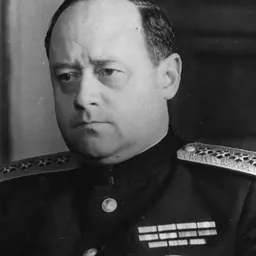




Contemporaries
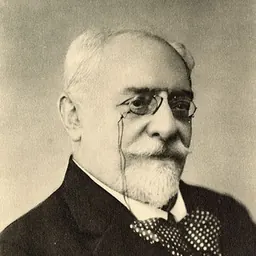
People whose lives overlapped Rajendrasinhji Jadeja's



Frequently asked questions
Who was Rajendrasinhji Jadeja?
High-ranking Indian military officer
When was Rajendrasinhji Jadeja born?
Rajendrasinhji Jadeja was born on 15 June 1899.
When did Rajendrasinhji Jadeja die?
Rajendrasinhji Jadeja died in 1964.
What was Rajendrasinhji Jadeja's occupation?
Rajendrasinhji Jadeja was a military personnel.
What nationality was Rajendrasinhji Jadeja?
Rajendrasinhji Jadeja was Indian.
Sources & further reading
· Wikipedia: Rajendrasinhji Jadeja
· DBpedia: Rajendrasinhji Jadeja
Cite this page
APA: Biography.guide. (2026). Rajendrasinhji Jadeja. https://biography.guide/rajendrasinhji-jadeja/
MLA: "Rajendrasinhji Jadeja." Biography.guide, https://biography.guide/rajendrasinhji-jadeja/.
Chicago: "Rajendrasinhji Jadeja." Biography.guide. https://biography.guide/rajendrasinhji-jadeja/.
Data last updated: 2026-09-20 · Spot an error? Report a correction.
Page generated 2026-09-27 05:28 UTC