
About Rais Amrohvi
Lived 1914 – 1988 (aged 74). Rais Amrohvi was a Pakistani and Indian journalist, philosopher and poet.
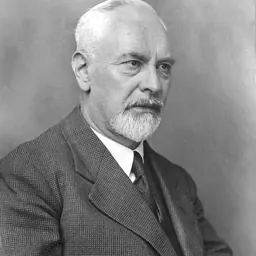
Syed Muhammad Mahdi (September 1914 – 22 September 1988), commonly known as Rais Amrohvi, was a Pakistani Urdu poet, paranormal investigator and psychoanalyst. He was known for his style of qatanigari (quatrain writing). He wrote quatrains for Pakistani newspaper Jang for several decade. He promoted the Urdu language and supported the Urdu-speaking people of Pakistan. His family is regarded as a family of poets. He was the elder brother of poet Jaun Elia.
The Sindh Assembly passed The Sind Teaching, Promotion and Use of Sindhi Language Bill, 1972 that created conflict and language violence in the regime of Prime Minister Zulfikar Ali Bhutto. Amrohvi wrote his famous poem Urdu ka janaza hai zara dhoom say niklay (It's Urdu's funeral, make it befitting!). He also intended to translate the Bhagavad Gita into standard Urdu.
He was also a scriptwriter, one of the movies he wrote being Waqt Ki Pukar (1967), a spy thriller about a journalist, based on his brother Muhammad Taqi, exposing anti-state elements and which anticipated the 1971 Bangladesh separation.
Biography Amrohvi was born on 12 September 1914 to a Shia Muslim family in Amroha, India. His father, Shafiq Hasan, was a scholar of literature and astronomy well-versed in the Arabic, English, Persian, Hebrew and Sanskrit languages, and who corresponded with leading intellectuals. He migrated to Pakistan on 19 October 1947 and settled in Karachi. He was known for his style of Qatanigari (quatrain writing). For several decades he published quatrains for Pakistan's daily newspaper, Jang. He was also a supporter of the Urdu language and the Urdu-speaking people of Pakistan. He established an institution Raees Academy where writers were trained in emotional and moral values. He was assassinated by virtue of his faith on 22 September 1988 by an extremist religious militant group.
Publications Poetry
Alif Masnavi Lala-e-Sehra (1956) Pase Ghubar (1969) Qattat - I (1969) Qattat - II (1969) Hikayaat (1975) Ba-Hazrat-e-Yazdaan (1984) Malboos-e-Bahar (1983) Aasaar (1985) Kulliyat Naseemus sahar Zameer e khama
Other Muraqabah Ma'badun-Nafsiyaat (Parapsychology) Nafseyaat-o-Mabaad-an-Nafseyaat (3 vols) Ajaib-e-Nafs (4 vols) Le Sans Bhi Ahista (2 vols) Jinseyaat (2 vols) Aalam-e-Barzagh (2 vols) Hazraat-e-Arwah Hypnotism "Tawajjuhaat" (2 volumes) "Jinnaat" (2 volumes) "Aalam-e-Arwah" (2 volumes) Almiye e mashraqi Pakistan Achche Mirza Ana minal husain
Don’t just read it —
keep it.
Full-length biographies made to live with: read them, listen on the way to work, watch them tonight.
- E-book
- Audio
- Video
Instant download · yours to keep · every purchase keeps this site free
Important facts
People in Rais Amrohvi's life
Named in this biography and alive at the same time


Related people
Same field, nearest in time




Contemporaries
People whose lives overlapped Rais Amrohvi's


Frequently asked questions
Who was Rais Amrohvi?
Pakistani poet (1914-1988)
When was Rais Amrohvi born?
Rais Amrohvi was born on 12 September 1914 in Amroha.
When did Rais Amrohvi die?
Rais Amrohvi died on 22 September 1988 in Karachi.
What was Rais Amrohvi's occupation?
Rais Amrohvi was a journalist, philosopher and poet.
What nationality was Rais Amrohvi?
Rais Amrohvi was Pakistani and Indian.
Sources & further reading
Cite this page
APA: Biography.guide. (2026). Rais Amrohvi. https://biography.guide/rais-amrohvi/
MLA: "Rais Amrohvi." Biography.guide, https://biography.guide/rais-amrohvi/.
Chicago: "Rais Amrohvi." Biography.guide. https://biography.guide/rais-amrohvi/.
Data last updated: 2026-09-22 · Spot an error? Report a correction.
Page generated 2026-09-27 05:04 UTC