
About Ragnar Nurkse
Lived 1907 – 1959 (aged 51). Ragnar Nurkse was an Estonian and American economist.
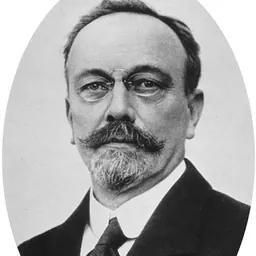
Ragnar Wilhelm Nurkse (5 October 1907, Käru, Estonia – 6 May 1959, Le Mont-Pèlerin, Switzerland) was an Estonian-American economist and policy maker mainly in the fields of international finance and economic development. He is considered the pioneer of Balanced Growth Theory.
Life Ragnar Nurkse was born in Käru village, in the then Governorate of Livonia of the former Russian Empire (now in Järva County, Estonia), son of an Estonian father who worked himself up from lumberjack to estate manager, and an Estonian-Swedish mother. His parents emigrated to Canada in 1928.
After finishing primary school, Nurkse attended the Domschule zu Reval in Tallinn, the most prestigious, German-language secondary school in the city, from where he graduated with higher honors in 1926. He continued his education at the law and economics' departments of the University of Tartu in 1926–1928, and then in economics at the University of Edinburgh. He graduated with a first class degree in economics, under professor Frederick Ogilvie, in 1932. He earned a Carnegie Fellowship to study at the University of Vienna from 1932 to 1934.
Nurkse served in the Economic and Financial Organization of the League of Nations from 1934 to 1945, working in the Financial Section and Economic Intelligence Service. He was the financial analyst and was largely responsible for the annual Monetary Review. He was also involved with the publication of The Review of World Trade, World Economic Surveys, and the report of the Delegation on Economic Depressions entitled "The Transition from War to Peace Economy". Nurke authored the 1935 monograph Internationale Kapitalbewegungen on international capital movements. He was influential for his criticism of floating exchange rates, which he argued were at fault for the economic crises of the interwar period. According to Nurkse, floating exchange rates were subject to "cumulative and self-aggravating movements".
For his 100th anniversary on 5 October 2007, the Estonian Postal Service commemorated Nurkse with an international letter stamp. A stone monument with a plaque was also unveiled across the house he was born in Käru. He was also honored earlier in 2007 by the inauguration of a Lecture Series by the Bank of Estonia and an international conference by Tallinn University of Technology's Technology Governance program. An economics professorship at Columbia is named in his honor . In 2013, Tallinn University of Technology named one of its departments in honor of him: The Ragnar Nurkse Department of Innovation and Governance.
Work
Nurkse is one of the founding fathers of Classical Development Economics. Together with Rosenstein-Rodan and Mandelbaum, he promoted a 'theory of the big push', emphasized the role of savings and capital formation in economic development, and argued that poor nations remained poor because of a 'vicious circle of poverty'. Among his major works are International Currency Experience: Lessons of the Interwar Period (1944), the foundation of the Bretton Woods Agreement, Conditions of International Monetary Equilibrium (1945), and Problems of Capital Formation in Underdeveloped Countries (1953).
Private life Ragnar Nurkse married Harriet Berger of Englewood, New Jersey, in 1946, and they had two sons. One of them is the poet Dennis Nurkse.
Don’t just read it —
keep it.
Full-length biographies made to live with: read them, listen on the way to work, watch them tonight.
- E-book
- Audio
- Video
Instant download · yours to keep · every purchase keeps this site free
Important facts
People in Ragnar Nurkse's life
Named in this biography and alive at the same time


Related people
Same field, nearest in time



Contemporaries
People whose lives overlapped Ragnar Nurkse's


Frequently asked questions
Who was Ragnar Nurkse?
American-Estonian economist (1907-1959)
When was Ragnar Nurkse born?
Ragnar Nurkse was born on 5 October 1907 in Käru.
When did Ragnar Nurkse die?
Ragnar Nurkse died on 6 May 1959 in Vevey.
What was Ragnar Nurkse's occupation?
Ragnar Nurkse was an economist.
What nationality was Ragnar Nurkse?
Ragnar Nurkse was Estonian and American.
Sources & further reading
Cite this page
APA: Biography.guide. (2026). Ragnar Nurkse. https://biography.guide/ragnar-nurkse/
MLA: "Ragnar Nurkse." Biography.guide, https://biography.guide/ragnar-nurkse/.
Chicago: "Ragnar Nurkse." Biography.guide. https://biography.guide/ragnar-nurkse/.
Data last updated: 2026-09-20 · Spot an error? Report a correction.
Page generated 2026-09-27 05:22 UTC