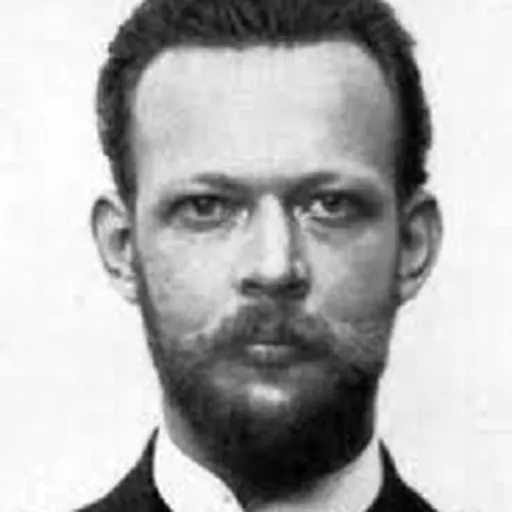
Ragnar Berg
Swedish biochemist who lived in Germany and promoted the importance of minerals and acid-base balance in diet
About Ragnar Berg
Lived 1873 – 1956 (aged 82). Ragnar Berg was a Swedish and German nutritionist, chemist, biochemist and nutritional scientist.
Ragnar Berg (September 1, 1873 – March 31, 1956) was a Swedish-born biochemist and nutritionist who worked most of his adult life in Germany. He is best known for his theories on the importance of acid-base balance and inorganic minerals like calcium in the diet; later in life he endorsed vegetarianism and ways to prolong the human life span. He promoted an alkaline rich diet and also invented the alkaline dietary supplement Basica, which Volkmar Klopfer manufactured and marketed from 1925.
Biography
Ragnar Berg was the son of the respected Swedish historian and archaeologist Wilhelm Berg (1839-1915) and his first wife, Ulrika Charlotta Emerentia "Emy" Gumaelius (1846-1902). He married Ella Buscher in 1902, and they had two sons, Gunnar Wilhelm Emil (1907-1974) and Alf Ragnar Wilhelm (1912-1994).
Berg was recruited by Karl Lingner to the Dresden Center for Dental Hygiene (Zentralstelle für Zahnhygiene) in 1902, where he met dentist Carl Röse (1864–1947), his long-time experimental partner. From 1909 to 1921 Berg headed the physiology lab at the homeopathic sanatorium founded by Heinrich Lahmann at Weisser Hirsch near Dresden, researching vitamins, trace elements and the metabolism of minerals. Berg continued conducting experiments on himself and analyzing foodstuffs from a home laboratory. From 1927 to 1932, he headed his own nutrition department at the Dresden-Friedrichstadt Hospital. In 1934, he became head of the nutrition department at the Rudolf Hess Hospital in Dresden. However, his funding ran out two years later. Only during the 1940s was he able to get federal funds for his "war-related" work. Berg belonged to the Nazi Party's Main Office for People's Health. The book has been cited as one of the earliest on vitamin research in Europe. It has a huge bibliography of 1500 entries.
Although the term "vitamins" was included in the title of the book, Berg did not like this term. They relied on the work of Ernst Leopold Salkowski, who published results in the 1870s that suggested inorganic acids could only be excreted by the kidneys if neutralized by inorganic bases. If the acids remained in the body, they would accumulate in areas of low blood flow (like joints), thereby obstructing normal physiological function. The model disease was gout, but Berg traced many other "diseases of civilization" to acid-base imbalance, including obesity, arthritis, and diabetes.
Because the body produces more acids than bases, concluded Berg, the best source of bases was the diet. If the diet was too acidic, then the body would break down proteins for the ammonia. This prevented the body from getting the full caloric and nitrogen value of the protein and produced abnormal intermediate metabolites. Moreover, a more basic diet reduced the need for protein. The following chart classifies foods according to Berg's theory and analyses.
Acidic foods Basic foods meat, eggs, grains, bread, butter and other fats, beer, nuts, seeds milk, potatoes, most fruits, most vegetables, coffee, tea, cocoa, soy
Berg promoted an alkaline rich diet. In the early 1930s Berg met Gayelord Hauser. They authored the book Dictionary of Foods, in 1932.
Vegetarianism
In the 1930s and 1940s, Berg teamed up with Are Waerland to promote vegetarianism and ways to prolong life.
In 1933, at the meeting of the International Vegetarian Union (IVU) in Switzerland, Nazism was criticized. Berg was invited to participate at the IVU 1935 meeting in Denmark but he refused due to its anti-Nazi stance.
Selected publications
(with Martin Vogel) Die Grundlagen einer richtigen Ernährung, Dresden, 1907 Der Einfluss des Abbrühens auf den Nährwert unserer Gemüsekost, Dresden, 1911 Die Nahrungs- und Genussmittel, ihre zusammensetzung und ihr Einfluss auf die Gesundheit, mit besonderer Berücksichtigung der Aschenbestandteile, Dresden: Holze & Pahl, 1913 Die Vitamine: kritische Übersicht der Lehre von den Ergänzungsstoffen, Leipzig: Hirzel, 1922. Translated by Cedar and Eden Paul as Vitamins: A Critical Survey of the Theory of Accessory Food Factors. New York: A.A. Knopf, 1923. Eiweissbedarf und Mineralstoffwechsel bei einfachster Ernährung, Leipzig: S. Hirzel, 1931 (with Gayelord Hauser) Dictionary of Foods, New York: Tempo Books, 1932
Don’t just read it —
keep it.
Full-length biographies made to live with: read them, listen on the way to work, watch them tonight.
- E-book
- Audio
- Video
Instant download · yours to keep · every purchase keeps this site free
Important facts
People in Ragnar Berg's life
Named in this biography and alive at the same time



Related people
Same field, nearest in time


Contemporaries
People whose lives overlapped Ragnar Berg's


Frequently asked questions
Who was Ragnar Berg?
Swedish biochemist who lived in Germany and promoted the importance of minerals and acid-base balance in diet
When was Ragnar Berg born?
Ragnar Berg was born on 1 September 1873 in Gothenburg.
When did Ragnar Berg die?
Ragnar Berg died on 31 March 1956 in Borstel.
What was Ragnar Berg's occupation?
Ragnar Berg was a nutritionist, chemist, biochemist and nutritional scientist.
What nationality was Ragnar Berg?
Ragnar Berg was Swedish and German.
Sources & further reading
Cite this page
APA: Biography.guide. (2026). Ragnar Berg. https://biography.guide/ragnar-berg/
MLA: "Ragnar Berg." Biography.guide, https://biography.guide/ragnar-berg/.
Chicago: "Ragnar Berg." Biography.guide. https://biography.guide/ragnar-berg/.
Data last updated: 2026-09-22 · Spot an error? Report a correction.
Portrait: Wikimedia Commons · author & licence
Page generated 2026-09-27 05:00 UTC