
Raffaele Aversa
Italian officer and partisan
About Raffaele Aversa
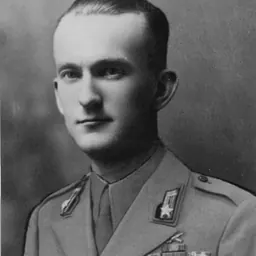
Lived 1906 – 1944 (aged 37). Raffaele Aversa was an Italian fronte Clandestino di Resistenza dei Carabinieri and partisan.
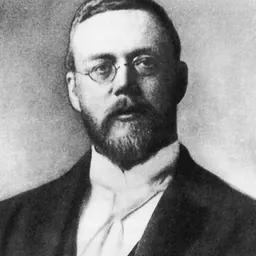
Raffaele Aversa (2 September 1906 – 24 March 1944) was an Italian soldier and Resistance member, most notable for having carried out the arrest of Benito Mussolini after his dismissal as Prime Minister of Italy on 25 July 1943.
Biography
Aversa was born in Labico on 2 September 1906, the son of Alfonso Aversa, commander of the local Carabinieri station, and Mariolina Aquino. After attending the "Pietro Colletta" Lyceum of Avellino, in December 1924 he enlisted in the Carabinieri, attending the Carabinieri School of Rome, and then serving as a non-commissioned officer in Florence. In October 1930 he enrolled in the Royal Military Academy of Modena to attend a special course, at the end of which he was commissioned with the rank of second lieutenant of the Carabinieri, on 1 March 1932. He was later promoted to lieutenant and in 1935 he was sent to East Africa, where he fought in the Second Italo-Ethiopian War. Assigned to the 390th Mobilized Carabinieri Section, he remained in Italian East Africa from 23 August 1935 to 29 May 1937.
In 1941, during the Second World War, he was promoted to captain. In March 1942 he was sent to the Eastern Front, attached to the 3rd Bersaglieri Regiment which was part of the 3rd Cavalry Division Principe Amedeo Duca d'Aosta of the CSIR; he was subsequently awarded a War Cross of Military Valor. In March 1943 he returned to Italy to take command of the "Compagnia Tribunali" of the Carabinieri of Rome.
After the fall of the Fascist regime, on 25 July 1943, together with Captain Paolo Vigneri, Aversa arrested Benito Mussolini, acting on the orders of Lieutenant Colonel Giovanni Frignani.
On 7 October 1943, however, Aversa was forced to go into hiding after the new Fascist authorities attempted to have him arrested. He then devoted himself to organizing the Clandestine Resistance Front of the Carabinieri, under the leadership of General Filippo Caruso and in liaison with Colonel Giuseppe Cordero Lanza di Montezemolo of the Clandestine Military Front.
On 23 January 1944 he was arrested by the German police, together with Lieutenant Colonel Frignani and Major Ugo de Carolis. Imprisoned in the SS prison of Via Tasso, he was tortured for two months for information about the Resistance, but did not talk, and on 23 March 1944 he was shot in the Fosse Ardeatine massacre. He was posthumously awarded the Gold Medal of Military Valour.
Don’t just read it —
keep it.
Full-length biographies made to live with: read them, listen on the way to work, watch them tonight.
- E-book
- Audio
- Video
Instant download · yours to keep · every purchase keeps this site free
Important facts
People in Raffaele Aversa's life
Named in this biography and alive at the same time




Contemporaries
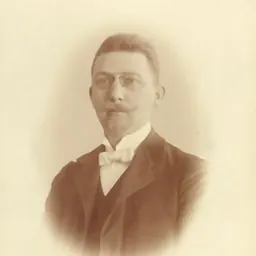
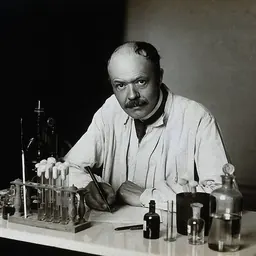
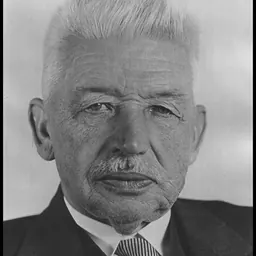
People whose lives overlapped Raffaele Aversa's


Frequently asked questions
Who was Raffaele Aversa?
Italian officer and partisan (1906–1944)
When was Raffaele Aversa born?
Raffaele Aversa was born on 2 September 1906 in Labico.
When did Raffaele Aversa die?
Raffaele Aversa died on 24 March 1944 in Rome.
What was Raffaele Aversa's occupation?
Raffaele Aversa was a fronte Clandestino di Resistenza dei Carabinieri and partisan.
What nationality was Raffaele Aversa?
Raffaele Aversa was Italian.
Sources & further reading
Cite this page
APA: Biography.guide. (2026). Raffaele Aversa. https://biography.guide/raffaele-aversa/
MLA: "Raffaele Aversa." Biography.guide, https://biography.guide/raffaele-aversa/.
Chicago: "Raffaele Aversa." Biography.guide. https://biography.guide/raffaele-aversa/.
Data last updated: 2026-09-20 · Spot an error? Report a correction.
Page generated 2026-09-27 05:16 UTC