
About Giovanni Frignani
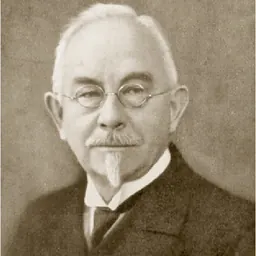
Lived 1897 – 1944 (aged 46). Giovanni Frignani was an Italian military personnel and partisan.
Giovanni Frignani (8 April 1897 – 24 March 1944) was an Italian soldier and Resistance member, most notable for his role in the arrest of Benito Mussolini after his dismissal as Prime Minister of Italy on 25 July 1943, in the arrest and death of Ettore Muti, and in the Roman Resistance after the Armistice of Cassibile.
Biography
He was born in Ravenna on April 8, 1897, the son of Angelo Frignani and Gemma Salini. With the entry of the Kingdom of Italy into World War I, on 24 May 1915, he volunteered in the Royal Italian Army, joining the 52nd Battalion of the National Corps of Volunteer Cyclists. On the following year he was admitted to the officer cadet course at the Royal Military Academy of Modena, graduating with the rank of second lieutenant and being assigned to the 28th Infantry Regiment of the Pavia Infantry Brigade. After promotion to lieutenant, in June 1918 he distinguished himself in the Second Battle of the Piave River, earning a Bronze Medal of Military Valor. After the Armistice of Villa Giusti, he was made commander of garrison of Dambel.
In November 1919 he was transferred to the Carabinieri, serving as commander of the Carabinieri stations of Parma and Medicina; in 1929 he was promoted to captain and transferred to Rome, where he was assigned to the Servizio Informazioni Militare until 1934, carrying out intelligence operations. He was later promoted to major and appointed head of the intelligence service of the Army Corps; then commander of the Carabinieri Company that guarded the tribunals in Rome, and finally of the Internal Carabinieri Group of Rome. In this capacity, during the late 1930s and early 1940s he gathered information about the political and social situation in the capital, which he passed on to his superior Riccardo Moizo, who in turn related to the king and government. In 1942 he was promoted to lieutenant colonel, carrying out important counterintelligence tasks. In June 1943 he informed Mussolini that he had come into possession of a secret German document which showed that Hitler considered Italy to be an occupation zone; Mussolini ordered his transfer to France, which however did not take place due to delaying action by General Azolino Hazon, the commander-general of the Carabinieri. In the summer of 1943 Frignani was in command of the Carabinieri of Rome, and on 25 July, after the vote of no confidence against Mussolini by the Grand Council of Fascism, he oversaw the arrest of Mussolini, on the orders of King Victor Emmanuel III.
Don’t just read it —
keep it.
Full-length biographies made to live with: read them, listen on the way to work, watch them tonight.
- E-book
- Audio
- Video
Instant download · yours to keep · every purchase keeps this site free
Important facts
People in Giovanni Frignani's life
Named in this biography and alive at the same time


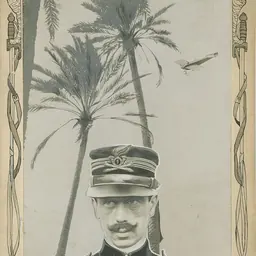

Related people
Same field, nearest in time

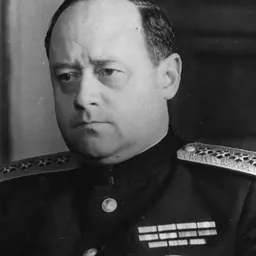


Contemporaries
People whose lives overlapped Giovanni Frignani's
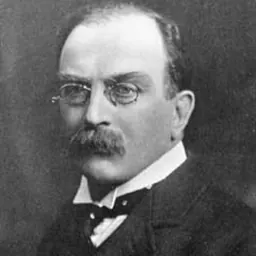

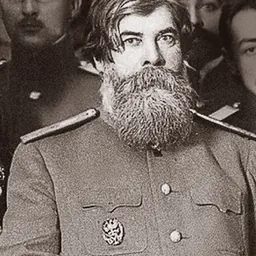

Frequently asked questions
Who was Giovanni Frignani?
Italian soldier and Resistance member (1897–1944)
When was Giovanni Frignani born?
Giovanni Frignani was born on 8 April 1897 in Ravenna.
When did Giovanni Frignani die?
Giovanni Frignani died on 24 March 1944 in Rome.
What was Giovanni Frignani's occupation?
Giovanni Frignani was a military personnel and partisan.
What nationality was Giovanni Frignani?
Giovanni Frignani was Italian.
Sources & further reading
· Wikipedia: Giovanni Frignani
Cite this page
APA: Biography.guide. (2026). Giovanni Frignani. https://biography.guide/giovanni-frignani/
MLA: "Giovanni Frignani." Biography.guide, https://biography.guide/giovanni-frignani/.
Chicago: "Giovanni Frignani." Biography.guide. https://biography.guide/giovanni-frignani/.
Data last updated: 2026-09-20 · Spot an error? Report a correction.
Page generated 2026-09-27 05:33 UTC