
About Rafael Antonio Gutiérrez
Lived 1845 – 1921 (aged 75). Rafael Antonio Gutiérrez was a Salvadoran politician and military personnel.
Rafael Antonio Gutiérrez (24 October 1845 – 9 January 1921) was the 17th president of El Salvador from 10 June 1894 to 13 November 1898. He was a leader of the Revolution of the 44 which overthrew President General Carlos Ezeta from April to June 1894. Gutiérrez served as provisional president until being officially inaugurated in March 1895 after his victory in the 1895 presidential election, in which he was the only candidate.
During his four-year presidency, Gutiérrez settled land disputes, attempted to combat an economic crisis, and was a key figure in the foundation of the short-lived Greater Republic of Central America. He was overthrown on 13 November 1898 by General Tomás Regalado. Gutiérrez's overthrow subsequently lead to a revolt in Izalco the following day and the dissolution of the Greater Republic of Central America on 29 November 1898.
Early and personal life
Rafael Antonio Gutiérrez was born in Ilobasco, Cabañas, El Salvador, on 24 October 1845. His father was a Spaniard and his mother was Marcela Gutiérrez. Gutiérrez was an idealist liberal.
In May 1885, Gutiérrez supported Divisional General Francisco Menéndez in a revolution which overthrew President Rafael Zaldívar and installed Menéndez as president of El Salvador. During the coup, Gutiérrez led indigenous Salvadoran soldiers in Nahuizalco.
Presidency
Rise to power
On 29 April 1894, Gutiérrez, along with several other military officers, began a rebellion against President Carlos Ezeta, a pragmatic reformist, who had allowed a financial crisis to arise. With assistance from Guatemala, Honduras, and Nicaragua, Ezeta was overthrown on 9 June 1894 in what is known as the Revolution of the 44.
After a rivalry and struggle with General Manuel Rivas for the presidency, in which Rivas conceded to Gutiérrez, he became provisional president of the nation on 10 June 1894. He revived the University Council that was abolished during Ezeta's presidency. El Salvador faced an economic crisis in 1897. In response, Gutiérrez took "extreme fiscal policies" to combat the crisis. Those policies included the construction of a railroad from San Miguel to La Unión and another from San Salvador to Nejapa. Prior to the crisis, he had also constructed a rail line from Ateos to La Joya in 1895 and from La Joya to Santa Ana in 1896. His policies, however, were unpopular, and his government was blamed for the poor handling of the crisis.
He faced protests from university students because of the economic crisis, and as a result, he had the university expel any students who spoke out against him or university officials. On 28 September 1898, he issued a decree that would grant the university more autonomy from the government and was signed by Minister of Public Instruction Francisco Gavidia, but the bill never went into effect.
Central American union and overthrow
Gutiérrez was a supporter of a Central American union and signed the Pact of Amapala with Honduras and Nicaragua on 20 June 1895 which established the Greater Republic of Central America. The union did not last long, however, as he was overthrown in a coup d'état led by General Tomás Regalado, a pragmatic liberal who had helped him rise to power in 1894, on 13 November 1898. Regalado overthrew Gutiérrez as he intended to rig the upcoming presidential election so that he could continue serving as president. Gutiérrez and some supporters fled to Honduras, and the 1898 coup was the last where a political rival deposed El Salvador's incumbent president.
The day following Gutiérrez's overthrow, Indians in Izalco staged a revolt against the Salvadoran government. The overthrow of Gutiérrez eventually lead to the collapse of the Greater Republic of Central America on 29 November 1898.
Later life and death
Gutiérrez stood for election for the presidency in 1907 but received only one vote. Gutiérrez died on 9 January 1921, aged 75, at 10:00 p.m. in Barrio San Jacinto, San Salvador, El Salvador. He was buried the following day at the Cemetery of Distinguished Citizens with full honors and President Jorge Meléndez declared three days of national mourning.
Electoral history
Year Office Type Party Main opponent Party Votes for Gutiérrez Result Swing Total % . 1895 President of El Salvador General Liberal "Against" 61,080 99.85 1st N/A Hold 1907 President of El Salvador General Liberal Fernando Figueroa Liberal 1 0.00 9th –99.85 Hold
Don’t just read it —
keep it.
Full-length biographies made to live with: read them, listen on the way to work, watch them tonight.
- E-book
- Audio
- Video
Instant download · yours to keep · every purchase keeps this site free
Important facts
People in Rafael Antonio Gutiérrez's life
Named in this biography and alive at the same time
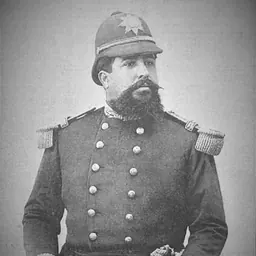

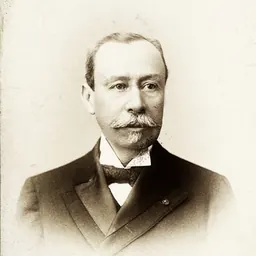

Related people
Same field, nearest in time






Contemporaries
People whose lives overlapped Rafael Antonio Gutiérrez's
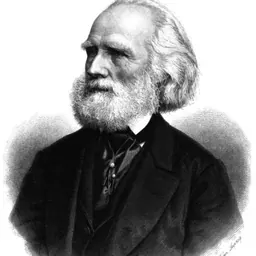
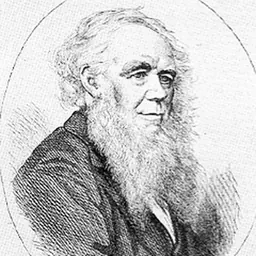


Frequently asked questions
Who was Rafael Antonio Gutiérrez?
President of El Salvador (1845-1921)
When was Rafael Antonio Gutiérrez born?
Rafael Antonio Gutiérrez was born on 24 October 1845 in Ilobasco.
When did Rafael Antonio Gutiérrez die?
Rafael Antonio Gutiérrez died on 9 January 1921 in San Salvador.
What was Rafael Antonio Gutiérrez's occupation?
Rafael Antonio Gutiérrez was a politician and military personnel.
What nationality was Rafael Antonio Gutiérrez?
Rafael Antonio Gutiérrez was Salvadoran.
Sources & further reading
· Wikipedia: Rafael Antonio Gutiérrez
· DBpedia: Rafael Antonio Gutiérrez
Cite this page
APA: Biography.guide. (2026). Rafael Antonio Gutiérrez. https://biography.guide/rafael-antonio-gutierrez/
MLA: "Rafael Antonio Gutiérrez." Biography.guide, https://biography.guide/rafael-antonio-gutierrez/.
Chicago: "Rafael Antonio Gutiérrez." Biography.guide. https://biography.guide/rafael-antonio-gutierrez/.
Data last updated: 2026-09-25 · Spot an error? Report a correction.
Page generated 2026-09-27 05:10 UTC