
About R. Shamasastry
Lived 1868 – 1944 (aged 75–76). R. Shamasastry was an Indian librarian.
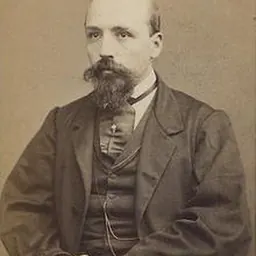
Rudrapatna Shamasastry (1868–1944) was a Sanskrit scholar and librarian at the Oriental Research Institute Mysore. He re-discovered and published the Arthashastra, an ancient Indian treatise on statecraft, economic policy, and military strategy.
Early life Shamasastry was born in 1868 in Rudrapatna, a village on the banks of the Kaveri river in what is today the state of Karnataka. His early education started in Rudrapatna. He later went to the Mysore Samskruta Patasala and obtained his Sanskrit Vidwat degree with high honours. In 1889, Madras University awarded him a BA degree. Impressed by his ability in classical Sanskrit, Sir Sheshadri Iyer, the then Dewan of Mysore State, nurtured and helped Shamasastry, making it possible for him to join the Government Oriental Library in Mysore as a librarian. He "had mastered Vedas, Vedanga, classical Sanskrit, Prakrit, English, Kannada, German, French and other languages." Shamasatry further completed his PhD.
The Arthashastra The Oriental Research Institute was established as the Mysore Oriental Library in 1891. It houses thousands of Sanskrit palm-leaf manuscripts. As a librarian, Shamasastry examined these fragile manuscripts daily to determine and catalogue their contents. The original manuscript's condition is tenuous, as indicated by S.A Krishnaiah, a member of the Mysore Oriental Research Institute (MRI) committee .
The manuscript was in the Early Grantha script. Other copies of the Arthashastra were discovered later in other parts of India.
It was one of the manuscripts in the library that had been handed over by a pandit from Tanjore district to the Oriental Library.
Until this discovery, the Arthashastra was known only through references to it in works, including those by Dandin, Bana, Vishnusarma, Mallinathasuri, Megasthenes, as well as others. This discovery was "an epoch-making event in the history of the study of ancient Indian polity". It altered the perception of ancient India and changed the course of history studies, notably the false belief of European scholars at the time that Indians learnt the art of administration from the Greeks. Eclipse-Cult in the Vedas, Bible, and Koran – A supplement to the Drapsa. It is this Cult which gave rise to the Epic and Puranic tales in India. The mathematical aspect of eclipse-cycles is treated at great length and eclipse-tables have been appended. Dr. E. Abegg, Professor, University of Zurich, Switzerland, stated- 'I see with admiration that R Shamasatry is a thorough scholar in the difficult problems of Vedic Astronomy and Calendars, things which European Indianists have very rarely true Knowledge of' Gavam Ayana - The Vedic Era - is an exposition of a forgotten sacrificial calendar of the Vedic poets and includes an account of the origin of the Yugas. Evolution of Indian Polity. This book is a compilation of ten lectures delivered at Calcutta University. Sir Asutosh Mookerjee, Vice-chancellor of Calcutta University, personally invited Sastry to deliver these lectures. In this work, the ancient Indian administrative systems and various levels of administrative set-up were critically examined, on the basis of Vedas, legends, Arthashastra, Mahabharata, Jainagama works etc. The Origin of Devanagari Alphabets.
All his works received great attention from many great Scholars around the world, particularly European Indologists.
R. Shamasastry also edited many Kannada Texts. Some of the important works he published are: Rudrabhaṭṭa's Jagannāthavijaya (1923) Nayasena's Dharmāmṛta (part I in 1924 & part II 1926) Lingannakavi's Keḷadinṛpavijaya (1921) Govindavaidya's Kaṇṭhīravanarasarajavijaya (1926) The Virāṭa Parva of Kumāravyāsa's Karnataka Mahābhārata (1920) The Udyoga Parva of Kumārayvāsa's Karnataka Mahābhārata (1922)
Awards Shamasastry's work was acclaimed by Ashutosh Mukherjee, Rabindranath Tagore, and others. Shamasastry also met Mahatma Gandhi in 1927 at Nandi Hills. He was made a Fellow of the Royal Asiatic Society and won the Campbell Memorial gold medal.
Several titles were also conferred on him, including Arthashastra Visharada by the Maharaja of Mysore, Mahamahopadhyaya by the Government of India and Vidyalankara and Panditaraja by the Varanasi Sanskrit Mandali.
Recognition in Germany An often-told anecdote involves the visit of the then-king of Mysore, Krishna Raja Wadiyar IV, to Germany. When introduced as the king of Mysore, he was asked by the vice-chancellor of a German university whether he was from the Mysore of Shamasastry. On his return, the king honoured Shamasastry and said "In Mysore we are the Maharaja and you are our subject, but in Germany, you are the master and people recognise us by your name and fame."
Don’t just read it —
keep it.
Full-length biographies made to live with: read them, listen on the way to work, watch them tonight.
- E-book
- Audio
- Video
Instant download · yours to keep · every purchase keeps this site free
Important facts
People in R. Shamasastry's life
Named in this biography and alive at the same time
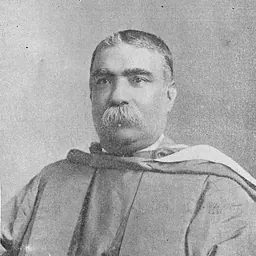
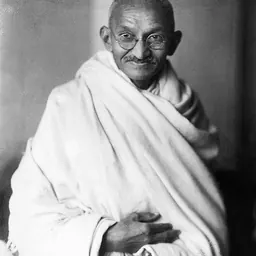
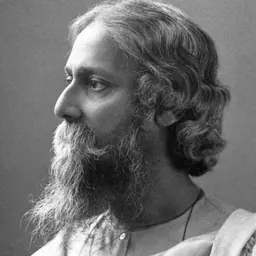
Related people
Same field, nearest in time


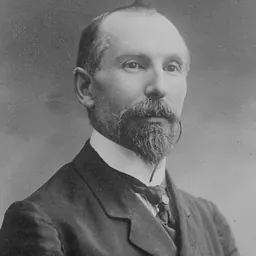
Contemporaries
People whose lives overlapped R. Shamasastry's


Frequently asked questions
Who was R. Shamasastry?
Sanskrit scholar
When was R. Shamasastry born?
R. Shamasastry was born in 1868 in Rudrapatna.
When did R. Shamasastry die?
R. Shamasastry died in 1944.
What was R. Shamasastry's occupation?
R. Shamasastry was a librarian.
What nationality was R. Shamasastry?
R. Shamasastry was Indian.
Sources & further reading
Cite this page
APA: Biography.guide. (2026). R. Shamasastry. https://biography.guide/r-shamasastry/
MLA: "R. Shamasastry." Biography.guide, https://biography.guide/r-shamasastry/.
Chicago: "R. Shamasastry." Biography.guide. https://biography.guide/r-shamasastry/.
Data last updated: 2026-09-20 · Spot an error? Report a correction.
Page generated 2026-09-27 05:03 UTC