
About Quintus Caecilius Metellus
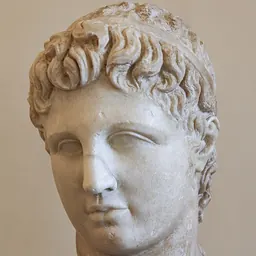
Lived 245 BC – 175 BC (aged 69–70). Quintus Caecilius Metellus was a Roman politician, orator, poet, military personnel, ancient Roman priest and diplomat.
Quintus Caecilius Metellus (c. 250 BC – 175 BC) was a pontiff in 216 BC, aedile of the plebeians in 209 BC, curule aedile in 208 BC, magister equitum in 207 BC, dictator in 205 BC, proconsul of Bruttium in 204 BC, He was a political ally of Scipio Africanus, the man who eventually defeated Hannibal. He was also distinguished as an orator, the funeral sermon he pronounced at his father's funeral being counted among his best speeches.
Family background Quintus Caecilius Metellus was the son of Lucius Caecilius Metellus, a successful general who defeated Hasdrubal at Panormus in the First Punic War. Both father and son were members of the famed gens Caecilia, a powerful plebeian family of the late Republic.
Early career Caecilius Metellus first appears in the historical record in 221 BC, delivering a panegyric at the obsequies of his father, Lucius, who died that year. Quintus declared that "his father had achieved the ten greatest and highest objects in the pursuit of which wise men pass their lives". Among these he included being a "brave commander", "supreme orator", and "eminent member of the senate". Cicero comments that Caecilius Metellus was considered "a good speaker" by his contemporaries, alongside the likes of the famed Quintus Maximus Verrucosus.
In the disastrous year of 216 BC, after the grave Roman defeat at the Battle of Cannae, Metellus, alongside Quintus Fabius and Quintus Fulvius Flaccus, were all made pontiffs, to replace Publius Scantinius, Lucius Aemilius Paullus, and Quintus Aelius Paetus, all of whom had fallen at the previously mentioned battle. or legate, in Gaius Claudius Nero's army, Metellus, along with Lucius Veturius Philo and Publius Licinius Varussent, was sent back to Rome in 207 BC to announce the Roman victory in and death of Hasdrubal Barca at the Battle of the Metaurus. Making their way into the Forum, the three emissaries were forced to push their way through jubilant masses and into the senate, where Veturius read out the news, to the shouted approval of the senate, which declared a three day's thanksgiving.
Accordingly, appointed by Salinator, Caecilius Metellus served as consul in the year 206 BC, alongside the previously mentioned Lucius Veturius Philo. Both new consuls were appointed to the province of Bruttium, "to carry on the war with Hannibal".
During his time as consul, before having departed Rome for the campaign in Bruttium, it is also known that Caecilius Metellus came into dispute with the poet Gnaeus Naevius, who, upon the accession of Metellus to the consulship, pronounced "It's fate that makes the Metelli consuls at Rome", to which Metellus responded "The Metelli will make the poet Naevius rue it", in reference to his witty remark. Naevius was later driven out of Rome by a Caecilius Metellus-led group of nobles and imprisoned at Utica, where St. Jerome states that he perished.
The next year, 205 BC, Metellus' consular army was disbanded as he was appointed dictator by Publius Licinius Crassus Dives, the consul serving in Bruttium that year, with the stated purpose of holding the year's consular elections. Metellus made Veturius Philo, with whom he seemingly would have been close after years of service together, his magister equitum, before successfully overseeing the election of Marcus Cornelius Cethegus and Publius Sempronius Tuditanus to the consulships of 204 BC. Metellus duly abdicated his office as dictator upon the conclusion of the elections. Tuditanus defeated Hannibal in 204 BC at the Battle of Crotona, presumably with the assistance of proconsul Metellus.
In 203 BC, Metellus and other allies of Scipio Africanus made sure Scipio's command in Africa was prorogued. to Samnium and Apulia to organize the redistribution of public lands to veterans returning from the victorious campaign against Hannibal in Africa. Before leaving on this mission, while still in Rome, Caecilius Metellus spoke before the Senate, saying that "he did not look upon its [the war's] termination as a blessing to Rome, since he feared that the Roman people would now sink back again into its former slumbers, from which it had been roused by the presence of Hannibal."
Later, in 185 BC, Caecilius Metellus was sent as an ambassador alongside Marcus Baebius Tamphilus and a Tiberius Sempronius Gracchus to the Court of Philip V of Macedon, to investigate various charges brought against the Macedonian king by some Thessalians and Epirotes, as well as Eumenes II of Pergamum, in the wake of the Roman victory in the Seleucid War. There, Caecilius Metellus demanded that Philip evacuate the cities under his control in Thessaly and Perrhaebia. On his way back from Macedonia, Caecilius Metellus and the other ambassadors were passing through the city of Argos, at the time controlled by the Achaean League, where they met the magistrates of said league. Caecilius Metellus dIsparaged them for their harsh treatment of the Spartans, referring to poor management of that city-state after its defeat at the hands of the league during the Laconian War of 195 BC, which included "the razing of their walls, the removal of the population as slaves into Achaia, and the abolition of the laws of Lycurgus, on which up to that day the stability of their State had rested". The ambassadors demanded that the Achaean popular assembly be summoned to speak with them to discuss these grievances, but were ignored.
Caecilius Metellus, along with Baebius Tamphilus and Sempronius Gracchus, returned to Rome in 184 BC, reporting on the state of affairs in Macedonia and the Peloponnesus. Envoys from the Achaeans were also present in Rome at the time, and argued to the senate that their magistrates, in treating with Caecilius Metellus, had done nothing wrong, according to Achaean law, which dictated that the assembly was under no obligation to gather at the command of Roman ambassadors unless they came with a direct commandment from the senate to do so. Hearing this, Caecilius Metellus, stood up, accusing the Achaeans again of mismanagement of affairs in the Peloponnesus, whereupon the senate, after ensuring that the Achaeans would not make the same excuse again by clarifying the duty of the popular assembly to gather for Roman ambassadors, decided to send a new commission to the Achaeans.
Caecilius Metellus died in 175 BC.
Don’t just read it —
keep it.
Full-length biographies made to live with: read them, listen on the way to work, watch them tonight.
- E-book
- Audio
- Video
Instant download · yours to keep · every purchase keeps this site free
Important facts
Family & relationships
People in Quintus Caecilius Metellus's life
Named in this biography and alive at the same time




Related people
Same field, nearest in time


Contemporaries
People whose lives overlapped Quintus Caecilius Metellus's


Frequently asked questions
Who was Quintus Caecilius Metellus?
Roman consul
When was Quintus Caecilius Metellus born?
Quintus Caecilius Metellus was born in 245 BC in Ancient Rome.
When did Quintus Caecilius Metellus die?
Quintus Caecilius Metellus died in 175 BC.
What was Quintus Caecilius Metellus's occupation?
Quintus Caecilius Metellus was a politician, orator, poet, military personnel, ancient Roman priest and diplomat.
What nationality was Quintus Caecilius Metellus?
Quintus Caecilius Metellus was Roman.
Sources & further reading
· Wikipedia: Quintus Caecilius Metellus
· DBpedia: Quintus Caecilius Metellus (consul 206 BC)
Cite this page
APA: Biography.guide. (2026). Quintus Caecilius Metellus. https://biography.guide/quintus-caecilius-metellus/
MLA: "Quintus Caecilius Metellus." Biography.guide, https://biography.guide/quintus-caecilius-metellus/.
Chicago: "Quintus Caecilius Metellus." Biography.guide. https://biography.guide/quintus-caecilius-metellus/.
Data last updated: 2026-09-20 · Spot an error? Report a correction.
Page generated 2026-09-27 05:23 UTC