
About Ptolemy III Euergetes
Lived 284 BC – 222 BC (aged 61–62). Ptolemy III Euergetes was an Egyptian sovereign.
Background and early life Ptolemy III was born some time around 280 BC, as the eldest son of Ptolemy II and his first wife Arsinoe I, daughter of King Lysimachus of Thrace. His father had become co-regent of Egypt in 284 BC and sole ruler in 282 BC. Around 279 BC, the collapse of Lysimachus' kingdom led to the return to Egypt of Ptolemy II's sister Arsinoe II, who had been married to Lysimachus. A conflict quickly broke out between Arsinoe I and Arsinoe II. Sometime after 275 BC, Arsinoe I was charged with conspiracy and exiled to Coptos. When Ptolemy II married Arsinoe II probably in 273/2 BC, her victory in this conflict was complete. As children of Arsinoe I, Ptolemy III and his two siblings seem to have been removed from the succession after their mother's fall. This political background may explain why Ptolemy III seems to have been raised on Thera in the Aegean, rather than in Egypt. His tutors included the poet and polymath Apollonius of Rhodes, later head of the Library of Alexandria.
From 267 BC, a figure known as Ptolemy "the Son" was co-regent with Ptolemy II. He led naval forces in the Chremonidean War (267–261 BC), but revolted in 259 BC at the beginning of the Second Syrian War and was removed from the co-regency. Some scholars have identified Ptolemy the Son with Ptolemy III. This seems unlikely, since Ptolemy III was probably too young to lead forces in the 260s and does not seem to have suffered any of the negative consequences that would be expected if he had revolted from his father in 259 BC. Chris Bennett has argued that Ptolemy the Son was a son of Arsinoe II by Lysimachus. Around the time of the rebellion, Ptolemy II legitimised the children of Arsinoe I by having them posthumously adopted by Arsinoe II. The decision to single Ptolemy III out for this marriage indicates that, by this time, he was the heir presumptive. On his father's death, Ptolemy III succeeded him without issue, taking the throne on 28 January 246 BC. A republican government, led by two Cyrenaeans named Ecdelus and Demophanes, controlled Cyrene for four years.
It was only with Ptolemy III's accession in 246 BC, that the wedding of Ptolemy III and Berenice seems to have actually taken place. Ptolemaic authority over Cyrene was forcefully reasserted. Two new port cities were established, named Ptolemais and Berenice (modern Tolmeita and Benghazi) after the dynastic couple. The cities of Cyrenaica were unified in a League overseen by the king, as a way of balancing the cities' desire for political autonomy against the Ptolemaic desire for control.
Third Syrian War (246–241 BC)
In July 246 BC, Antiochus II, king of the Seleucid empire, died suddenly. By his first wife Laodice I, Antiochus II had had a son, Seleucus II, who was about 19 years old in 246 BC. However, in 253 BC, he had agreed to repudiate Laodice and marry Ptolemy III's sister Berenice. Antiochus II and Berenice had a son named Antiochus, who was still an infant when his father died. A succession dispute broke out immediately after Antiochus II's death. Ptolemy III quickly invaded Syria in support of his sister and her son, marking the beginning of the Third Syrian War (also known as the Laodicean War).
An account of the initial phase of this war, written by Ptolemy III himself, is preserved on the Gurob papyrus. At the outbreak of war, Laodice I and Seleucus II were based in western Asia Minor, while the widowed Queen Berenice was in Antioch. The latter quickly seized control of Cilicia to prevent Laodice I from entering Syria. Meanwhile, Ptolemy III marched along the Levantine coast encountering minimal resistance. The cities of Seleucia and Antioch surrendered to him without a fight in late autumn. At Antioch, Ptolemy III went to the royal palace to plan his next moves with Berenice in person, only to discover that she and her young son had been murdered. In light of this success, he may have been crowned 'Great King' of Asia. Early in 245 BC, he established a governor of the land 'on the other side' of the Euphrates, indicating an intention to permanently incorporate the region into the Ptolemaic kingdom.
At this point however, Ptolemy III received notice that a revolt had broken out in Egypt and he was forced to return home to deal with it. By July 245 BC, the Seleucids had recaptured Mesopotamia. Some sources may indicate that the Egyptian revolt, the first of a series of native Egyptian uprisings which would trouble Egypt for the next century, was linked to economic reasons. Possible causes are the tax-burdens placed on the people of Egypt by Ptolemy III's war in Syria or a possible lack of the annual inundation of the Nile river in 245 BC, resulting in famine. However, the hypotheses on the backgrounds of the rebellion are based on the combination of incompletely preserved and poorly dateable sources. Other details in the sources seem to indicate that the Egyptian priests were the main drivers of the uprising. In any case, the text of a royal decree from 243 suggests that Ptolemy was able to contain the unrest very quickly, before it could escalate.
After his return to Egypt and suppression of the revolt, Ptolemy III made an effort to present himself as a victorious king in both Egyptian and Greek cultural contexts. Official propaganda, like OGIS 54, an inscription set up in Adulis and probably the copy of an inscription in Alexandria, vastly exaggerated Ptolemy III's conquests, claiming even Bactria among his conquests. At the new year in 243 BC, Ptolemy III incorporated himself and his wife Berenice II into the Ptolemaic state cult, to be worshipped as the Theoi Euergetai (Benefactor Gods), in honour of his restoration to Egypt of statues found in the Seleucid territories, which had been seized by the Persians. captured Ephesus from the Seleucids in 246 BC. At an uncertain date around 245 BC, he fought a sea-battle at Andros against King Antigonus II of Macedon, in which the Ptolemaic forces were defeated. It appears that he then led an invasion of Thrace, where Maroneia and Aenus were under Ptolemaic control as of 243 BC. Ptolemy Andromachou was subsequently assassinated at Ephesus by Thracian soldiers under his control.
The only further action known from the war is some fighting near Damascus in 242 BC. Shortly after this, in 241 BC, Ptolemy made peace with the Seleucids, retaining all the conquered territory in Asia Minor and northern Syria. Nearly the whole Mediterranean coast from Maroneia in Thrace to the Syrtis in Libya was now under Ptolemaic control. One of the most significant acquisitions was Seleucia Pieria, the port of Antioch, whose loss was a significant economic and logistical set-back for the Seleucids.
Later reign (241–222 BC)
The conclusion of the Third Syrian War marked the end of military intervention in the Seleucid territories, but Ptolemy III continued to offer covert financial assistance to the opponents of Seleucus II. From 241 BC, this included Antiochus Hierax, the younger brother of Seleucus II, who rebelled against his brother and established his own separate kingdom in Asia Minor. Ptolemy III sent military forces to support him only when a group of Galatian mercenaries rebelled against him but is likely to have supported him more tacitly throughout his conflict with Seleucus II. He offered similar support to Attalus I, the dynast of Pergamum, who took advantage of this civil conflict to expand his territories in northwestern Asia Minor. When the Seleucid general Achaeus was sent in 223 BC to reconquer the territories in Asia Minor that had been lost to Attalus, Ptolemy III sent his son Magas with a military force to aid Attalus, but he was unable to prevent Attalus' defeat.
Ptolemy III maintained his father's hostile policy to Macedonia. This probably involved direct conflict with Antigonus II during the Third Syrian War, but after the defeat at Andros in c. 245 BC, Ptolemy III seems to have returned to the policy of indirect opposition, financing enemies of the Antigonids in mainland Greece. The most prominent of these was the Achaean League, a federation of Greek city-states in the Peloponnese that were united by their opposition to Macedon. From 243 BC, Ptolemy III was the nominal leader (hegemon) and military commander of the League and supplied them with a yearly payment. After 240 BC, Ptolemy also forged an alliance with the Aetolian League in northwest Greece. From 238 to 234 BC, the two leagues waged the Demetrian War against Macedon with Ptolemaic financial support.
However, in 229 BC, the Cleomenean War (229–222 BC) broke out between the Achaean League and Cleomenes III of Sparta. As a result, in 226 BC, Aratos of Sicyon the leader of the Achaean League forged an alliance with the Macedonian king Antigonus III. Ptolemy III responded by immediately breaking off relations with the Achaean League and redirecting his financial support to Sparta. Most of the rest of the Greek states were brought under the Macedonian umbrella in 224 BC when Antigonus revived the Hellenic League of Philip II of Macedon under the name of the "League of Leagues". However Aetolia and Athens remained hostile to Macedon and redoubled their allegiance to Ptolemy III. In Athens, in 224 BC, extensive honours were granted to Ptolemy III to entrench their alliance with him, including the creation of a new tribe named Ptolemais in his honour and a new deme named Berenicidae in honour of Queen Berenice II. The Athenians instituted a state religious cult in which Ptolemy III and Berenice II were worshipped as gods, including a festival, the Ptolemaia. The centre of the cult was the Ptolemaion, which also served as the gymnasium where young male citizens undertook civic and military training.
Cleomenes III suffered serious defeats in 223 BC and Ptolemy III abandoned his support for him in the next year – probably as a result of an agreement with Antigonus. The Egyptian king seems to have been unwilling to commit actual troops to Greece, particularly as the threat of renewed war with the Seleucids was looming. Cleomenes III was defeated and forced to flee to Alexandria, where Ptolemy III offered him hospitality and promised to help restore him to power. However, these promises were not fulfilled, and the Cleomenian War would in fact be the last time that the Ptolemies intervened in mainland Greece.
Ptolemy III financed construction projects at temples across Egypt. The most significant of these was the Temple of Horus at Edfu, one of the masterpieces of ancient Egyptian temple architecture and now the best-preserved of all Egyptian temples. The king initiated construction on it on 23 August 237 BC. A sacred lake in the Temple of Montu at Medamud; Temple of Khnum at Esna A birth house at the Temple of Isis at Philae. Galen attests that he borrowed the official manuscripts of Aeschylus, Sophocles, and Euripides from Athens and forfeited the considerable deposit he paid for them in order to keep them for the Library rather than returning them. The most distinguished scholar at Ptolemy III's court was the polymath and geographer Eratosthenes, most noted for his remarkably accurate calculation of the circumference of the world. Other prominent scholars include the mathematicians Conon of Samos and Apollonius of Perge.
Red Sea trade Ptolemy III's reign was also marked by trade with other contemporaneous polities. In the 1930s, excavations by Mattingly at a fortress close to Port Dunford (the likely Nikon of antiquity) in present-day southern Somalia yielded a number of Ptolemaic coins. Among these pieces were 17 copper coins from the reigns of Ptolemy III to Ptolemy V, as well as late Imperial Rome and Mamluk Sultanate coins.
Marriage and issue Ptolemy III married his half-cousin Berenice of Cyrene in 244/243 BC. Their children were:
May/June 244 BCJuly/August 204 BC King of Egypt from 222 to 204 BC.A son July/August 243 BCPerhaps 221 BCName unknown, possibly 'Lysimachus'. He was probably killed in or before the political purge of 221 BC. Alexander September/October 242 BC Perhaps 221 BCHe was probably killed in or before the political purge of 221 BC. Magas November/December 241 BC 221 BCScalded to death in his bath by Theogos or Theodotus, at the orders of Ptolemy IV. Berenice January/February 239 BCFebruary/March 238 BCPosthumously deified on 7 March 238 BC by the Canopus Decree, as Berenice Anasse Parthenon (Berenice, mistress of virgins).
Don’t just read it —
keep it.
Full-length biographies made to live with: read them, listen on the way to work, watch them tonight.
- E-book
- Audio
- Video
Instant download · yours to keep · every purchase keeps this site free
Important facts
Family & relationships
People in Ptolemy III Euergetes's life
Named in this biography and alive at the same time
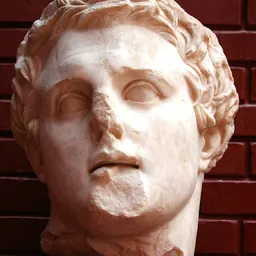



Related people
Same field, nearest in time
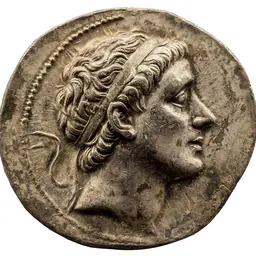
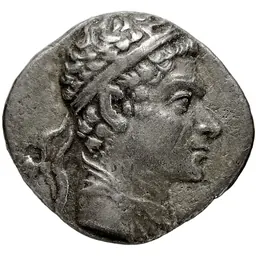

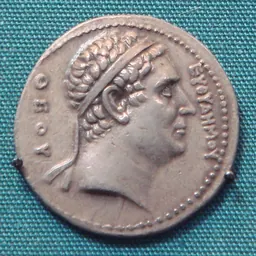

Contemporaries
People whose lives overlapped Ptolemy III Euergetes's

Frequently asked questions
Who was Ptolemy III Euergetes?
Egyptian pharaoh
When was Ptolemy III Euergetes born?
Ptolemy III Euergetes was born in 284 BC in Kos.
When did Ptolemy III Euergetes die?
Ptolemy III Euergetes died in 222 BC.
What was Ptolemy III Euergetes's occupation?
Ptolemy III Euergetes was a sovereign.
What nationality was Ptolemy III Euergetes?
Ptolemy III Euergetes was Egyptian.
Sources & further reading
· Wikipedia: Ptolemy III Euergetes
· DBpedia: Ptolemy III Euergetes
Cite this page
APA: Biography.guide. (2026). Ptolemy III Euergetes. https://biography.guide/ptolemy-iii-euergetes/
MLA: "Ptolemy III Euergetes." Biography.guide, https://biography.guide/ptolemy-iii-euergetes/.
Chicago: "Ptolemy III Euergetes." Biography.guide. https://biography.guide/ptolemy-iii-euergetes/.
Data last updated: 2026-09-26 · Spot an error? Report a correction.
Page generated 2026-09-27 05:14 UTC