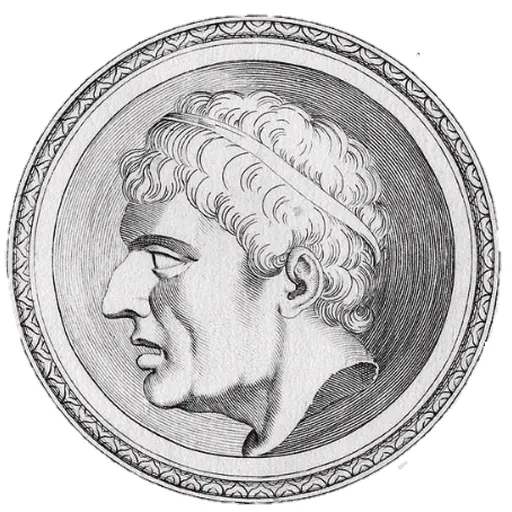
Aratus of Sicyon
Greek statesman, general and Achaean League strategos
About Aratus of Sicyon
Lived 271 BC – 213 BC (aged 57–58). Aratus of Sicyon was a politician, historian, writer, military personnel, military leader and philip V of Macedon.
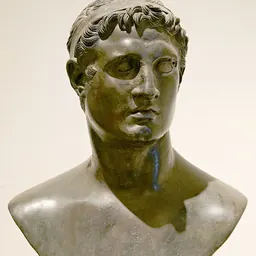
Aratus of Sicyon (Ancient Greek: Ἄρατος ὁ Σικυώνιος; 271–213 BC) was a politician and military commander of Hellenistic Greece. He was elected strategos of the Achaean League 17 times, leading the League through numerous military campaigns including the Cleomenean War and the Social War.
Aratus was exiled to Argos at the age of seven, after his father, the magistrate of Sicyon, was killed in a coup. In 251 BC, he led an expedition composed of other exiles which freed Sicyon from tyranny, and assumed power in the city. Sicyon joined the Achaean League, in which Aratus would later be elected strategos. In his first major campaign as strategos, he seized the Macedonian-held citadel of Acrocorinth, previously believed impregnable.
After conquering the Acrocorinth, Aratus pursued the Achaean League's expansion. When the Spartan king Cleomenes III conquered the Achaean cities of Argos and Corinth, Aratus succeeded in securing an alliance with his own erstwhile enemy Antigonus III Doson of Macedon. Cleomenes III was defeated at the Battle of Sellasia by the joint Achaean and Macedonian forces. During the Social War against the Aetolian League, Aratus became one of the prime advisors of the new king of Macedon, Philip V. Aratus died in 213 BC, allegedly poisoned by Philip.
Youth
Aratus was born in 271 BC in the northern Peloponnese city-state of Sicyon. His father, Cleinias of Sicyon, had become head magistrate of the city (jointly with Timocleidas) after the murder of the previous tyrant. Shortly after the government stabilised, Timocleidas died. In 264 BC, Abantidas murdered Cleinias and proclaimed himself tyrant. The seven-year-old Aratus escaped the coup with the help of his aunt, The Achaean League did not like this development, because of the cities' strategic importance.
The ephors urged Cleomenes also to take the Athenaeum, a fortress on the road between Sparta and Arcadia. The fortress belonged both to Megalopolis and to the Achaean League. The Achaean League saw this move by Sparta as a declaration of war. Aratus, again strategos, tried to organise nightly attacks to regain control of Tegea and Orchomenus, but was betrayed by his partisans in both cities, who told Cleomenes of the plan.
The ephors called Cleomenes back to Sparta, probably seeking to avoid all-out war.
The defeat brought scorn on Aratus. An Achaean assembly voted to stop funding him. Aratus resolved to resign the office of general, but rethought and stayed on, again displaying his resilience. He marched with an Achaean army to Orchomenus, there defeating a Spartan army commanded by Cleomenes' father-in-law, who was captured and then quickly ransomed.
The Spartans soldiers were armed in the "Macedonian way" after Cleomenes' reforms.
In 226 BC, Cleomenes conquered Mantinea, Tegea and Pharae. He succeeded in luring the Achaeans into open battle in the fall of 226 BC. Details of the engagement are not known, but the reformed Spartan army, now armed in the Macedonian style, won a decisive victory. The Achaeans sued for peace, and were rejected. Aratus began negotiating an alliance between Macedon and the Achaean League, but Macedon demanded the return of the Acrocorinth in return for intervening. The Achaeans were not prepared to give up the citadel, and negotiations broke down.
In 225 BC, Cleomenes attacked Achaean territory again, aiming to take Aratus' home city, Sicyon. He hoped this would provoke the collapse of the entire Achaean League, as tensions within the League were already running high over Aratus' Macedonian strategy. If Sicyon fell, Aratus would no longer be part of the Achaean League. The plan to take Sicyon failed, but Cleomenes did conquer Pellene, Pheneus, Penteleum, and later Agros. The Argives, never the most enthusiastic members of the Achaean League, decided to ally with Sparta. Many authors see in this the hand of Aristomachus, former tyrant of the city. Aratus was given plenipotentiary powers to deal with the crisis. He marched to Corinth, arriving to face an angry mob: the population had heard of his intention to surrender the city and its citadel to Antigonus. Aratus only narrowly escaped. The Corinthians offered to surrender the city to Cleomenes, even while the Acrocorinth was still held by an Achaean garrison. Cleomenes marched towards Corinth, taking many other cities in Argolis on his way. After laying siege to the Acrocorinth, Cleomenes proposed a peace treaty to Aratus, who refused. The Spartan king went on to besiege Sicyon, pillaging the surrounding countryside.
Macedonian intervention
Shortly before the start of the siege, the Achaean council members decided to accept Macedon's war conditions after all. Aratus sent his son to Macedon as a hostage. Antigonus was ready with an army of 20,000 infantry and 3,000 cavalry. When Cleomenes heard of the Macedonian intervention, he abandoned the siege of Sicyon as fast as possible, moving to the Isthmus of Corinth, a better position from which to meet the northern threat. Aratus went to meet the Macedonian king near Pagae:
Both hard-headed realists, Aratus and Antigonus got along well despite their wariness. Plutarch reports that at one point, during a banquet, they even shared a blanket to keep warm.
Cleomenes' defensive front near the Isthmus of Corinth proved very effective. It took Antigonus a long time to overcome it, and he lost men while trying to break through near Lechaeum. Later, a delegation from Argos asked Aratus to liberate their city from the Spartans, as Cleomenes had failed to deliver on his promises. Aratus sailed to Epidaurus with 1,500 troops to attack Argos, but found that it had fallen already to an internal uprising with the help of Timoxenos, then strategos of the Achaean League. Sparta was left almost undefended. Cleomenes was forced to return to Sparta as a result, and leave his defences near the Isthmus. This allowed Antigonus to enter the Peloponnese, where he occupied the Acrocorinth and put a garrison in the city.
Battle of Sellasia
In 224 BC, while Antigonus was liberating the occupied cities in the Peloponnese, Cleomenes was reinforcing his army. The winter of 223 BC saw Cleomenes feign a march to Tegea, but then turn for Megalopolis, where he took the city by surprise. Around a thousand citizens escaped, finding shelter in Messene. Megalopolis itself was pillaged. Aratus reportedly wept while reporting this news to the Achaean council. Antigonus recalled his troops from winter quarters, but soon realised there was insufficient time. Cleomenes, emboldened, marched on Argos, pillaging the countryside in the hope that the population would be enraged by Antigonus' lack of action. But ultimately, Cleomenes' acts served only to antagonise the inhabitants of the Peloponnese.
Antigonus was able to rally his army, now numbering some 27,600 infantry and 1,200 cavalry. Cleomenes occupied the pass near Sellasia, before Sparta, to stop the Macedonian king. But he was defeated at the Battle of Sellasia in July 222 BC, and fled to Egypt. Antigonus conquered Sparta, but treated the city leniently and left again some days later.
Social War
In 221 BC, the Aetolians began pillaging the territory of Messenia. In 220 BC, the council of the Achaean League met in Aegium to discuss the city of Messene's request for their help. Most council members did not want to attack the Aetolians, but Aratus was able to persuade them. He began to raise an army near Megalopolis, with the aim of trapping the Aetolians as they returned to their ships to sail home. But the Aetolian commander was able to evade the threat. It seemed there would be no decisive confrontation, until the Achaean commanders made a crucial mistake and Aratus sent a cavalry unit against the Aetolians:
The cavalry had to fight on rough terrain, where the Aetolians were greatly superior. Aratus then abandoned his favourable position to go to his cavalry's aid. The rest of the Aetolian force seized the advantage, charging from high ground to rout the Achaeans. After the battle, the Aetolians continued pillaging, and also raided Sicyon. They returned to Aetolia via the Isthmus of Corinth, adding insult to the injury of the Achaeans' failure to protect their own.
As both sides were then trying to find new allies, the Achaean League turned again to Macedon. But the new Macedonian king, Philip V, was not keen on war with the Aetolians. Ultimately, the Achaeans did convince Philip, and Boeotia, Acarnania, and Epirus also joined the alliance. The Aetolians allied with Sparta and Elis, and in 219 BC again invaded Achaean League territory. This invasion attempt was put down near Aegeira, but it was not a decisive defeat.
In the meantime, Philip was preparing his army in Macedon. He won several victories in 218 BC, but his army mutinied and he returned to Macedon for the winter. Philip was assisted by Aratus and several other advisors, of whom Apelles was the most important. Aratus had become very influential, and is considered to have been a true friend of the king. Apelles, in contrast, remained resolutely Macedonian, still wanting to incorporate Achaea into the Kingdom of Macedon. Apelles began to oppose the Achaeans in the allied army, for example by demoting several Achaean officers. He also opposed Aratus by supporting his opponent, Eperatus, in the election of a new strategos. He tried, and failed, to impeach Aratus by ruse. The relationship between Apelles and the Macedonian king appears to have worsened as a result, and Aratus became Philip's most important advisor. Aratus quickly gained a reputation for his skill, but this increased the other officers’ envy. They began to insult him openly during their banquets, even throwing stones. The king was furious, and ordered those responsible put to death.
After Macedon's intervention in the war, the Aetolians faced more difficulties on all fronts. They continued their pillaging, but were frequently ambushed. Ultimately they sued for peace, concluded in 217 BC.
Death
After the Social War, Philip caused a civil war in Messene, and possibly kept Aratus out of the matter deliberately. Unhappy, Aratus ordered the king to suppress the unrest. Philip was angry, but taken aback at his vehemence, and accepted the rebuke.
Meanwhile, the First Macedonian War between Macedon and Rome had erupted. In 214 BC, the Romans defeated Philip near the town of Oricum in Illyria. The same year, Philip returned to Messene, which he attacked for reasons that remain unclear. Aratus had already given his opinion of Philip's deeds near Messene, and did so again, (Macedon gaining territory in the Peloponnese was unfavourable to the Achaean League, which wished to remain independent.) The relationship between Aratus and Philip may also have worsened for personal reasons, as the king had reportedly seduced Aratus' daughter-in-law.
Aratus's health deteriorated rapidly during this period, and he died in 213 BC. As tensions had been high between the king and the strategos, there were inevitable rumours of foul play. According to Plutarch, Philip had Aratus poisoned. He reports that Aratus knew what was happening, but could only confide this information to his manservant:
By special permission of the Oracle of Delphi, Aratus was the first person to be buried within the city walls of Sicyon as 'founder and saviour of the city'. But it seems Aratus was a master of the surprise attack, although details of these battles remain obscure.
Aratus became the most important person within the Achaean League, but it grew progressively more difficult for him to get his way as a succession of other mighty city-states joined. Plutarch mentions that "he is said to have been a more ornate speaker than some think who judge from the Commentaries which he left; these were a bye-work, and were composed in haste, off-hand, and in the words that first occurred to him in the heat of contest." The information concerning Aratus is therefore to be read through a critical filter, allowing for the possibility that he may have wanted to attenuate his own mistakes by blaming others, or that he glorified his own victories.
Don’t just read it —
keep it.
Full-length biographies made to live with: read them, listen on the way to work, watch them tonight.
- E-book
- Audio
- Video
Instant download · yours to keep · every purchase keeps this site free
Important facts
People in Aratus of Sicyon's life
Named in this biography and alive at the same time
Related people
Same field, nearest in time

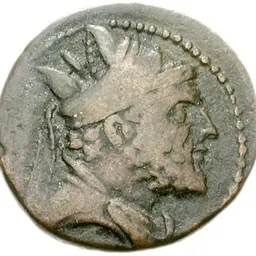
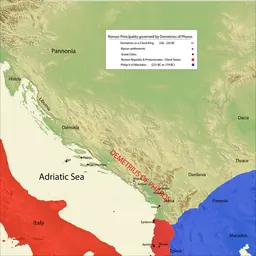

Contemporaries
People whose lives overlapped Aratus of Sicyon's

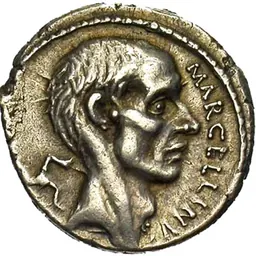
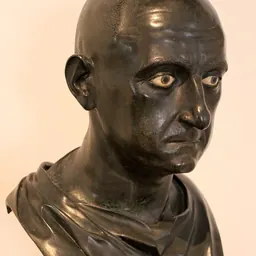

Frequently asked questions
Who was Aratus of Sicyon?
Greek statesman, general and Achaean League strategos (271-213 BC)
When was Aratus of Sicyon born?
Aratus of Sicyon was born in 271 BC in Sicyon.
When did Aratus of Sicyon die?
Aratus of Sicyon died in 213 BC in Athens.
What was Aratus of Sicyon's occupation?
Aratus of Sicyon was a politician, historian, writer, military personnel, military leader and philip V of Macedon.
Sources & further reading
Cite this page
APA: Biography.guide. (2026). Aratus of Sicyon. https://biography.guide/aratus-of-sicyon/
MLA: "Aratus of Sicyon." Biography.guide, https://biography.guide/aratus-of-sicyon/.
Chicago: "Aratus of Sicyon." Biography.guide. https://biography.guide/aratus-of-sicyon/.
Data last updated: 2026-09-22 · Spot an error? Report a correction.
Portrait: Wikimedia Commons · author & licence
Page generated 2026-09-27 05:02 UTC