
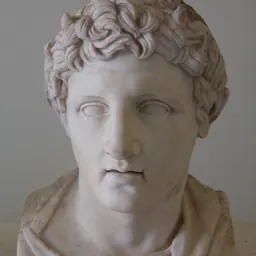
Ptolemy II Philadelphus
King of the Ptolemaic dynasty in Egypt (308–246 B.C.)
About Ptolemy II Philadelphus
Lived 308 BC – 246 BC (aged 61–62). Ptolemy II Philadelphus was an Egyptian sovereign.
Reign Ptolemy II and Arsinoe II depicted on the Gonzaga Cameo in the Hermitage Museum, St. Petersburg.
Arsinoe I and Arsinoe II The fall-out from the succession conflict between Ptolemy II and Ptolemy Keraunos continued even after Ptolemy II's accession. The conflict was probably the reason why Ptolemy executed two of his brothers, probably full brothers of Keraunos, in 281 BC. Keraunos himself had gone to the court of Lysimachus, who ruled Thrace and western Asia Minor following his expulsion from Egypt. Lysimachus' court was divided on the question of supporting Keraunos. On the one hand, Lysimachus himself had been married to Ptolemy II's full sister, Arsinoe II, since 300 BC. On the other hand, Lysimachus' heir, Agathocles, was married to Keraunos' full sister Lysandra. Lysimachus chose to support Ptolemy II and sealed that decision at some point between 284 and 281 BC by marrying his daughter Arsinoe I to Ptolemy II.
Continued conflict over the issue within his kingdom led to the execution of Agathocles and the collapse of Lysimachus' kingdom in 281 BC. Around 279 BC, Arsinoe II returned to Egypt, where she clashed with her sister-in-law Arsinoe I. Some time after 275 BC, Arsinoe I was charged with conspiracy and exiled to Coptos. Probably in 273/2 BC, Ptolemy married his older sister, Arsinoe II. As a result, both were given the epithet "Philadelphoi" ( "Sibling-lovers"). While sibling-marriage conformed to the traditional practice of the Egyptian pharaohs, it was shocking to the Greeks, who considered it incestuous. Sotades, a poet who mocked the marriage, was exiled and assassinated. The marriage may not have been consummated, since it produced no children. Another poet Theocritus defended the marriage by comparing it to the marriage of the gods Zeus and his older sister Hera. The marriage provided a model which was followed by most subsequent Ptolemaic monarchs. Ptolemy II seems to have adopted Arsinoe II's son by Lysimachus, also named Ptolemy, as his heir, eventually promoting him to co-regent in 267 BC, the year after Arsinoe II's death. He retained that position until his rebellion in 259 BC. Around the time of the rebellion, Ptolemy II legitimised the children of Arsinoe I by having them posthumously adopted by Arsinoe II.
Antiochus did this by pursuing ties with Ptolemy II's maternal half-brother, Magas, who had been governor of Cyrenaica since around 300 BC and had declared himself king of Cyrene sometime after Ptolemy I's death. Around 275 BC Antiochus entered into an alliance with Magas by marrying his daughter Apama to him. Shortly thereafter, Magas invaded Egypt, marching on Alexandria, but he was forced to turn back when Libyan nomads launched an attack on Cyrene. At this same moment, Ptolemy's own forces were hamstrung. He had hired 4,000 Galatian mercenaries, but soon after their arrival the Gauls mutinied and so Ptolemy marooned them on a deserted island in the Nile where "they perished at one another's hands or by famine." This victory was celebrated on a grand scale. Several of Ptolemy's contemporary kings had fought serious wars against Gallic invasions in Greece and Asia Minor, and Ptolemy presented his own victory as equivalent to theirs.
Around this time Ptolemy was also ostensibly considering some military action in Pre-Islamic Arabia, and so sent Ariston to reconnoiter the western coast of Arabia.
Nubian campaign (c. 275 BC) The Ptolemaic kingdom clashed with Kush, over the territory known as the Triakontaschoinos ('thirty-mile land'). This was the stretch of the Nile river between the First Cataract at Syene and the Second Cataract at Wadi Halfa (the whole area is now submerged under Lake Nasser). The region may have been probably used by the Nubians as a base for raids on southern Egypt. Around 275 BC, Ptolemaic forces invaded Nubia and annexed the northern twelve miles of this territory, subsequently known as the Dodekaschoinos ('twelve-mile land'). The conquest was publicly celebrated in the panegyric court poetry of Theocritus and by the erection of a long list of Nubian districts at the Temple of Isis at Philae, near Syene. The region's gold production was a key contributor to the prosperity and power of the Ptolemaic empire in the third century BC.
First Syrian War (274–271 BC)
Probably in response to the alliance with Magas, Ptolemy declared war on Antiochus I in 274 BC by invading Seleucid Syria. After some initial success, Ptolemy's forces were defeated in battle by Antiochus and forced to retreat back to Egypt. Invasion was imminent and Ptolemy and Arsinoe spent the winter of 274/3 BC reinforcing the defences in the eastern Nile Delta. However, the expected Seleucid invasion never took place. The Seleucid forces were afflicted by economic problems and an outbreak of plague. In 271 BC, Antiochus abandoned the war and agreed to peace, with a return to the status quo ante bellum. This was celebrated in Egypt as a great victory, both in Greek poetry, such as Theocritus' Idyll 17 and by the Egyptian priesthood in the Pithom stele.
Colonisation of the Red Sea
Ptolemy revived earlier Egyptian programmes to access the Red Sea. A canal from the Nile near Bubastis to the Gulf of Suez – via Pithom, Lake Timsah and the Bitter Lakes – had been dug by Darius I in the sixth century BC. However, by Ptolemy's time it had silted up. He had it cleared and restored to operation in 270/269 BC – an act which is commemorated in the Pithom Stele. The city of Arsinoe was established at the mouth of the canal on the Gulf of Suez. From there, two exploratory missions were sent down the east and west coasts of the Red Sea all the way down to the Bab-el-Mandeb. The leaders of these missions established a chain of 270 harbour bases along the coasts, some of which grew to be important commercial centres.
Along the Egyptian coast, Philotera, Myos Hormos, and Berenice Troglodytica would become important termini of caravan routes running through the Egyptian desert and key ports for the Indian Ocean trade which began to develop over the next three centuries. Even further south was Ptolemais Theron (possibly located near the modern Port Sudan), which was used as a base for capturing elephants. The adults were killed for their ivory, the children were captured to be trained as war elephants.
On the east coast of the sea, the key settlements were Berenice (modern Aqaba/Eilat) and Ampelone (near modern Jeddah). These settlements allowed the Ptolemies access to the western end of the caravan routes of the incense trade, run by the Nabataeans, who became close allies of the Ptolemaic empire. Ptolemy was able to pursue this interventionist policy without any challenge because a long-running civil war in Macedon had left a power vacuum in the northern Aegean. This vacuum was threatened after Antigonus II firmly established himself as king of Macedon in 272 BC. As Antigonus expanded his power through mainland Greece, Ptolemy II and Arsinoe II positioned themselves as defenders of 'Greek freedom' from Macedonian aggression. Ptolemy forged alliances with the two most powerful Greek cities, Athens and Sparta.
The Athenian politician Chremonides forged a further alliance with Sparta in 269 BC. In late 268 BC, Chremonides declared war on Antigonus II. The Ptolemaic admiral Patroclus sailed into the Aegean in 267 BC and established a base on the island of Keos. From there, he sailed to Attica in 266 BC. The plan seems to have been for him to rendezvous with the Spartan army and then use their combined forces to isolate and expel the Antigonid garrisons at Sounion and Piraeus which held the Athenians in check. However, the Spartan army was unable to break through to Attica and the plan failed. In 265/4 BC, the Spartan king Areus I once again tried to cross the Isthmus of Corinth and aid the beleaguered Athenians, but Antigonus II concentrated his forces against him and defeated the Spartans, with Areus himself among the dead. After a prolonged siege, the Athenians were forced to surrender to Antigonus in early 261 BC. Chremonides and his brother Glaucon, who were responsible for the Athenian participation in the war, fled to Alexandria, where Ptolemy welcomed them into his court.
Despite the presence of Patroclus and his fleet, it appears that Ptolemy II hesitated to fully commit himself to the conflict in mainland Greece. The reasons for this reluctance are unclear, but it appears that, especially in the last years of the war, Ptolemaic involvement was limited to financial support for the Greek city-states and naval assistance. Gunther Hölbl argues that the Ptolemaic focus was on the eastern Aegean, where naval forces under the command of Ptolemy II's nephew and co-regent Ptolemy took control of Ephesus and perhaps Lesbos in 262 BC.
Second Syrian war (260–253 BC)
Around 260 BC, war broke out once more between Ptolemy II and the Seleucid realm, now ruled by Antiochus II. The cause of this war seems to have been the two kings' competing claims to the cities of western Asia Minor, particularly Miletus and Ephesus. Its outbreak seems to be connected to the revolt of Ptolemy II's co-regent Ptolemy, who had been leading the Ptolemaic naval forces against Antigonus II. The younger Ptolemy and an associate took control of the Ptolemaic territories in western Asia Minor and the Aegean. Antiochus II took advantage of this upset to declare war on Ptolemy II and he was joined by the Rhodians.
The course of this war is very unclear, with the chronological and causal relationship of events attested at different times and in different theatres being open to debate. Between 259 and 255 BC, the Ptolemaic navy, commanded by Chremonides, was defeated in a sea battle at Ephesus. Antiochus II then took control of the Ptolemaic cities in Ionia: Ephesus, Miletus, and Samos. Epigraphic evidence shows that this was complete by 254/3 BC.
Later reign and death (252–246 BC) After the Second Syrian War, Ptolemy refocused his attention on the Aegean and mainland Greece. Some time around 250 BC, his forces defeated Antigonus in a naval battle at an uncertain location. In Delos, Ptolemy established a festival, called the Ptolemaia in 249 BC, which advertised continued Ptolemaic investment and involvement in the Cyclades, even though political control seems to have been lost by this time. Around the same time, Ptolemy was convinced to pay large subsidies to the Achaean League by their envoy Aratus of Sicyon. The Achaean League was a relatively small collection of minor city-states in the northwestern Peloponnese at this date, but with the help of Ptolemy's money, over the next forty years Aratus would expand the League to encompass nearly the whole of the Peloponnese and transform it into a serious threat to Antigonid power in mainland Greece. On Magas' death in 250 BC, however, Berenice's mother Apame refused to honour the agreement and invited an Antigonid prince, Demetrius the Fair, to Cyrene to marry Berenice instead. With Apame's help, Demetrius seized control of the city, but he was assassinated by Berenice. A republican government led by two Cyrenaeans named Ecdelus and Demophanes controlled Cyrene until Berenice married Ptolemy III in 246 BC after his accession to the throne.
Ptolemy died on 28 January 246 BC and was succeeded by Ptolemy III without incident.
The eponymous priest of the deified Alexander, who served annually and whose name was used to date all official documents, became the "Priest of Alexander and the ". Each subsequent royal couple would be added to the priest's title until the late second century BC. In artistic depictions, Ptolemy II was often depicted with divine attributes, namely the club of Heracles and the elephant-scalp headdress associated with Alexander the Great, while Arsinoe was shown carrying a pair of cornucopiae with a small ram's horn behind her ear.
Ptolemy also instituted cults for a number of relatives. Following her death around 269 BC, Arsinoe II was honoured with a separate cult in her own right, with every temple in Egypt required to include a statue of her as a "temple-sharing deity" alongside the sanctuary's main god. Her cult would prove extremely popular in Egypt throughout the Ptolemaic period. Ptolemy's other sister Philotera also received a cult. Even Ptolemy's mistress Bilistiche received sanctuaries in which she was identified with the goddess Aphrodite.
Most of the animals were in pairs—as many as eight pairs of ostriches—and although the ordinary chariots were likely led by a single elephant, others which carried a golden statue may have been led by four. At the end of the whole procession marched a military force numbering 57,600 infantry and 23,200 cavalry. Over 2,000 talents were distributed to attendees as largesse.
Although this ruler cult was centred on Alexandria, it was propagated throughout the Ptolemaic empire. The Nesiotic League, which contained the Aegean islands under Ptolemaic control, held its own Ptolemaia festival at Delos from the early 270s BC. Priests and festivals are also attested on Cyprus at Lapethos, at Methymna on Lesbos, on Thera, and possibly at Limyra in Lycia.
Pharaonic ideology and Egyptian religion This granite statue depicts Ptolemy II in the traditional canon of ancient Egyptian art. Walters Art Museum, Baltimore. Ptolemy II followed his father's example by presenting himself as a traditional Egyptian pharaoh and supporting the Egyptian priestly elite. Two hieroglyphic stelae commemorate Ptolemy's activities in this context. The Mendes stele celebrates Ptolemy's performance of rituals in honour of the ram god Banebdjedet at Mendes, shortly after his accession. The Pithom stele records the inauguration of a temple at Pithom by Ptolemy, in 279 BC, on his royal jubilee. Both stelae record his achievements in terms of traditional Pharaonic virtues. Particularly stressed is the recovery of religious statuary from the Seleucids through military action in 274 BC—a rhetorical claim which cast the Seleucids in the role of earlier national enemies like the Hyksos, Assyrians, and Persians.
As part of his patronage of Egyptian religion and the priestly elite, Ptolemy II financed large-scale building works at temples throughout Egypt. Ptolemy ordered the construction of the core of the Temple of Isis at Philae during his reign and assigned the tax revenue from the newly conquered Dodekaschoinos region to the temple. Although the temple had existed since the sixth century BC, it was Ptolemy's sponsorship that converted it into one of the most important in Egypt.
In addition, Ptolemy initiated work at a number of other sites, including (from north to south): Decorative work on the Temple of Anhur-Shu at Sebennytos and the nearby Temple of Isis at Behbeit El Hagar; Temple of Horus at Tanis; Temple of Arsinoe at Pithom; Anubeion in the Serapeum of Saqqara; Temple of Min and Isis at Koptos; Expansion of the birth house of the Dendera Temple complex;
Administration Ptolemaic Egypt was administered by a complicated bureaucratic structure. It is possible that much of the structure had already been developed in the reign of Ptolemy I, but evidence for it—chiefly in the form of documentary papyri—only exists from the reign of Ptolemy II. At the top of the hierarchy, in Alexandria, there was a small group of officials, drawn from the king's . These included the , responsible for diplomacy; the , the chief secretary; the , who produced drafts of royal edicts; the key generals; and the , responsible for taxation and provincial administration.
The for most of Ptolemy II's reign was Apollonius (262–245 BC). The enormous archive of his personal secretary, Zenon of Kaunos, has survived. As a result, it is the administration of the countryside that is best known to modern scholarship.
The whole of Egypt was divided into thirty-nine districts, called nomes , whose names and borders had remained roughly the same since early Pharaonic times. Within each nome, there were three officials: the nomarch who was in charge of agricultural production; the , who was in charge of finances; and the , who was in charge of land surveying and record-keeping. All three of these officials answered to the and held equal rank, the idea being that each would act as a check on the others, preventing officials from developing regional power bases that might threaten the king's power. Each village had a and a , who reported to the nomarch and the , respectively.
Through this system, a chain of command was created which ran from the king all the way down to each of the three thousand villages of Egypt. Each nome also had its own , who was in charge of the troops settled in the nome and answered directly to the king.
The Zenon papyri also record experiments by the Apollonius to establish cash-crop regimes, particularly castor oil cultivation, with mixed success. In addition to these measures focused on agriculture, Ptolemy II also established extensive gold mining operations in Nubia at Wadi Allaqi and in the eastern desert at Abu Zawal. Gold octodrachm of Ptolemy II, from Alexandria mint, c. 272 BC. Obverse shows the jugate busts of Ptolemy II and Arsinoe II. The Greek legend reads: (, meaning 'of siblings'.
Scholarship and culture Ptolemy II was an eager patron of scholarship, funding the expansion of the Library of Alexandria and patronising scientific research. Poets like Callimachus, Theocritus, Apollonius of Rhodes, and Posidippus were provided with stipends and produced masterpieces of Hellenistic poetry, including panegyrics in honour of the Ptolemaic family. Other scholars operating under Ptolemy's aegis included the mathematician Euclid and the astronomer Aristarchus of Samos. Ptolemy is thought to have commissioned Manetho to compose his Aegyptiaca, an account of Egyptian history, perhaps intended to make Egyptian culture intelligible to its new rulers.
A tradition preserved in the pseudepigraphical Letter of Aristeas presents Ptolemy as the driving force behind the translation of the Hebrew Bible into Greek as the Septuagint. This account contains several anachronisms and is unlikely to be true. The Greek translation of the Hebrew Bible is likely to have taken place among the Jews of Alexandria, but the role of Ptolemy II is unclear, and only the Pentateuch is likely to have been translated during his reign.
Relations with the western Mediterranean Ptolemy II and King Hiero II of Syracuse are regularly referred to as having enjoyed particularly close relations. There is substantial evidence for the exchange of goods and ideas between Syracuse and Alexandria. Hiero seems to have modelled various aspects of his royal self-representation and perhaps his tax system, the Lex Hieronica on Ptolemaic models. Two of the luminaries of Ptolemy II's court, the poet Theocritus and the mathematician and engineer Archimedes came from and eventually returned to Syracuse. Numismatic evidence seems to indicate that Ptolemy II funded Hiero II's original rise to power—a series of Ptolemaic bronze coins known as the 'Galatian shield without Sigma' minted between 271 and 265 BC, have been shown to have been minted in Sicily itself, on the basis of their style, flan shape, die axes, weight and find spots. The first set seems to have been minted by a Ptolemaic mint, perhaps left there in 276 BC after Pyrrhus of Epirus' withdrawal from Sicily. They are succeeded by a series that seems to have been minted by the regular Syracusan mint, perhaps on the outbreak of the First Punic War in 265 BC.
Ptolemy II cultivated good relations with Carthage, in contrast to his father, who seems to have gone to war with them at least once. One reason for this may have been the desire to outflank Magas of Cyrene, who shared a border with the Carthaginian empire at the Altars of Philaeni. Ptolemy was also the first Egyptian ruler to enter into formal relations with the Roman Republic. An embassy from Ptolemy visited the city of Rome in 273 BC and established a relationship of friendship (, ). These two friendships were tested in 264 BC, when the First Punic War broke out between Carthage and Rome, but Ptolemy II remained studiously neutral in the conflict, refusing a direct Carthaginian request for financial assistance.
He is also mentioned by name in the Edicts of the contemporary Indian emperor Ashoka as a recipient of Buddhist proselytism:
Marriages and issue Ptolemy married Arsinoe I, daughter of Lysimachus, between 284 and 281 BC. She was the mother of his legitimate children:
c. 285–275 BC October/December 222 BCSucceeded his father as king in 246 BC.Lysimachus 221 BCBerenice c. 275 BC? September/October 246 BCMarried the Seleucid king Antiochus II.
Ptolemy II repudiated Arsinoe I in the 270s BC. Probably in 273 or 272 BC, he married his sister Arsinoe II, widow of Lysimachus. They had no offspring, but in the 260s BC, the children of Ptolemy II and Arsinoe I were legally declared to be Arsinoe II's children.
Ptolemy II also had several concubines and mistresses, including Agathoclea (?), Aglais (?) daughter of Megacles, the cup-bearer Cleino, Didyme, the Chian harp player Glauce, the flautist Mnesis, the actress Myrtion, the flautist Pothine and Stratonice.
Don’t just read it —
keep it.
Full-length biographies made to live with: read them, listen on the way to work, watch them tonight.
- E-book
- Audio
- Video
Instant download · yours to keep · every purchase keeps this site free
Important facts
Family & relationships
People in Ptolemy II Philadelphus's life
Named in this biography and alive at the same time
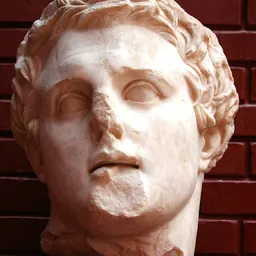

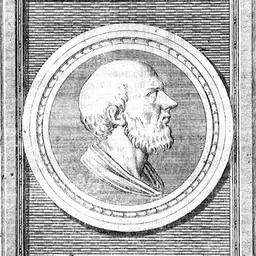
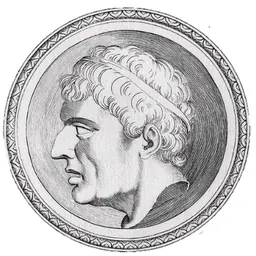

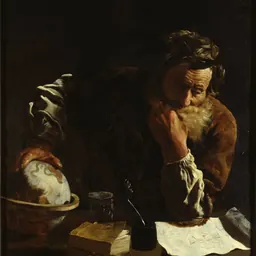

Related people
Same field, nearest in time



Contemporaries
People whose lives overlapped Ptolemy II Philadelphus's

Frequently asked questions
Who was Ptolemy II Philadelphus?
king of the Ptolemaic dynasty in Egypt (308–246 B.C.)
When was Ptolemy II Philadelphus born?
Ptolemy II Philadelphus was born in 308 BC in Kos.
When did Ptolemy II Philadelphus die?
Ptolemy II Philadelphus died in 246 BC in Alexandria.
What was Ptolemy II Philadelphus's occupation?
Ptolemy II Philadelphus was a sovereign.
What nationality was Ptolemy II Philadelphus?
Ptolemy II Philadelphus was Egyptian.
Sources & further reading
· Wikipedia: Ptolemy II Philadelphus
· DBpedia: Ptolemy II Philadelphus
Cite this page
APA: Biography.guide. (2026). Ptolemy II Philadelphus. https://biography.guide/ptolemy-ii-philadelphus/
MLA: "Ptolemy II Philadelphus." Biography.guide, https://biography.guide/ptolemy-ii-philadelphus/.
Chicago: "Ptolemy II Philadelphus." Biography.guide. https://biography.guide/ptolemy-ii-philadelphus/.
Data last updated: 2026-09-25 · Spot an error? Report a correction.
Page generated 2026-09-27 05:11 UTC