
About Procopio Cutò
Lived 1651 – 1727 (aged 76). Procopio Cutò was a Sicilian cook and businessperson, known for Café Procope and Gelato.
Procopio Cutò, also known as Francesco Procopio Cutò, Francesco Procopio dei Coltelli, or François Procope was an Italian chef, a subject of the Kingdom of Sicily. He founded in 1686 what has become the oldest extant café in Paris, Café Procope. It became the first literary coffeehouse in Paris. For over 200 years the cafe-restaurant attracted notables in the world of arts, politics, and literature.
Biography
Some sources say Cutò was born near Mount Etna in Sicily around the town of Aci Trezza. Other sources say he was born at or near Palermo.
Cutò received the surname dei Coltelli from the French, who mistook his Sicilian family name, as it is a homophone of French couteaux "knives". Coltelli means "knives" in Italian. Hence, translating back into Italian gives Francesco Procopio dei Coltelli, the other name he is known by. The marriage record shows the witnesses as his father Onofrio Cutò and his mother Domenica Semarqua. Procopio and Marguerite had eight children during their long marriage before Procopio became a widower in 1696.
Early life Cutò played in the snow when he was a boy. The snow was mixed with fruit juices and honey to make a type of sorbet. This type of "ice cream" was eaten by both rich aristocrats and by peasants. This is where Procopio got the idea of developing gelato. Procopio is credited with being the inventor of modern gelato.
Cutò worked first as a fisherman like his father Onofrio. His grandfather Francesco was also a fisherman from Aci Trezza who built gelatiere machines (ice cream makers) part-time, when he was not fishing. Francesco eventually left his invention to his grandson as an inheritance. Cutò tinkered with his grandfather's "ice cream" machine making various improvements and eventually felt that he had developed a machine that would produce gelato on a large scale and decided to promote the new product. He left Sicily and went to France by way of Italy.
Café Procope
Cutò acquired the skills to become a cook, possibly in Palermo on his way to France, arriving in Paris sometime between 1670 and 1674. There he joined the guild of the and apprenticed under the leadership of an Armenian immigrant named Pascal who had a kiosk (, ) on rue de Tournon selling refreshments, including lemonade and coffee. Pascal's attempt at such a business in Paris was not successful and he went to London in 1675, leaving the stall to Cutò.
Cutò had learned in about 1680 how to make a beverage of ice made of lemonade using salt to lower its temperature and keep cooler longer. He had a special royal license from King Louis XIV to sell a melange of refreshments including spices, iced drinks including "frozen waters", barley water, anise flower, orange flower, cinnamon flower, frangipan, and his improved version of the Italian "ice cream" of fruit-based gelatos like lemon and orange. This gave him exclusive rights to these unique sweet and cool products from his kiosk booth at the Foire Saint-Germain. Some were referred to as lemonade stands, meaning they sold various cold drinks including lemonade. There had been a café in Marseille in 1644 before Pascal and Cutò that soon became defunct, and a Levantine had opened a coffee house in Paris in 1643, which had also failed. It seems, however, that Pascal was the first to call his establishment a "café" or coffee house where one drinks coffee. Prior to then it was reserved for royalty only. Cutò's café served it in small porcelain bowls that resembled egg cups. He is sometimes referred to as "The Father of Italian gelato".
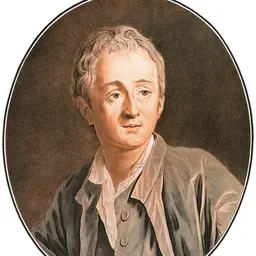
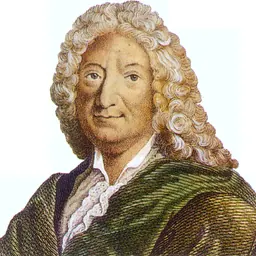
Cutò relocated his kiosk in 1686 to the rue des Fossés Saint-German. In 1689, as luck would have it, the Comédie-Française opened its doors across the street from his café, and it became a very popular cultural and political gathering place. Notable people who have frequented the café include Maximilien Robespierre, Victor Hugo, Paul Verlaine, Pierre Beaumarchais, Jean-Jacques Rousseau, Alain-René Lesage, Georges Danton, Jean-Paul Marat, Honoré de Balzac and Denis Diderot.
His café in the 17th century turned France into a coffee drinking society.
Later life Cutò obtained French citizenship in 1685. Dr. Procope shows up as a fictionalized character in Patrick Suskind's novel, Perfume
His second son Alexandre took over the Café Procope in 1716, but Cutò continued to operate another café during the annual Foire Saint-Germain.
Don’t just read it —
keep it.
Full-length biographies made to live with: read them, listen on the way to work, watch them tonight.
- E-book
- Audio
- Video
Instant download · yours to keep · every purchase keeps this site free
Important facts
People in Procopio Cutò's life
Named in this biography and alive at the same time
Related people
Same field, nearest in time




Contemporaries
People whose lives overlapped Procopio Cutò's





Frequently asked questions
Who was Procopio Cutò?
Italian chef (1651-1727)
When was Procopio Cutò born?
Procopio Cutò was born on 9 February 1651 in Palermo.
When did Procopio Cutò die?
Procopio Cutò died on 10 February 1727 in Paris.
What was Procopio Cutò's occupation?
Procopio Cutò was a cook and businessperson.
What was Procopio Cutò known for?
Procopio Cutò was known for Café Procope and Gelato.
What nationality was Procopio Cutò?
Procopio Cutò was Sicilian.
Sources & further reading
Cite this page
APA: Biography.guide. (2026). Procopio Cutò. https://biography.guide/procopio-cuto/
MLA: "Procopio Cutò." Biography.guide, https://biography.guide/procopio-cuto/.
Chicago: "Procopio Cutò." Biography.guide. https://biography.guide/procopio-cuto/.
Data last updated: 2026-09-25 · Spot an error? Report a correction.
Page generated 2026-09-27 05:08 UTC