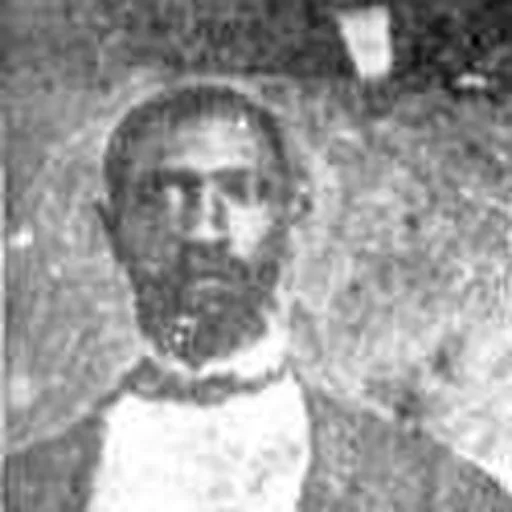
About Prince Rivers
Lived 1824 – 1887 (aged 62–63). Prince Rivers was an American politician.
Prince R. Rivers (c. 1824–1887) was a former enslaved man from South Carolina who served as a soldier in the Union Army and as a state politician during the Reconstruction era. He escaped and joined Union lines, becoming a sergeant in the 1st South Carolina Volunteers, a Union regiment in the American Civil War.
He had gained literacy as an enslaved man and after the war joined the Republican Party. He served as a delegate to the 1868 South Carolina Constitutional Convention, becoming known as an orator. He was one of three African-American founders of Aiken County in 1871, helped pick the site for the courthouse, and served as the state legislator from the county through 1874. He also served as a trial judge.
Early life and education Born into slavery in Beaufort, South Carolina, Prince R. Rivers worked on the Henry Middleton Stuart, Sr. (1803–1872) or H.M. Stuart plantation known as Oak Point or Pages Point. He served with the household staff and as carriage driver, among the elite of the estate's slaves, and learned to read and write. He escaped from slavery in 1862 after his master moved with his slaves to Edgefield County. Rivers stole one of Stuart's horses and rode through the Confederate lines to Beaufort, which was occupied by Union troops. He volunteered to enlist in the Union Army with the First South Carolina Volunteers. By the summer of 1862, more than 10,000 slaves had fled from Lowcountry and Midlands plantations to join Union lines along the coast.
Serving the Union Army Rivers was among the slaves (and their families) declared free in 1862 by Union General David Hunter under Congress' Confiscation Act of 1861. Hunter's decision was considered controversial, and the general was prohibited from enlisting former slaves. But they served in "Hunter's Regiment" with unpaid status for a time, and Rivers said he never regretted it.
The 1st South Carolina Volunteers and other African-American soldiers were promised at enlistment in writing to be paid the same as other soldiers. However, under the Militia Act of 1862, were paid less than half that. They and their supporters lobbied the government but did not gain full pay until June 1864, when an Act of Congress granted them equal pay, including what they were due retroactively. Nearly 180,000 African Americans served in the war and were critical to Union victory.
Reconstruction era After the war, Rivers returned to the Edgefield District, eventually settling on a farm outside Hamburg, which became a black-majority town in this period, with a thriving community. He entered the Republican Party and became active in state politics. He had reportedly learned to read and write while a slave, and proved to be a skilled orator and essayist. He served as registrar for Edgefield County in 1867. In the South Carolina Constitutional Convention of 1868, he was the delegate from Edgefield.
He was elected as a state legislator and later as a trial judge, and was deeply involved with Reconstruction politics. Rivers was one of three African-American founders of Aiken County, established by the state legislature in 1871 during Reconstruction, and he helped pick the site for the county courthouse. After a redistricting in 1872, Rivers was the state representative from the newly organized Aiken County. He later served as mayor, county coroner and justice of the peace, all local offices newly available to black candidates.
After the trial, Rivers' home was burned and property stolen or destroyed by Red Shirts. Violence continued in the following weeks as the white militia worked to suppress black voting in the Upland counties, with a massacre of an estimated 30-100 blacks over several days in September in Ellenton. The Democrats regained control of the state legislature and governor's office in 1876, in an election marked by fraud. It was settled in a national compromise by which the Republican administration agreed to withdraw federal troops from the South, officially ending Reconstruction.
In South Carolina, white Democrats passed laws to impose segregation and "Jim Crow", and continued violence at elections, but African-American George Henry White was elected to US Congress in the 1890s. In 1895 the Democrats passed a new constitution that included requirements that effectively disfranchised blacks in the state. After the rise of whites and imposition of white supremacy, Rivers worked as a house painter and coachman until his death at age 65.
Don’t just read it —
keep it.
Full-length biographies made to live with: read them, listen on the way to work, watch them tonight.
- E-book
- Audio
- Video
Instant download · yours to keep · every purchase keeps this site free
Important facts
People in Prince Rivers's life
Named in this biography and alive at the same time


Related people
Same field, nearest in time



Contemporaries
People whose lives overlapped Prince Rivers's





Frequently asked questions
Who was Prince Rivers?
American politician in South Carolina (1824-1887)
When was Prince Rivers born?
Prince Rivers was born in 1824.
When did Prince Rivers die?
Prince Rivers died in 1887.
What was Prince Rivers's occupation?
Prince Rivers was a politician.
What nationality was Prince Rivers?
Prince Rivers was American.
Sources & further reading
Cite this page
APA: Biography.guide. (2026). Prince Rivers. https://biography.guide/prince-rivers/
MLA: "Prince Rivers." Biography.guide, https://biography.guide/prince-rivers/.
Chicago: "Prince Rivers." Biography.guide. https://biography.guide/prince-rivers/.
Data last updated: 2026-09-23 · Spot an error? Report a correction.
Portrait: Wikimedia Commons · author & licence
Page generated 2026-09-27 05:04 UTC