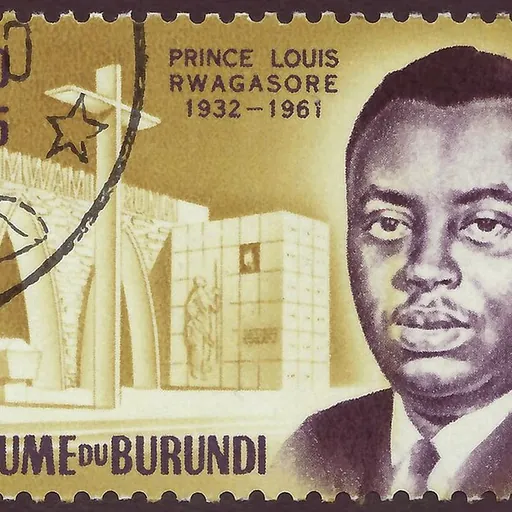
Prince Louis Rwagasore of Burundi
Burundian Royal and Prime Minister of Burundi (1961)
About Prince Louis Rwagasore of Burundi
Lived 1932 – 1961 (aged 29). Prince Louis Rwagasore of Burundi was a politician.
Death Assassination On 13 October 1961, Rwagasore was shot in the throat, fired from approximately away from a group of bushes while dining outdoors with friends and his cabinet members at the Hotel Tanganyika in Usumbura. He was pronounced dead at the scene. In the ensuing confusion, Rwagasore's assassin jumped into a waiting car and escaped. After being inspected by a doctor, Rwagasore's corpse was taken to Rhodain Hospital. A witness described the getaway car to the authorities, and an investigator was able to connect the vehicle to a group of people he had seen in the capital earlier that day. Within three days the police had arrested a Greek national, Ioannis Kageorgis—who had fired the shot—and three Burundian accomplices: Antoine Nahimana, Henri Ntakiyica, and Jean-Baptiste Ntakiyica. The latter three were all members of the PDC. The group quickly admitted responsibility for the murder and incriminated three other persons in their plot: Michel Iatrou, Jean-Baptiste Ntidendereza, and Joseph Biroli. The former was a Greek national who had given money to the PDC and was a business associate of Kageorgis. The latter two were high-ranking members of the PDC, with Ntidendereza having previously served as a minister in government. As sons of Chief Pierre Baranyanka, they were also distant cousins of Rwagasore.
Investigation The investigators concluded that Ntidendereza and Biroli planned the assassination. Iatrou denied this, while Ntidendereza initially implicated himself in the conspiracy, saying that FC leaders viewed Rwagasore as an existential threat to multi-party democracy and that the prime minister had planned assassination attempts against himself and his father, before later recanting his testimony. The investigators also uncovered three previous assassination plots against Rwagasore in September which had been cancelled. On 2 April 1962 a Burundian tribunal composed of Belgian judges sentenced Kageorgis, Nahimana, and Ntidendereza to death for their role in the murder. Two others accused of minor roles in the affair, Pascal Bigirindavyi (a Burundian) and Liverios Archianotis (a Greek), were given prison sentences. On 7 May the Court of Appeal affirmed Kageorgis' sentence but commuted the other death sentences to 20 years of penal servitude. On 30 June, one day before Burundi's independence, Kageorgis was executed. Following independence Burundi established a Supreme Court with retroactive competence, and on 27 October it ruled the previous trials to have violated the right to judgement by a jury established by the new constitution and ordered a retrial. On 27 November the lower court found Ntidendereza, Biroli, Nahimana, Iatrou, and Ntakiyica guilty and sentenced them to death. The defendants' final appeal to the Supreme Court was denied, as were the attempts of the Belgian government to convince the Mwami to offer clemency, and on 15 January 1963 all five were publicly hanged.
Responsibility
There was immediate concern in Burundi following the killing that the Belgian administration shared responsibility for Rwagasore's murder. When Governor Harroy went to the hospital to pay respects to the corpse of the late prime minister, Rwagasore's mother confronted him in a hallway and slapped him. Belgian Foreign Minister Paul-Henri Spaak sent several telegrams to officials in Usumbura inquiring about the role of "Europeans" in the events. Spaak was also fearful of a UN inquiry and ordered Harroy to send him a detailed report on the murder which he could present so as to assuage international concerns. The UN General Assembly ultimately passed a resolution calling for an investigation and dispatched a Commission for Ruanda-Urundi delegation to Burundi to draft a report. The commission noted complaints from UPRONA leaders which accused the administration of being complicit in the murder, with additional accusations of culpability lodged against Brioli's and Ntidendereza's father, Chief Baranyanka. The body also received complaints that the PDC leaders were given favourable treatment in prison. The commission's report was ultimately dismissive of such concerns and affirmed the findings of the original criminal investigation.
Generally, little academic attention has been paid to the details of the murder. Citing the distraction of "recent events", Muhirwa declined to offer a government programme and the Legislative Assembly sat in session aimlessly for the next few months. The establishment of the role of opposition figures in the assassination plot and their subsequent execution led to the immediate demise of a formal parliamentary opposition in Burundi. Rwagasore's death derailed his attempts to build national inter-ethnic cohesion and facilitated the growth of Hutu–Tutsi tensions; the latter came to eclipse the internal Ganwa rivalries in national politics. Subsequent governments remained ethnically diverse but unstable. The assassination also fractured UPRONA, as Rwagasore's former lieutenants struggled to succeed him as the party's leader; figures of Ganwa aristocracy eventually succeeded in claiming control of the organisation. UPRONA subsequently used Rwagasore's image to promote itself while disregarding his vision for the party, ultimately becoming a vehicle for exclusionary, Tutsi-elitist, single-party rule. as was the sole aircraft of the country's first state airline, and the Legislative Assembly created the Order of Prince Louis as a national order of merit.
In 1966 Captain Michel Micombero launched a military coup, overthrowing the monarchy and transforming Burundi into a republic with himself as its president. UPRONA subsequently became the only legal political party. Micombero referred to himself as the "successor" and sometimes "little brother" of Rwagasore. Throughout his tenure the late prime minister was frequently honoured in public ceremonies, and his portrait remained prevalent in public places. In 1976, Micombero was overthrown and replaced by Colonel Jean-Baptiste Bagaza. Bagaza tried to present himself as a moderniser, and Rwagasore's reputation thus competed with him. As a result, he deemphasised mention of Rwagasore and suspended celebration of the 13 October holiday. In 1987 Bagaza was overthrown by Major Pierre Buyoya. Following ethnic violence in 1988, Buyoya declared a policy of national unity, and used Rwagasore as a symbol of this. Under Buyoya's tenure, more portraits of Rwagasore were hung in public places, the mausoleum was renovated and a UPRONA-sponsored Rwagasore Institute was created to promote national reconciliation.
In the 1990s, Burundi underwent a democratic transition which included the reestablishment of multi-party politics. The end of UPRONA's monopoly on power led to a decline in public celebration of Rwagasore. One of the key nascent opposition parties, Front for Democracy in Burundi (, FRODEBU), made reference to Rwagasore in its official publication but avoided all associations of him with UPRONA. FRODEBU won the parliamentary and presidential elections in 1993. The new president, Melchior Ndadaye, did not attend any official commemorations for Rwagasore in October. Ndadaye was assassinated in a coup attempt later that month, plunging Burundi into a crisis which evolved into a civil war. During this time Rwagasore was usually invoked only by politicians in self-serving fashion or by newspapers calling for reconciliation.
In the late 1990s, the belligerents in the civil war partook in peace talks. The resulting Arusha Accords praised the "charismatic leadership of Prince Louis Rwagasore and his companions" who had kept Burundi from "plunging into a political confrontation based on ethnic considerations". The implementation of the accords and further negotiation eventually resulted in the election of Pierre Nkurunziza as president in 2005. During his tenure, he attended annual celebrations of Rwagasore in October and frequently mentioned him in his speeches. His government also repaired several monuments to the late premier and erected a new one jointly honoring him and Ndadaye at a roundabout in Bujumbura. In 2019 he renamed Rwagasore Stadium, but stated that the planned parliament building to be built in Gitega would bear Rwagasore's name.
Popular reputation
After his death, historian Aidan Russell wrote that Rwagasore's reputation was quickly transformed into that of a "hero and martyr" and that he was the subject of a "competitive hagiography". Within Burundi, his reputation enjoys nearly-universal acclaim, with his speeches often quoted in political discussions
Don’t just read it —
keep it.
Full-length biographies made to live with: read them, listen on the way to work, watch them tonight.
- E-book
- Audio
- Video
Instant download · yours to keep · every purchase keeps this site free
Important facts
People in Prince Louis Rwagasore of Burundi's life
Named in this biography and alive at the same time
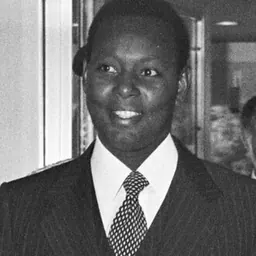
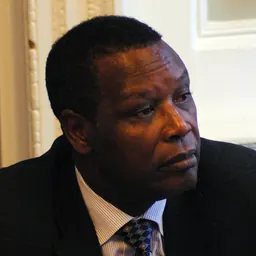

Related people
Same field, nearest in time
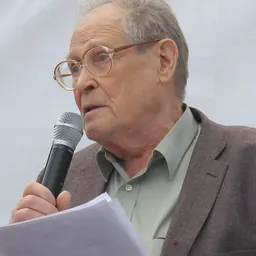



Contemporaries
People whose lives overlapped Prince Louis Rwagasore of Burundi's
Frequently asked questions
Who was Prince Louis Rwagasore of Burundi?
Burundian Royal and Prime Minister of Burundi (1961)
When was Prince Louis Rwagasore of Burundi born?
Prince Louis Rwagasore of Burundi was born on 10 January 1932 in Gitega.
When did Prince Louis Rwagasore of Burundi die?
Prince Louis Rwagasore of Burundi died on 13 October 1961 in Bujumbura.
What was Prince Louis Rwagasore of Burundi's occupation?
Prince Louis Rwagasore of Burundi was a politician.
What nationality was Prince Louis Rwagasore of Burundi?
Prince Louis Rwagasore of Burundi's recorded nationality: Kingdom of Burundi.
Sources & further reading
· Wikipedia: Prince Louis Rwagasore of Burundi
Cite this page
APA: Biography.guide. (2026). Prince Louis Rwagasore of Burundi. https://biography.guide/prince-louis-rwagasore-of-burundi/
MLA: "Prince Louis Rwagasore of Burundi." Biography.guide, https://biography.guide/prince-louis-rwagasore-of-burundi/.
Chicago: "Prince Louis Rwagasore of Burundi." Biography.guide. https://biography.guide/prince-louis-rwagasore-of-burundi/.
Data last updated: 2026-10-01 · Spot an error? Report a correction.
Portrait: Wikimedia Commons · author & licence
Page generated 2026-10-05 04:40 UTC