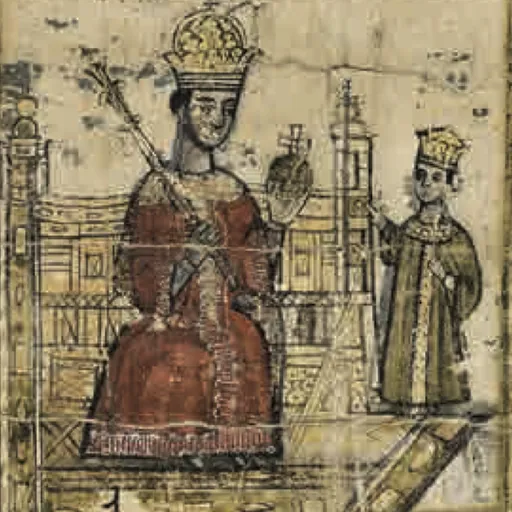
About Prince Bakar of Kartli
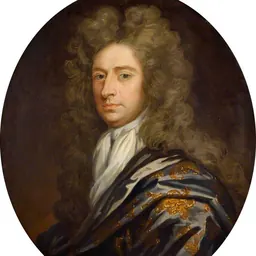
Lived 1699 – 1750 (aged 50). Prince Bakar of Kartli was a Georgian diplomat, royalty and military personnel.
Bakar (; 7 April 1700 – 1 February 1750), of the Bagrationi dynasty, was appointed regent of Kartli in 1716, and in the absence of Vakhtang VI, he ruled as king (mepe) of Kartli from 1717 to 1719 under the Persian title Shah Navaz Khan III, and briefly reigned again from 1723 to 1724 under the Ottoman title Ibrahim Pasha.
Born into a dynasty that had ruled Kartli since 1658, Bakar was the son of king Vakhtang VI and was involved in state affairs from an early age. Part of his youth was spent in exile during the violent reign of his uncle Jesse of Kartli . At the age of sixteen, he was appointed by the Safavid authorities to govern Kartli in his father’s absence, while Vakhtang VI was active in Persia, a regency that lasted until 1719. During this period, Bakar challenged the power of the local nobility and introduced a number of internal reforms, before relinquishing authority to his father following a Lezgin invasion.
A supporter of a pro-Persian orientation for Georgia, Bakar was appointed commander of Shah Soltan Hoseyn's imperial guard in 1722. However, Vakhtang VI prevented him from aiding the Safavids during the Afghan invasion of Persia. Vakhtang’s subsequent shift toward a pro-Russian foreign policy led to open conflict between the Persian forces in the Caucasus and the Georgian royal family. Despite Bakar’s military efforts, Vakhtang VI was deposed in 1723. In June of that year, following an Ottoman invasion, Bakar was restored to power and installed as king in Tbilisi. His reign proved short-lived: effective control of Kartli rested with the Ottoman authorities, prompting Bakar to rebel against his own government and wage guerrilla warfare alongside his father.
Lacking international support and facing overwhelming opposition, Bakar and the royal family went into exile in Russia in July 1724, establishing a significant Georgian community in Moscow. There, Bakar entered Russian military and diplomatic service and became involved in imperial policy in the North Caucasus. Repeated attempts to restore him to the Georgian throne failed due to Russia’s reluctance to provide military backing. After the death of Vakhtang VI in 1737, Bakar became a claimant to the throne of Kartli. In Moscow, he led a prosperous Georgian émigré community under Russian protection and, together with his brother Vakhushti, created an important cultural center that included a major printing press.
Early life
Youth Bakar was born on 7 April 1700 (or 11 June 1699), the first legitimate son of Prince Vakhtang, a grandson of King Vakhtang V , and Rusudan of Circassia, a princess from the North Caucasus. He also had an elder half-brother, Vakhushti, the illegitimate son of Vakhtang.
Bakar was born in the citadel of Kharagauli, in the Kingdom of Imereti, where his father was living in exile following the expulsion of his uncle George XI from the throne of Kartli by Heraclius I. In 1703, the royal family returned to Tbilisi, the capital of Kartli, after Vakhtang was appointed regent of the kingdom by Persia, acting in place of the restored George XI, who was then campaigning in Afghanistan. Shah Soltan Hoseyn likewise abandoned him: instead of providing military assistance, he limited his support to sending gifts in order to preserve Jesse’s formal allegiance. Finally, after repeated petitions from the Kartlian nobility, Persia agreed to depose Jesse.
Regent
Domestic policy
On 1 June 1716, Vakhtang, still in Isfahan, agreed to convert to Islam and was recognized as King of Kartli under the name Vakhtang VI. However, as commander-in-chief of the Persian armed forces and governor of Tabriz, he was required to remain at the court of Shah Soltan Hoseyn. The shah nevertheless deposed Jesse and decided to appoint the young Bakar as janishin (“lieutenant”) of the kingdom. With Tbilisi devastated by an outbreak of bubonic plague, Bakar landed at Mtskheta on 17 September.
External problems Despite the support of Bakar and his Persian allies, the prince faced a growing number of external challenges on the borders of Kartli, partly encouraged by the supporters of Jesse. In particular, in Kakheti, King David II accused his vizier Qiassa of spying for Tbilisi and had him imprisoned in Pankisi, before a Kartlian mission secured his release. Qiassa’s subsequent settlement in Tbilisi and Bakar’s gift of a palace to the disgraced minister further aggravated relations between the two Georgian kingdoms, a tension that caused concern among Persian envoys. Only the return of Vakhtang VI to his throne succeeded in restoring calm between Kartli and Kakheti.
In the summer of 1717, an army of 7,000 Lezgins from Jar-Balakan crossed Kakheti and devastated the town of Bolnisi and the villages of the Ktsia valley. Bakar sent his uncle Simon with 300 cavalrymen in pursuit, but despite their superior military experience, they were defeated at the battle of Nazara and chased as far as Marneuli. Lezgin raids became routine and abated only during the height of the summer heat. When the Lezgins began to leave Kartli and attack Iranian territories, Isfahan decided to send Vakhtang VI back to Georgia to defeat them.
In August 1719, Vakhtang VI returned to Kartli. Bakar welcomed him with a military, noble, and religious procession at the frontier town of Lori, accompanied by Catholicos Domentius IV. The historian Sekhnia Chkheidze, an eyewitness to the events, describes the warm embrace between father and son, their return to Tbilisi, and the coronation of Vakhtang VI at Mtskheta.
Under Vakhtang VI
Under the reign of Vakhtang VI, Bakar became a close deputy of his father. In 1720 (or 1719, according to Nikoloz Berdzenishvili), the king dispatched Bakar and Vakhushti to confront Duke Shanshe of Ksani, who had just escaped from his imprisonment in Tbilisi. During the campaign, Bakar was responsible for the eastern front and inflicted a defeat on Shanshe, who entrenched himself at Churta before being finally overcome when the king called upon troops from Racha. The duke surrendered to Bakar, who had him imprisoned in Imereti.
Soon afterwards, Vakhtang undertook a major shift in his foreign policy when Persia refused to assist him against the Lezgins. At the same time, the Russian Empire stood at the gates of the Caucasus, preparing for a southward expansion, while Afghanistan invaded Persia, severely weakening Safavid power and killing Rostom Khan—Vakhtang’s brother and commander-in-chief of the Persian armed forces—at the Battle of Gulnabad on 8 March 1722. Within days, the Afghans laid siege to Isfahan, and Shah Soltan Hoseyn, in desperation, appealed for the support of Kartli and appointed Bakar qollar-aghassi, or commander of the imperial guard, to replace Rostom Khan.
In his new position, Bakar—later described by Vakhushti as “a man of great intellect and a friend of the Persians”—assembled an army of 3,000 to 4,000 Georgians and marched toward Isfahan. This development alarmed the Afghans, as the Georgians then enjoyed a reputation as agile and formidable soldiers, and Emir Mahmud Hotak was forced to confront a mutiny within his own ranks. Ange de Gardane, the French ambassador to Persia, reported at the time: “Some claim that the prince of Georgia [Vakhtang VI] is sending his son [Bakar] here at the head of 12,000 Georgians. This, my lord, is the true way to restore the affairs of this kingdom and to compel Mahmud to withdraw; otherwise, he runs great risks against the Georgian troops.”
In May, Bakar reached Syunik, but a change in his father’s policy altered his plans. In Tbilisi, Persian envoys reported the arrival of Russian representatives, while Emperor Peter the Great was preparing to enter into war against Iran. Vakhtang VI promptly sent Queen Rusudan and Anna Sidamoni, Bakar’s wife, to intercept the prince and demand his return to Georgia. Isfahan remained under siege, and Russia declared war on the weakened Persian state in July.
Bakar and the royal adviser Sulkhan-Saba Orbeliani strongly opposed a Russo–Georgian alliance, fearing the imperial ambitions of Peter the Great. Nevertheless, the tsar captured Derbent in August and summoned Vakhtang VI to Ganja in order to secure the region ahead of the southward advance of Russian forces. Vakhtang and Bakar departed together on 20 August, arrived in September, and began expelling the Lezgins from the area while uniting the Christian communities of Shirvan and Karabakh. Father and son remained there for three months, before learning of the sudden withdrawal of Russian troops.
During their stay in Ganja, Isfahan fell to the Afghans on 23 October, and the Georgians dispatched the ambassador Sekhnia Chkheidze to Tahmasp, the son of Shah Soltan Hoseyn, who was then in flight at Qazvin. In November, Tahmasp sent gifts to Vakhtang and requested military assistance from Bakar, but following the king’s refusal, both men returned to Georgia. On 22 November 1722, they were back in Tbilisi.
War for Tbilisi
In December, Tahmasp, who governed the Safavid domains while Shah Soltan Hoseyn was imprisoned by the Afghans, issued an ultimatum to the Georgian royal family. He demanded that Vakhtang VI convene the tribal leaders of Azerbaijan in order to retake Shirvan from the Russians, and that Bakar—who still held the title of qollar-aghassi—march on Isfahan “with as many Georgian troops as possible”. Vakhtang refused to jeopardize his newly formed and fragile alliance with Russia. In response, Tahmasp ordered his vassal Constantine II of Kakheti to attack Kartli. Before the end of 1722, Constantine reached Lilo, a village near Tbilisi. In retaliation, Bakar and his uncle Jesse mustered troops at Mtskheta and devastated the Kakhetian province of Saguramo.
In Kakheti, the forces of Bakar and Jesse were reinforced by those of Prince Teimuraz, Constantine’s anti-Persian half-brother. The three then returned together to Tbilisi, where Teimuraz swore allegiance to Vakhtang VI. In January 1723, Tahmasp announced the deposition of Vakhtang VI and recognized Constantine II as the sole governor of Georgia. At the same time, he ordered the Persian garrison stationed in Tbilisi to open fire on the royal palace. Constantine arrived simultaneously at the gates of the capital, initiating a five-month battle within the city.
At the head of the royalist forces, Bakar commanded an army reinforced by a coalition from western Georgia, including Alexander V of Imereti, Shoshita of Racha, and Simon Abashidze. Constantine II, by contrast, was supported by Muslim troops from Ganja and Erevan, as well as Lezgin militias. During the first days of the fighting, clashes were concentrated in the Cliff Quarter, which changed hands repeatedly before being decisively captured by Bakar. Constantine II then established a strong position at Avlabari, a hill several kilometers from the center of Tbilisi.
Despite Bakar’s successes in Tbilisi, the invaders ravaged the rest of the kingdom. The governor of Ganja sent his troops into Georgian Armenia (Somkhiti), forcing Vakhushti to leave his brother in order to defend the province’s agricultural heartland. After securing the region, Vakhushti captured Mtskheta, which served as Constantine II’s base of operations, seized several military commanders, and enabled Bakar to retake Mount Tabori, a strategic position, during a night assault. These successive defeats compelled Constantine II to concentrate his mountain and Lezgin mercenaries for a final attempt to seize the capital. However, Bakar inflicted a bloody defeat on him on the banks of the Mtkvari River with the help of Imeretian reinforcements. Constantine fled, and Bakar was prevented from pursuing him by his advisers because of the exhausted state of his troops.
Royal Guerrilla Warfare
For several days, Constantine evaded repeated attempts by Bakar to capture him. On 7 May 1723, he returned to the gates of Tbilisi, this time with nearly 7,000 Lezgin mercenaries, while the forces of Vakhtang VI were weakened. On 8 May, the royal family abandoned the capital, and Constantine II sacked the city, burning numerous churches and looting residential quarters. Vakhtang and Bakar first withdrew to Mtskheta before separating: the king went to Gori, while Bakar sought military assistance from his father-in-law, Duke George of Aragvi, at Dusheti, but was refused.
After rejoining their father at Gori, Bakar and Vakhushti campaigned in Satsitsiano, in central Kartli, but were forced to retreat after suffering another defeat at the hands of Constantine II. Vakhtang appealed for Russian intervention, as Russian forces were then engaged in warfare along the Caspian Sea, but, receiving no response, he turned instead to the third major regional power, the Ottoman Empire. During the first week of June 1723, Bakar and Jesse met the Ottoman serasker Ibrahim at the village of Poka to negotiate the recapture of Tbilisi. The talks initially collapsed when it emerged that the Ottomans were also in contact with Constantine. However, Bakar was compelled to return to the negotiating table after a final appeal to Russia again went unanswered.
On 12 June, a substantial Ottoman force, supported by Georgian troops under the command of one of Bakar’s brothers, captured Tbilisi with little resistance. On the same day, Vakhtang, Bakar, and Simon Abashidze entered the capital.
Bakar in Power Upon the capture of Tbilisi, the Ottomans betrayed the royal family and imprisoned not only Constantine of Kakheti, but also Bakar and Jesse, demanding payment in exchange for the throne. Constantine offered the serasker Ibrahim “300 purses” as well as the cities of Ganja and Erevan to the Ottoman Empire, but Vakhtang secured his son’s release with twelve mules laden with gold, silver, and jewelry. On 13 June, Bakar was placed on the throne of Kartli under the new name Ibrahim Pasha. A council composed of the pashas Köprülü Abdullah of Erzurum and Ishaq Jaqeli of Childir, together with the governor of Kars, granted Bakar “the administration of all Georgia”. Vakhtang nevertheless continued to be recognized as king by the high nobility and retained considerable influence over his son’s decisions, while residing in Tskhinvali until his eventual exile.
Forced to wear Ottoman dress in his palace, Bakar moved swiftly to consolidate his authority. Constantine was imprisoned on the day of Bakar’s accession, and the Persian garrison of Tbilisi was executed by Ottoman janissaries. However, Bakar was obliged to accept the payment of an annual tribute of 4,000 piastres to Ottomans, and the serasker Ibrahim imposed a reign of terror on the Christian population of the capital with his force of 40,000 soldiers. Exploiting divisions among the Kartlian nobility, the Ottomans compelled Bakar to employ brutal measures to secure control. Numerous nobles were executed, including his father-in-law, George of Aragvi, who was beheaded during a hunting with Bakar. Ishaq Jaqeli, pasha of Childir, forced Bakar to provide troops for his conquest of Ganja, in return for which he settled a dispute between the crown and the noble Chkheidze family. Vakhtang, for his part, was compelled to suppress the anti-Ottoman rebellion of Shanshe of Ksani by employing Lezgin mercenaries, who subsequently mutinied and ravaged Kartli.
In September 1723, Bakar came to regret his alliance with Ottomans and entered into negotiations with his former enemy, Constantine II. He secured Constantine’s release for the price of 200 purses and allowed him to resume his throne at Telavi through a clandestine arrangement that was officially presented as Constantine’s escape from his Tbilisi prison. When Constantine massacred a Turkish garrison that was ravaging Kakheti toward the end of 1723, Ottomans invaded his kingdom, forcing him to take refuge in the forests, and appointed Jesse as governor of the region, while annexing the provinces of Borchalo and Qazakh to Bakar’s domains. In January 1724, Constantine sent his brother Teimuraz to negotiate secretly with Bakar in Tbilisi, and a few days later the two kings met at Mtskheta, from which point they formed an anti-Ottoman alliance.
Deposed King Bakar and Constantine hoped to enlist the support of neighboring powers in their effort to liberate Georgia from Ottoman rule. Their alliance envisaged the backing of Tahmasp and Peter the Great, but these expectations were disappointed: the Safavids were themselves preoccupied with continuing wars against the Afghans, while Russia had no intention of entering into war with the Ottoman Empire. The Treaty of Constantinople of 24 July 1724 between the Ottomans and Russia formally confirmed the abandonment of Georgia to Ottoman control. Nevertheless, the departure of the serasker Ibrahim in September 1723 offered Bakar a measure of hope, as the imposing Ottoman force of 40,000 soldiers was reduced to a garrison of only 4,000–5,000 men, while Bakar enlisted loyal followers from Karabakh and Ganja to protect him.
In the spring of 1724, Bakar left Tbilisi and launched an anti-Ottoman guerrilla campaign together with Constantine and Teimuraz. Vakhtang VI, for his part, attempted to negotiate with the Ottoman authorities and even offered to capture his own son in exchange for the throne. However, the massacre of 500 Ottomans by Bakar at Poka prompted the occupiers to depose the prince. Bakar was soon reinforced by Shanshe of Ksani, and together they retook Mukhrani, expelling the Lezgins who were then ravaging the province. Bakar subsequently joined his father at Ali before marching on Mtskheta, where the forces of Jesse and Constantine II assembled to form a Georgian army with the aim of retaking Tiflis. This plan failed, however, when Jesse abandoned the siege after being bribed by the Ottomans, who appointed him king of Kartli and forced Vakhtang, Bakar, and Constantine to withdraw toward Gori.
Jesse, now at the head of Ottoman forces, attacked Bakar at the village of Goristavi. Defeated, the prince took refuge at Ateni, while the Ottomans conquered the province of Sabaratiano. When Jesse pursued him further, Bakar fled into the Caucasus Mountains. Ottoman troops then devastated the provinces of Mukhrani and Samilakhoro, burned Tskhinvali, and returned to Tbilisi.
Under unclear circumstances, Bakar briefly managed to re-establish himself in the capital, from where he entered into contact with Russian envoys who offered exile in Russia to the royal family. In a letter to the ambassadors, Bakar accepted this proposal:“We have understood what your envoy has told us; a messenger has come to you from the great Emperor. Since you are devoted to that monarch, as well as to me, you must know what good treatment and services are fitting toward him.”In June 1724, Bakar left Tbilisi for the last time. He joined Vakhtang VI and his family at Tskhinvali, from where they departed together for Racha, accompanied by a retinue of between 1,200 and 1,400 Georgians. Refusing to submit to Constantine, the dukes of Aragvi and Ksani made a final appeal to Vakhtang to leave Bakar behind to lead the Georgian resistance. On 15 July,
An unnamed daughter, who married Shiosh Sachinoshvili (Baratashvili); Prince Alexander (1726–1791), a claimant to the Georgian throne in opposition to Heraclius II; Prince Levan (1728–1763), a Russian military officer; Princess Elisabeth (died 1768), who married Nikolai Ivanovich Odoevsky (died 1798); Princess Mariam (died 1807).
Don’t just read it —
keep it.
Full-length biographies made to live with: read them, listen on the way to work, watch them tonight.
- E-book
- Audio
- Video
Instant download · yours to keep · every purchase keeps this site free
Important facts
People in Prince Bakar of Kartli's life
Named in this biography and alive at the same time

Related people
Same field, nearest in time



Contemporaries
People whose lives overlapped Prince Bakar of Kartli's



Frequently asked questions
Who was Prince Bakar of Kartli?
King of Kartli (1699-1750)
When was Prince Bakar of Kartli born?
Prince Bakar of Kartli was born on 7 April 1699.
When did Prince Bakar of Kartli die?
Prince Bakar of Kartli died on 1 February 1750 in Moscow.
What was Prince Bakar of Kartli's occupation?
Prince Bakar of Kartli was a diplomat, royalty and military personnel.
What nationality was Prince Bakar of Kartli?
Prince Bakar of Kartli was Georgian.
Sources & further reading
· Wikipedia: Prince Bakar of Kartli
Cite this page
APA: Biography.guide. (2026). Prince Bakar of Kartli. https://biography.guide/prince-bakar-of-kartli/
MLA: "Prince Bakar of Kartli." Biography.guide, https://biography.guide/prince-bakar-of-kartli/.
Chicago: "Prince Bakar of Kartli." Biography.guide. https://biography.guide/prince-bakar-of-kartli/.
Data last updated: 2026-09-24 · Spot an error? Report a correction.
Portrait: Wikimedia Commons · author & licence
Page generated 2026-09-27 05:09 UTC