
About Prince Arisugawa Takehito
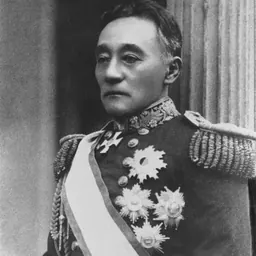
Lived 1862 – 1913 (aged 51). Prince Arisugawa Takehito was a Japanese military personnel and politician.
Prince was the 10th head of a cadet branch of the Japanese imperial family and a career officer in the Imperial Japanese Navy.
Early life Prince Takehito was born in Kyoto as a scion of the house, one of the shinnōke branches of the Imperial Family of Japan, which were eligible to succeed to the Chrysanthemum Throne in the event that the main line should die out. Prince Takehito is born to Prince Arisugawa Takahito and Noriko Mori; a concubine. As he was born when the country was still under rule by the Tokugawa Bakufu, he was sent as a youth into the Buddhist priesthood, and assigned to serve at the monzeki temple of Myōhō-in in Kyoto. After the Meiji Restoration, he was recalled to secular life, and relocated to Tokyo in 1871.
Naval and diplomatic career In 1874, on orders from Emperor Meiji, Arisugawa enrolled in the Imperial Japanese Naval Academy. In 1877, despite his youth, he was sent as an observer to the Satsuma Rebellion, to observe the devastation first hand, and landed in Kagoshima shortly after it was secured by Imperial forces.
In 1879, Arisugawa was sent as a military attaché to Great Britain and embarked upon , the flagship of Britain's Royal Navy in the Far East, for further training. He served in the Channel Squadron for a year before returning to Japan as an ensign.
In 1880, shortly after his wedding, Arisugawa was again sent to England, this time as a cadet at the Royal Naval College, Greenwich. He returned to Japan in June 1883. Arisugawa and Maeda Yasuko, his wife made an extensive tour of Europe and America in 1889.
Arisugawa's first naval command was that of the corvette in early 1890, and his next was the cruiser later that year.
In 1891, Arisugawa was assigned to escort Russian Crown Prince Nikolai, later Tsar Nicholas II, during his tour of Japan; his prior experience studying in England was the stated reason for the appointment. On 11 May, the party was returning by rickshaw from an outing around Lake Biwa. Nikolai was riding immediately ahead of Prince George of Greece, with Arisugawa following behind them, when a guard escorting the group drew his sword and attacked Nikolai. This event became known as the Ōtsu incident. Arisugawa requested that Emperor Meiji personally visit and console the wounded prince; the visit is one of the events historians point to in explaining why the incident did not produce a larger deterioration in relations with Russia.
In 1892, Arisugawa was posted as captain of the cruiser . He succeeded to the Arisugawa-no-miya title upon the death of his half-brother, Prince Arisugawa Taruhito, on January 15, 1895.
During the First Sino-Japanese War (1894–95), Arisugawa commanded the cruiser and subsequently the cruiser in combat. He attained the rank of rear admiral on November 11, 1896. In 1896, he travelled to England again to represent Emperor Meiji at the Diamond Jubilee celebrations for Queen Victoria.
Arisugawa advanced to the rank of vice admiral on September 26, 1899.
King Edward VII appointed Arisugawa an Honorary Knight Grand Cross in the civil division of the Most Honourable Order of the Bath (GCB) in the November 1902 Birthday Honours list published on the British King′s birthday.
Arisugawa was promoted to full admiral on June 28, 1904, the first member of the imperial family to reach that rank and only the sixth person in Japan to hold it. Following the fall of Port Arthur in January 1905 he was made a military councillor, formally advising the Emperor. He was abroad when the decisive Battle of Tsushima was fought in May 1905, having travelled with his wife to represent the Emperor at the wedding of the German Crown Prince Wilhelm (1882–1951) to Duchess Cecile of Mecklenburg-Schwerin. Meiji appointed the prince a member of the Order of the Golden Kite (3rd Class) for his service during the Russo-Japanese War. He and his wife visited Great Britain again on their way back to Japan.
Final years Arisugawa had a weak constitution from childhood and took frequent medical leaves during his naval career. He built a summer home in Kobe and went into semi-retirement in 1909 to recuperate from tuberculosis. He died there on July 5, 1913. News of his death was not made public immediately; his body was taken back to his palace in Kōjimachi, Tokyo by a specially chartered train, and his death was formally announced on July 10, 1913.
He was advanced to the honorary rank of marshal admiral on July 7, 1913. This came after his actual death but before his official death date, so the promotion was not treated as posthumous. He was, however, awarded the Collar of the Supreme Order of the Chrysanthemum posthumously.
Marriage and family On December 11, 1880, Arisugawa married Maeda Yasuko (March 15, 1864 – June 30, 1923), the fourth daughter of Maeda Yoshiyasu, the last daimyō of Kaga Domain (modern Ishikawa prefecture), by whom he had three children. married Prince Tokugawa Yoshihisa; their daughter was Kikuko, Princess Takamatsu.
Since the prince died without a male heir (his son, Tanehito, having died of appendicitis in 1908 while attending the Imperial Japanese Naval Academy at Etajima, Hiroshima), the direct line of descent of the house of Arisugawa-no-miya became extinct.
However, his boyhood friend Prince Yoshihito, Emperor Taishō, revived the house (which reverted to its original name of Takamatsu-no-miya) in favor of his third son, Prince Takamatsu Nobuhito. Prince Nobuhito subsequently married Kikuko Tokugawa, a granddaughter of Prince Arisugawa Takehito.
Memorials The site of Arisugawa's Tokyo palace is now the Arisugawa-no-miya Memorial Park. It is located in Minami Azabu, Minato, Tokyo and its extensive gardens are open to the public. The site of his seaside summer home in Hayama, Kanagawa Prefecture is now the site of the annex of the Kanagawa Prefectural Museum of Modern Art Arisugawa's summer villa in Inawashiro, Fukushima, the Tenkyōkaku (which he personally designed) is an Important Cultural Properties of Japan and is open to the public as a museum. On the grounds is a large standing bronze statue of Prince Arisugawa, formerly located at the Naval Staff College in Tsukiji, Tokyo.
Don’t just read it —
keep it.
Full-length biographies made to live with: read them, listen on the way to work, watch them tonight.
- E-book
- Audio
- Video
Instant download · yours to keep · every purchase keeps this site free
Important facts
People in Prince Arisugawa Takehito's life
Named in this biography and alive at the same time
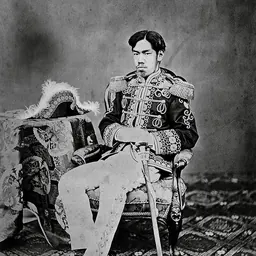
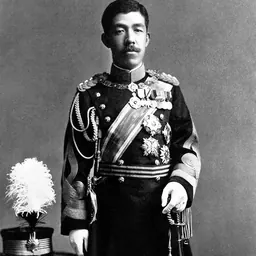

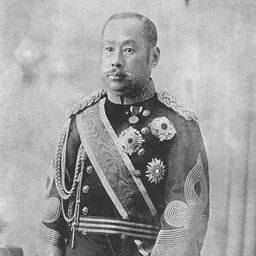
Related people
Same field, nearest in time


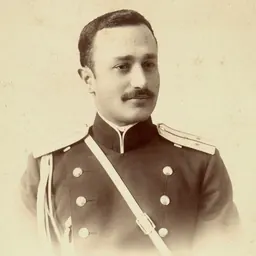


Contemporaries
People whose lives overlapped Prince Arisugawa Takehito's





Frequently asked questions
Who was Prince Arisugawa Takehito?
Japanese admiral (1862-1913)
When was Prince Arisugawa Takehito born?
Prince Arisugawa Takehito was born on 13 January 1862 in Kyoto.
When did Prince Arisugawa Takehito die?
Prince Arisugawa Takehito died on 5 July 1913 in Kobe.
What was Prince Arisugawa Takehito's occupation?
Prince Arisugawa Takehito was a military personnel and politician.
What nationality was Prince Arisugawa Takehito?
Prince Arisugawa Takehito was Japanese.
Sources & further reading
· Wikipedia: Prince Arisugawa Takehito
· DBpedia: Prince Arisugawa Takehito
Cite this page
APA: Biography.guide. (2026). Prince Arisugawa Takehito. https://biography.guide/prince-arisugawa-takehito/
MLA: "Prince Arisugawa Takehito." Biography.guide, https://biography.guide/prince-arisugawa-takehito/.
Chicago: "Prince Arisugawa Takehito." Biography.guide. https://biography.guide/prince-arisugawa-takehito/.
Data last updated: 2026-09-25 · Spot an error? Report a correction.
Page generated 2026-09-27 05:11 UTC