
About Pius VI
Lived 1717 – 1799 (aged 81). Pius VI was an Italian catholic priest and catholic bishop.
Pope Pius VI (; born Count Angelo Onofrio Melchiorre Natale Giovanni Antonio called Giovanni Angelo or Giannangelo Braschi, 25 December 171729 August 1799) was head of the Catholic Church and leader of the Papal States from 15 February 1775 to his death in August 1799.
Born in Cesena, he was elected Pope in the 1774–1775 conclave. Pius VI condemned the French Revolution and the persecution of the Catholic Church in France that resulted from it. French troops commanded by Napoleon Bonaparte defeated the Papal army and occupied the Papal States in 1796. In 1798, upon his refusal to renounce his temporal power, Pius was taken prisoner and transported to France. He died eighteen months later in Valence. His reign of more than twenty-four years is the fifth-longest in papal history. He was also the longest-serving pope of the Papal States.
Biography
Early years Giovanni Angelo Braschi was born in Cesena on Christmas Day in 1717 as the eldest of eight children to Count Marco Aurelio Tommaso Braschi and Anna Teresa. His grandmother was Cornelia Zangari Bandi, an aristocrat known for the mysterious circumstances of her death. His uncle was Cardinal Giovanni Carlo Bandi. His nephew was Romoaldo Braschi-Onesti, the penultimate cardinal-nephew.
Braschi was baptized in Cesena two days later on 27 December and was given the baptismal name of Angelo Onofrio Melchiorre Natale Giovanni Antonio. After completing his studies in the Jesuit college of Cesena and receiving his doctorate of both canon and civil law in 1734, Braschi continued his studies at the University of Ferrara.
The priest Braschi became the private secretary of papal legate Cardinal Tommaso Ruffo, Bishop of Ostia and Velletri. Cardinal Ruffo took him as his conclavist at the 1740 papal conclave and when the latter became the Dean of the College of Cardinals in 1740, Braschi was appointed as his auditor, a post he held until 1753.
Braschi's skill in the conduct of a mission to the court of Naples won him the esteem of Pope Benedict XIV. In 1755, the pope appointed him as a canon of St Peter's Basilica.
In 1758, putting an end to an engagement to be married, Braschi was ordained to the priesthood. He was also appointed in 1758 Referendary of the Apostolic Signatura and held that position until the following year. He also became the auditor and secretary to Cardinal Carlo Rezzonico, the nephew of Pope Clement XIII. In 1766, Clement XIII appointed Braschi treasurer of the camera apostolica. For a brief period of time this rendered him innocuous to the less scrupulous. Left without any specific task, Braschi retired to the Abbey of Saint Scholastica, Subiaco, of which he was commendatory abbot.
Gallican and Febronian protests
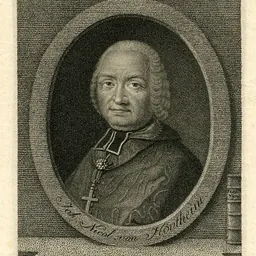
Besides facing dissatisfaction with this temporising policy, Pius VI also faced elements of Enlightenment thinking which sought to limit papal authority. Johann Nikolaus von Hontheim, since 1749 bishop of Myriophiri in partibus and auxiliary bishop and vicar-general to the archbishop-elector of Mainz, wrote under the pseudonym of "Febronius", expounding Gallican ideas of national Catholic Churches. Although Hontheim was himself induced (not without public controversy) publicly to retract his positions, they were nevertheless adopted in Austria. There the social and ecclesiastical reforms which had been undertaken by Emperor Joseph II and his minister Kaunitz, as a way of influencing appointments within the Catholic hierarchy, were seen as such a threat touched to papal authority that Pius VI adopted the exceptional course of travelling in person to Vienna.
Pius VI saw the development of the Catholic Church in the United States of America. He released the American clergy from the jurisdiction of the Vicar Apostolic in England, and erected the first American episcopal see, the Diocese of Baltimore in November 1789.
Pius VI elevated 73 cardinals in 23 consistories. He canonized no saints during his pontificate but beatified a total of 39 individuals that included Lawrence of Brindisi and Amato Ronconi.
The pope also set the Papal States' finances on much steadier ground. Pius is best remembered in connection with the expansion of the Pio-Clementine Museum, which was begun at the suggestion of his predecessor Clement XIV; and with an attempt to drain the Pontine Marshes, He also wrote that the French revolutionaries abolished "the monarchy, the best of all governments".
Arrest and death under Napoleon
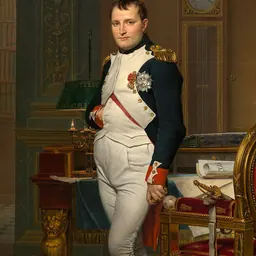
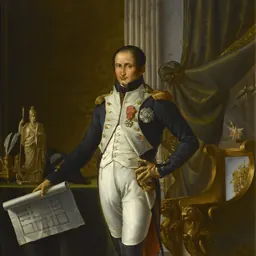
In 1796, French Republican troops under the command of Napoleon Bonaparte invaded Italy and defeated the Papal troops. The French occupied Ancona and Loreto. Pius VI sued for peace which was granted at Tolentino on 19 February 1797; but on 28 December 1797, in a riot blamed by papal forces on some Italian and French revolutionists, the popular brigadier-general Mathurin-Léonard Duphot, who had gone to Rome with Joseph Bonaparte as part of the French embassy, was killed and a new pretext was furnished for invasion. having then reigned longer than any pope since Saint Peter. To date, he is the last Pope to die outside of Italian territory.
Pius VI's body was embalmed, but was not buried until 30 January 1800 after Napoleon saw political advantage to burying the deceased Pope in efforts to bring the Catholic Church back into France. His entourage insisted for some time that his last wishes were to be buried in Rome, then behind the Austrian lines. They also prevented a Constitutional bishop from presiding at the burial, as the laws of France then required, so no burial service was held. This return of the investiture conflict was settled by the Concordat of 1801.
Pius VI's body was removed from Valence on 24 December 1801 and buried at Rome 19 February 1802, when Pius VI was given a Catholic funeral, attended by Pope Pius VII, his successor.
Reburial By decree of Pope Pius XII in 1949, the remains of Pius VI were moved to the Chapel of the Madonna below St. Peter's in the Vatican Grottoes. His remains were placed in an ancient marble sarcophagus. The inscription on the wall above the container reads:
"The mortal remains of Pius VI, consumed in unjust exile, by order of Pius XII were placed fittingly here and decorated by a marble ornament most excellent for its art and history in 1949".
Representation in literature A long audience with Pius VI is one of the most extensive scenes in the Marquis de Sade's narrative Juliette, published in 1798. Juliette shows off her learning to the Pope (whom she most often addresses as "Braschi") with a verbal catalogue of alleged immoralities committed by his predecessors.
Don’t just read it —
keep it.
Full-length biographies made to live with: read them, listen on the way to work, watch them tonight.
- E-book
- Audio
- Video
Instant download · yours to keep · every purchase keeps this site free
Important facts
People in Pius VI's life
Named in this biography and alive at the same time
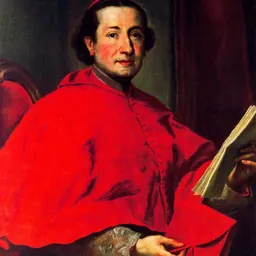

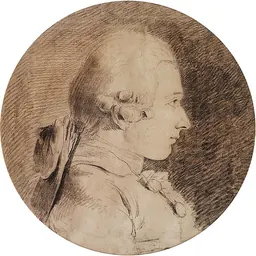
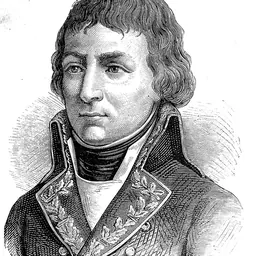
Related people
Same field, nearest in time
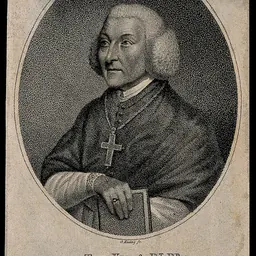


Contemporaries
People whose lives overlapped Pius VI's





Frequently asked questions
Who was Pius VI?
Pope of the Catholic Church from 1775 to 1799
When was Pius VI born?
Pius VI was born on 25 December 1717 in Cesena.
When did Pius VI die?
Pius VI died on 29 August 1799 in Valence.
What was Pius VI's occupation?
Pius VI was a catholic priest and catholic bishop.
What nationality was Pius VI?
Pius VI was Italian.
Sources & further reading
Cite this page
APA: Biography.guide. (2026). Pius VI. https://biography.guide/pius-vi/
MLA: "Pius VI." Biography.guide, https://biography.guide/pius-vi/.
Chicago: "Pius VI." Biography.guide. https://biography.guide/pius-vi/.
Data last updated: 2026-09-20 · Spot an error? Report a correction.
Page generated 2026-09-27 05:33 UTC