
About Pietro Biginelli
Lived 1860 – 1937 (aged 76). Pietro Biginelli was an Italian chemist, known for Biginelli reaction.
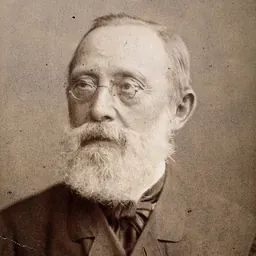
Pietro Biginelli (25 July 1860 – 15 January 1937) was an Italian chemist, who discovered a three-component reaction between urea, acetoacetic ester and aldehydes (Biginelli reaction). He also studied various aspects of sanitation chemistry and chemical products' quality control.
Biography
Biginelli is born on 25 July 1860 in Palazzolo Vercellese which was back then the Kingdom of Piedmont-Sardinia. He attended the University of Turin, studying under Icilio Guareschi, a well-known Italian chemist and chemistry historian. In 1885, he was already a 4th-year student.
By 1891, Biginelli worked at the chemical laboratory at the University of Florence, where 2 years later he developed a method which later would be known as Biginelli Pyrimidine synthesis. In 1897, he was already in Rome, as a privatdozent.
In 1901, Biginelli, as coadjutor, moved to the Chemical Laboratory of State Medicine in Rome, a chemist known for his discovery of arsenic-containing volatile gas known as "Gosio gas". From 1925 to 1928, Biginelli worked as a director of the above-mentioned chemical laboratory.
He died in Rome on 15 January 1937.
Scientific interests
Biginelli's first known scientific work, in which he was a co-author of his mentor Icilio Guareschi, was focused on synthesis and reactivity of chlorobromonaphthalene. Already in the University of Florence, Biginelli described a three-component reaction between urea, aldehyde, and ethyl acetoacetate, which was at first incorrectly interpreted as one leading to the formation of alpha-benzuramido-crotonacetic ester, with open-chain acyclic structures. However, later he corrected himself this interpretation and expanded his initial studies, showing that the end products actually were pyrimidines. However, Biginelli did not change the chemical names presented earlier.
Another scope of his research interests emerged when he was assistant of Bartolomeo Gosio. At that time, it was known that certain poisonous volatile arsenic species tend to form at molds growing on wallpapers painted by arsenic-containing paints. Finally, Gosio and Biginelli succeeded in isolating and analyzing the species: when Gosio gas was passed into a solution of mercuric chloride in dilute HCl (Biginelli's solution) a crystalline precipitate was formed.
A small vial of the Gosio/Biginelli mercurichloride is to this day preserved at The Museum of the History of Medicine (Museo di Storia della Medicina) in Rome, Italy. Under the printed name "Laboratorio Batteriologico della Sanità Pubblica" is handwritten, "arsina penicillare comp. mercurico". From analysis of this material and of the gas itself
Biginelli stated in 1911 that tannin has the formula C41H32O25 and that it was probably a glucoside. These conclusions were based on the property shown by tannin of forming additive products with water, alcohol, and ether, (which are stable even in vacuum) and also on the loss of carbon dioxide and water with formation of hexa-hydroxy-benzophenone, when tannin is heated in aqueous solution with lead dioxide (the amount of carbon dioxide liberated was estimated).
After leaving his post as a director of the Chemical Laboratory of State Medicine, Biginelli, as he himself stated, focused mainly on the problems of chemical commodity research, e.g. distinguishing between true and false tannates of commercial quinine, artificial tannins, etc.
Don’t just read it —
keep it.
Full-length biographies made to live with: read them, listen on the way to work, watch them tonight.
- E-book
- Audio
- Video
Instant download · yours to keep · every purchase keeps this site free
Important facts
People in Pietro Biginelli's life
Named in this biography and alive at the same time

Related people
Same field, nearest in time




Contemporaries
People whose lives overlapped Pietro Biginelli's


Frequently asked questions
Who was Pietro Biginelli?
Italian chemist (1860–1937)
When was Pietro Biginelli born?
Pietro Biginelli was born on 25 July 1860 in Palazzolo Vercellese.
When did Pietro Biginelli die?
Pietro Biginelli died on 15 January 1937 in Rome.
What was Pietro Biginelli's occupation?
Pietro Biginelli was a chemist.
What was Pietro Biginelli known for?
Pietro Biginelli was known for Biginelli reaction.
What nationality was Pietro Biginelli?
Pietro Biginelli was Italian.
Sources & further reading
Cite this page
APA: Biography.guide. (2026). Pietro Biginelli. https://biography.guide/pietro-biginelli/
MLA: "Pietro Biginelli." Biography.guide, https://biography.guide/pietro-biginelli/.
Chicago: "Pietro Biginelli." Biography.guide. https://biography.guide/pietro-biginelli/.
Data last updated: 2026-09-20 · Spot an error? Report a correction.
Page generated 2026-09-27 05:23 UTC