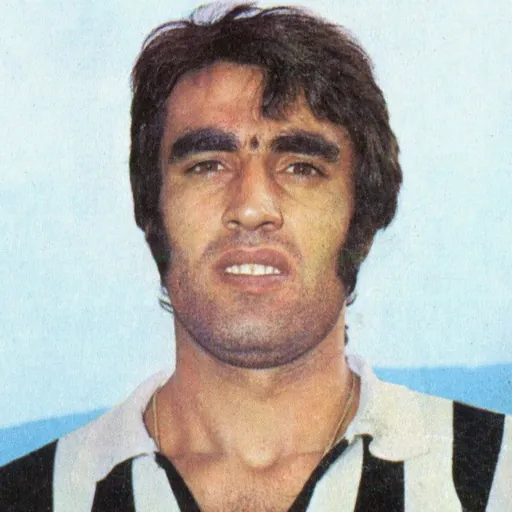
About Pietro Anastasi
Lived 1948 – 2020 (aged 71). Pietro Anastasi was an Italian association football player.
Pietro Anastasi (; 7 April 1948 – 17 January 2020), nicknamed by fans, was an Italian footballer who played mainly in the role of a forward. Anastasi (no. 9) in 1975, as captain of Juventus, with Ternana captain Fernando Benatti
Due to his precocious performances, he was purchased by Juventus in 1968 for a world record of 650 million Lire at the time, and with the Turin club, he won three Serie A titles, also helping the club to the final of the last edition of the Inter-Cities Fairs Cup, in 1971, a tournament in which he was top scorer, with ten goals. Juventus were defeated by Leeds in the final, however. In 1974, Anastasi was named the club's captain. He currently holds the record for the most goals in the Inter-Cities Fairs Cup by a Juventus player (12), as well as the all-time record for goals in the Coppa Italia by a Juventus player (30). Alongside Roberto Baggio, he is the joint tenth highest goal-scorer for Juventus in Serie A, with 78 goals, the joint fourth all-time Juventus goalscorer in European competitions, and the joint fifth all-time Juventus goalscorer in International competitions, with 22 goals.
International career Anastasi (left) beats Marić and scores the definitive goal in Italy's 3–1 friendly victory against Yugoslavia, in Turin, on 20 September 1972.
With the Italy national team, Anastasi was a member of the squad that won the 1968 UEFA European Football Championship on home soil, In the final replay against the same opponent two days later, he also scored his first international goal, the second goal in Italy's 2–0 victory, with a right-footed volley from just outside the area; with this goal, he became the youngest player ever to score in a European Championship final, at the age of 20 years and 64 days. He was initially set to take part in the 1970 FIFA World Cup in Mexico with Italy, but he was unable to participate due to injury. In his place, and that of midfielder Giovanni Lodetti, two strikers were called up by manager Ferruccio Valcareggi: Roberto Boninsegna and Pierino Prati, as Italy went on to reach the final. Anastasi also participated at the 1974 FIFA World Cup, scoring one goal in the team's 3–1 victory against Haiti in the first round, although Italy failed to advance from their group. In total, he played 25 international matches for Italy between 1968 and 1975, scoring 8 goals.
Style of play Anastasi is regarded as one of the best Italian strikers of his generation, as he was a fast, physical, hard-working, reliable, and agile forward, with good reactions. He was also a prolific, intelligent, instinctive, and opportunistic goalscorer, who was capable of making attacking runs to lose his markers and advance into more effective goalscoring positions, courtesy of his pace, power, movement off the ball, and positional sense inside the penalty area. A diminutive player with a sturdy build, Anastasi usually played as a striker in the centre-forward position, like his idol, John Charles; however, he had a rather modern and unorthodox interpretation of this role, and did not function as a traditional number nine, who mainly operated inside the box. Indeed, in this role, although he was capable of playing with his back to goal, using his strength to hold up the ball and lay it off for teammates, he was also known for his mobility and link-up play, as well as his ability to make quick exchanges with his teammates, and create chances or provide assists for other players, which saw him essentially act as more of an attacking midfielder at times. He also stood out for his dedication, bravery, fighting spirit, and generous team-play, as well as his unpredictable movement and high defensive work-rate off the ball, including his tendency to drift out wide, press opponents, or even track back into midfield in order to help win back possession. As such, he has been described as what as is known in Italian football jargon as a centravanti di manovra ("manouvering centre-forward", i.e. a centre-forward who participates in the build-up of attacking plays), a role which has retroactively been likened to a precursor of the "false 9" role in modern football. Despite not having the best first touch, or being the most naturally creative, tactical, or skilful player, he was a talented player and a fast sprinter, who possessed excellent acceleration and anticipation, as well as good dribbling skills with either foot, which led the Italian journalist Cesare Lanza to compare him to Luigi Meroni; as such, he also played on the right wing on occasion, due to his flair, solid technique, and crossing ability, and he even had a tendency to drift onto the left flank when he was deployed as an out-and-out striker in order to create chances for his teammates.
Nicknamed "il Pelé bianco" ("the white Pelé", in Italian) by the Juventus fans, Anastasi was extremely popular with his club's fanbase, and was known in particular for his acrobatic ability in the air, as well as for having a penchant for scoring spectacular goals with strikes of extreme technical difficulty, including from volleys and bicycle kicks. In addition to his playing ability, as a Sicilian who had success Juventus, Anastasi – as well as several of his other southern–Italian club teammates – also became a social symbol for many other southern Italian immigrants in a time of great social divide between the northern and the southern regions of the country; in particular, he became an icon for factory-workers who had moved from the South of Italy to Turin in order to find work with Fiat. His other nicknames were "Petruzzo" and "Petru 'u turcu" ("Peter the Turk", in the Sicilian dialect), due to the dark, olive-colour of his complexion whenever he was tanned.
Personal life Anastasi was married to Anna; together, they had two sons: Silvano and Gianluca.
Death Anastasi died in Varese on 17 January 2020 at the age of 71, having been diagnosed with amyotrophic lateral sclerosis in 2018. During the last three years of his life, medical examinations also found that he had an intestinal tumour, which was removed through an operation.
Honours Juventus Coppa Italia: 1977–78
Italy Inter-Cities Fairs Cup Top Scorer: 1970–71 Italian Football Hall of Fame: 2019 Juventus FC Hall of Fame: 2025
Don’t just read it —
keep it.
Full-length biographies made to live with: read them, listen on the way to work, watch them tonight.
- E-book
- Audio
- Video
Instant download · yours to keep · every purchase keeps this site free
Important facts
People in Pietro Anastasi's life
Named in this biography and alive at the same time



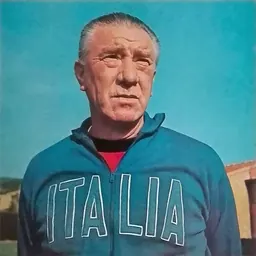
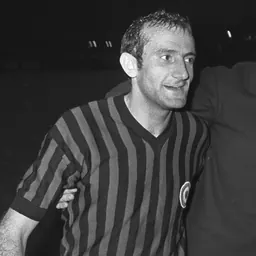
Related people
Same field, nearest in time





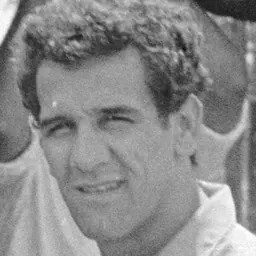
Contemporaries
People whose lives overlapped Pietro Anastasi's


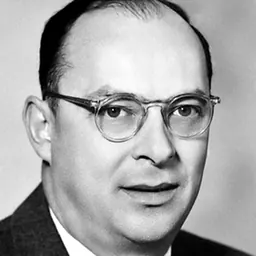


Frequently asked questions
Who was Pietro Anastasi?
Italian association football player (1948–2020)
When was Pietro Anastasi born?
Pietro Anastasi was born on 7 April 1948 in Catania.
When did Pietro Anastasi die?
Pietro Anastasi died on 17 January 2020 in Varese.
What was Pietro Anastasi's occupation?
Pietro Anastasi was an association football player.
What nationality was Pietro Anastasi?
Pietro Anastasi was Italian.
Sources & further reading
Cite this page
APA: Biography.guide. (2026). Pietro Anastasi. https://biography.guide/pietro-anastasi/
MLA: "Pietro Anastasi." Biography.guide, https://biography.guide/pietro-anastasi/.
Chicago: "Pietro Anastasi." Biography.guide. https://biography.guide/pietro-anastasi/.
Data last updated: 2026-09-23 · Spot an error? Report a correction.
Portrait: Wikimedia Commons · author & licence
Page generated 2026-09-27 05:05 UTC