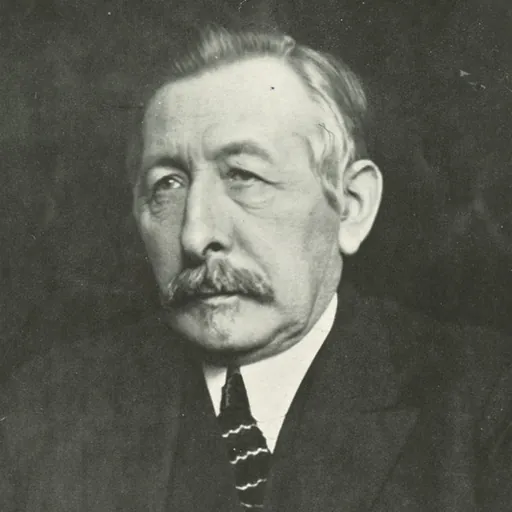
About Pieter Jelles Troelstra
Lived 1860 – 1930 (aged 70). Pieter Jelles Troelstra was a Dutch lawyer, journalist, politician, writer, poet lawyer and jurist.
Pieter Jelles Troelstra (; 20 April 186012 May 1930) was a Dutch lawyer, journalist and politician active in the socialist workers' movement. He is most remembered for his fight for universal suffrage and his failed call for revolution at the end of World War I.
Early and personal life Troelstra was born 20 April 1860 in Leeuwarden and grew up in the village of Stiens, where his father was a liberal tax inspector. He was an ethnic Frisian, and his name is styled in the traditional Frisian way: first name ("Pieter", because of his Frisian writings, is often written as "Piter", as it is spelled in Frisian), patronymic ("Jelles", meaning "son of Jelle"), family name (Troelstra).
He went on to study law at the University of Groningen. After graduation, he settled in Leeuwarden as a lawyer. He became involved in politics and the workers' movement through a Frisian movement, later to be known as the (Frisian People's Party). He had originally joined this movement because of his poetry and interest in the West Frisian language. Through the movement and his work as a lawyer, he got into the social democratic part of this wide movement.
From 1888 to 1904, Troelstra was married to Sjoukje Bokma de Boer, a well-known children's book writer under the pen name of Nienke van Hichtum, with whom he had two children, one being Jelle Troelstra.
Involvement with SDB In 1890, Troelstra joined the Social Democratic League (SDB), an early Dutch socialist movement under the leadership of Ferdinand Domela Nieuwenhuis. In time, he got into conflict with the anarchist tendencies of the movement. In 1893, the SDB took a decisive anti-parliamentary stance, and Troelstra no longer believed it could do any useful socialist work.
Founding of SDAP alt=Troelstra stands among a crowd. The name Troelstra is written in handwriting at the top left corner.
After trying to get some members of the SDB to join him, he was one of the twelve men who started the Social Democratic Workers' Party (SDAP) in 1894. Unlike the old SDB, the SDAP was more like its German counterpart, then still also named the SDAP, which was taking a more reformist course, trying to get social law implemented, while still keeping the ideal of revolution up.
From around 1903 he and Henri Polak edited the Sociale Bibliotheek book series, whose publisher in 1914 was the Commissie voor de Schriftelijke Propaganda Brochurenhandel S.D.A.P. in Amsterdam.
Hogerhuis Case In 1897, Troelstra, who now earned a living as a lawyer, got involved in the infamous Hogerhuis Case concerning three brothers (Keimpe, Wybren and Marten Hogerhuis) who were being prosecuted for the burglary of a rich farmer. Although the evidence against the brothers was shaky at best, they were nonetheless sentenced to lengthy prison terms, leading to accusations of (legal discrimination based on wealth or education).
Troelstra was the member of parliament for the district of Leeuwarden, close to the men's village of Beetgum, and was drawn into the case after the brothers' conviction. He collected additional evidence, which he published in socialist newspapers. One of his revelations was that soon after the burglary, three men had quickly emigrated to America and Germany. However, Troelstra did not manage to get the case retried. The affair gained fame, particularly in socialist circles, as the Dutch pendant of the French Dreyfus Affair, and Troelstra's role was, perhaps not coincidentally, not unlike that played by Émile Zola. Despite the failure of his efforts (the brothers served most of their sentence), they contributed to Troelstra's reputation and goodwill in the Frisian countryside.
SDAP leader Troelstra was inclusive in his outlook. As leader of the parliamentary faction of the SDAP, he did not insist upon a tight party line. That permitted a period of harmony within the SDAP between 1894 and 1900.
Both within and outside parliament, the SDAP proved to be a powerful force, despite its relatively small representation in the House of Representatives. However, the socialists felt a moral advantage because parliament was hardly an accurate representation of the people, and they used their possibilities to the full, among other things by filibustering (each representative had unlimited speaking time). When, in 1911 a majority of parliament refused to vote on an SDAP motion, the anger of the party was expressed by one of its most fiery speakers, : In that case, the inkwells will fly through the room.... I cannot be held accountable for anything. I assure you, we will start throwing chairs. The antagonism between the SDAP and more conservative forces would cause bitterness for a long time afterwards and also explains many of Troelstra's actions.
1913 elections and universal suffrage Troelstra's biggest political issue was universal suffrage in the Netherlands. This struggle reached its climax in 1910 to 1913. After electoral success in the 1913 general election, the SDAP was offered a place in a coalition government. The proposed coalition had plans for universal suffrage, but a party congress renounced such a close co-operation with its traditional enemy. Some MPs, such as the SDAP's co-founders Willem Vliegen and Schaper, were very distraught over what they saw as a tactical disaster. Vliegen wrote in 1934: I have never been able to prefer a government without social democrats over one with them, as evident as it may be that one cannot entertain all company. I still think that the refusal to accept government responsibility in 1913 is one of the most significant errors the SDAP ever made.
There is evidence to suggest that Troelstra himself was rather relieved; he had only reluctantly supported the request for government participation. Universal suffrage was eventually steered through parliament in 1917, by the liberal minority cabinet of Pieter Cort van der Linden.
Red Week (November 1918) Swedish Social Democratic leader Hjalmar Branting (right) and Pieter Jelles Troelstra (left) during the 1917 Stockholm Peace Conference.
Inspired by the Russian Revolution of 1917 and the German Revolution of 1918–1919, Troelstra made a historic if ill-advised move. In November 1918, he used a speech in the traditional worker stronghold of Rotterdam to call for a socialist revolution in the Netherlands. However, it was not followed up by any revolutionary activity on the side of other SDAP activists, who were as surprised by Troelstra's declaration as most other people. The government, on the other hand, reacted quickly and sent troops to the major cities. In addition, a counter-campaign was set up to emphasise loyalty to the House of Orange.
By that time, it had become clear that the attempted revolution, for which Troelstra had gathered very little support even among his own party, had failed. The events are known as the Red Week (Dutch: Roode Week) or, more commonly, "Troelstra's mistake" (Dutch: Vergissing van Troelstra).
Later life After all this Troelstra was broken and stayed at home, but a party conference two weeks later received him with a standing ovation. Although he could defend the position that the party had never had actual plans for a coup, his reputation had taken irreparable damage, both inside and outside the party.
The SDAP would not be invited to form any other government until the national cabinet of 1939. However, the establishment and the right wing had been frightened. In the next cabinet, under Hendrikus Colijn, social reforms were started to reduce discontent and to deny the socialists further support.
Troelstra is still an inspirational figure for many in the Dutch workers' movement.
He withdrew from politics in 1925 and devoted much time, despite ever declining health, to dictating his memoirs to his secretary, the later Amsterdam alderman Herman Bernard Wiardi Beckman. These memoirs (Gedenkschriften), which appeared in four volumes (Genesis, Growth, Surf and Storm) after 1925, almost became part of the furniture in the houses of many Dutch workers, further testimony to Troelstra's reputation among his followers.
Troelstra died 12 May 1930 in The Hague. The section in The Hague of the Labour Party, the successor of the SDAP, celebrates at a monument to Troelstra.
Electoral history + Election Electoral district First round Second round Result Votes % Votes % 1894 Utrecht 40 1.1% — 1897 Leeuwarden 939 23.8% 1,872 50.9% Tietjerksteradeel 1,149 27.0% 2,672 52.5% Utrecht I 442 9.6% — Utrecht II 444 13.0% — Winschoten 1,216 28.4% 2,276 58.6% 1901 230 6.9% — Franeker 1,527 28.6% — Tietjerksteradeel 1,247 22.9% — Utrecht I 935 18.7% — Zuidhorn 723 15.2% — 1901 Veendam 1,663 40.9% 2,292 46.0% 1902 2,050 37.2% 3,231 49.2% 1902 2,476 49.7% 3,397 56.7% 1905 3,837 48.3% 4,564 56.9% Apeldoorn 381 5.1% — Bodegraven 330 4.2% — Brielle 477 7.2% — Goes 216 4.0% — Tietjerksteradeel 1,469 20.3% — 1909 4,680 49.2% 5,691 56.3% Haarlem 989 12.2% — Leeuwarden 2,529 37.1% 2,740 42.7% Rotterdam II 1,205 14.3% — Utrecht I 961 13.6% — 1913 7,309 57.2% — Dokkum 591 7.8% — Haarlem 2,755 27.8% — Leeuwarden 3,738 46.5% 3,851 56.2% 1917 Leeuwarden 4,266 87.4% —
+ Election Electoral district List Votes Result List seats Individual 1918 5. 1. 30,896 2 12. 1. 26,216 2 1922 36. 1. 80,914 3
Don’t just read it —
keep it.
Full-length biographies made to live with: read them, listen on the way to work, watch them tonight.
- E-book
- Audio
- Video
Instant download · yours to keep · every purchase keeps this site free
Important facts
People in Pieter Jelles Troelstra's life
Named in this biography and alive at the same time


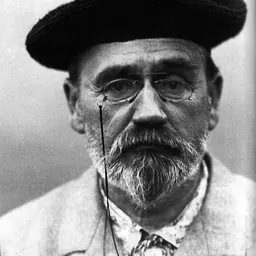

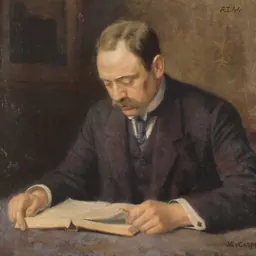
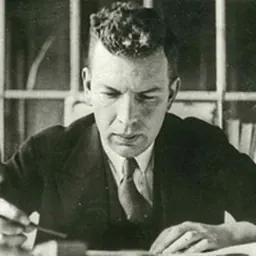
Related people
Same field, nearest in time


Contemporaries
People whose lives overlapped Pieter Jelles Troelstra's



Frequently asked questions
Who was Pieter Jelles Troelstra?
Dutch politician (1860-1930)
When was Pieter Jelles Troelstra born?
Pieter Jelles Troelstra was born on 20 April 1860 in Leeuwarden.
When did Pieter Jelles Troelstra die?
Pieter Jelles Troelstra died on 12 May 1930 in The Hague.
What was Pieter Jelles Troelstra's occupation?
Pieter Jelles Troelstra was a lawyer, journalist, politician, writer, poet lawyer and jurist.
What nationality was Pieter Jelles Troelstra?
Pieter Jelles Troelstra was Dutch.
Sources & further reading
· Wikipedia: Pieter Jelles Troelstra
· DBpedia: Pieter Jelles Troelstra
Cite this page
APA: Biography.guide. (2026). Pieter Jelles Troelstra. https://biography.guide/pieter-jelles-troelstra/
MLA: "Pieter Jelles Troelstra." Biography.guide, https://biography.guide/pieter-jelles-troelstra/.
Chicago: "Pieter Jelles Troelstra." Biography.guide. https://biography.guide/pieter-jelles-troelstra/.
Data last updated: 2026-09-20 · Spot an error? Report a correction.
Portrait: Wikimedia Commons · author & licence
Page generated 2026-09-27 04:57 UTC