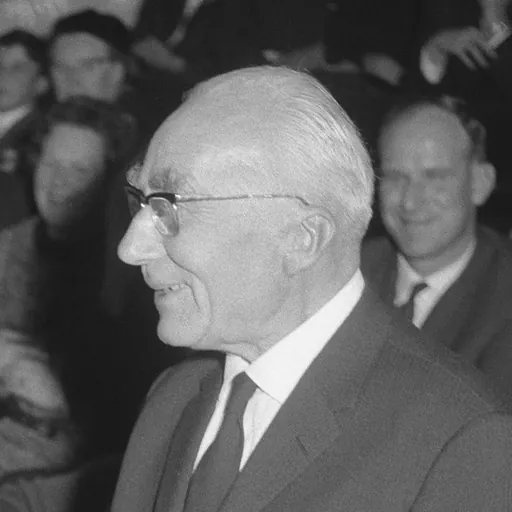
Piet Zwart
Dutch typography designer, architect, photographer and industrial designer
About Piet Zwart
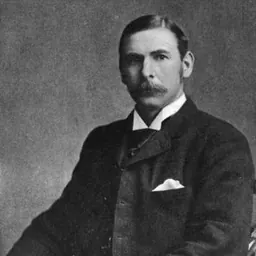
Lived 1885 – 1977 (aged 92). Piet Zwart was a Dutch photographer, typographer, industrial designer, graphic designer, architect and cover artist.
Piet Zwart (; 28 May 1885 – 24 September 1977) was a Dutch photographer, typographer, and industrial designer.
Biography
Early life Piet Zwart was born on May 28, 1885, in Zaandijk. He trained as an architect, and began graphic design projects at age 36. His training as an architect included designing furniture and interiors. He was influenced by the De Stijl movement, which focused on the essentials of form, colour and line, but later moved to a more functional design aesthetic. In the early 1920s Zwart received his first typographic commissions from Laga, a flooring manufacturer. Zwart had no formal training in typography or printing, so he was uninhibited by the rules and methods of traditional professional practices. Zwart regarded typography as an important cultural force of the 20th century.
Education Zwart attended the Rijksschool voor Kunstnijverheid Amsterdam (National School of Applied Arts, Amsterdam), which later merged into the Amsterdamse Hogeschool voor de Kunsten (Amsterdam University of the Arts), from 1902 to 1907. He studied a diverse range of art related subjects including painting and architecture, and he was introduced to the principles of the English Arts and Crafts movement.
From 1908 he taught drawing and art history lessons at the Industrie- en Huishoudschool voor Meisjes, (Industrial and Domestic School for Girls) in Leeuwarden. In 1913 he moved to Voorburg and returned to study, attending the Technische Universiteit Delft (Delft University of Technology) from 1913 to 1914.
In 1930, Piet Zwart was asked to design "The Book of PTT." The book was aimed at teaching school children how to use the Dutch postal service. Zwart looked at this as a way to "tickle their curiosity and encourage self reliance." The book was full of bright colors and it was meant to be exciting. He created two main characters for the book: 'The Post' and 'J Self'. They were paper doll cut-outs that he photographed and then touched up with chalk, ink, and color pencil. Additionally, he used many different fonts of varying sizes and thicknesses. He was assisted in illustrating the book by Dick Elffers. The book was finally published in 1938.
In 1942, during World War II, Zwart's design career came to a halt when he was arrested by the occupying German forces. He was held prisoner, along with 800 other prominent people, in an internment camp. He was released in 1945 when the war ended. He resumed his career, mainly focusing on industrial design from this point onward.
Design Style
1921
"Zwart was able to manipulate the oblique perspective in such a way that space was not only activated but made to seem irrational in order to heighten the viewer's experience of what would otherwise have been an ordinary rectangular room."
As a designer, and pioneer of modern typography, Zwart was well known for his work for both Nederlandse Kabelfabriek Delft (a cable factory in Delft) and the Dutch postal, telegraph and telephone service. He did not adhere to traditional typography rules, but used the basic principles of constructivism and "De Stijl" in his commercial work. His work can be recognized by its primary colours, geometrical shapes, repeated word patterns and an early use of photomontage. The latter is exemplified by his well-known cover designs for the series Monografieën over filmkunst (Monographs on Film Art).
His commercial print work has influences from Constructivism, Dada and De Stijl, while still adding a playfulness to the mix. In the 1920s, he began to work for Nederlandsche Kabelfabriek (Cable manufacturers) in Delft. While working for the company, he experimented with upper and lower case letters, lines, circles and screens, and free letter composition. He produced 275 designs within a decade, and then after he moved on to interior design, industrial design and furniture design. Zwart called himself a 'typotect'; part typographer, part architect.
Working career Piet Zwart is mostly known for his graphic design work. He started his career as an architect and draftsman and worked for Jan Wils and Berlage in 1919. Two years after working for Jans Wils, he worked with Dutch Architect Berlage for several years.
NKF Catalog In 1923 Berlage introduced him to one of his relatives. the manager of the Nederlandsche Kabelfabriek (NKF) at Delft. He had experimented with typography in the early 1920s, but, while working at the NKF, he realised how unaware he was of the terms and methods of printing. He didn't know the difference between lower and uppercase letters. An 18-year-old assistant at the NKF helped him learn the principles of printing. He created a total of 275 designs in 10 years for the NKF Company, almost all typographical works. He experimented with small and large letters, circles and rectangles, visual puns, repetition and alliteration. He resigned in 1933 to become an interior, industrial and furniture designer.
Zwart's Industrial Design In the Netherlands immediately before World War II, activity in the design field grew rapidly, calling for new solutions to functional problems. In 1938 Zwart's prefabricated kitchen consisting of independent units was brought out on the Dutch market, revolutionising kitchen interiors which also illustrated the creativity of mass-production of useful objects.
In 1930, Zwart was employed by the Bruynzeel Company. First he designed their annual calendars and other commercial items. He helped with other areas of the company, too. He was the first to design a kitchen for mass production. Zwart's Bruynzeel Modular Kitchen was exhibited in Germany-Netherlands: Interactions 1920–1940 at the Haags Gemeentemuseum. This was an example of a 'rational kitchen.'
Awards In 2000, Zwart was awarded the "Designer of the Century" award by the Association of Dutch Designers.
Don’t just read it —
keep it.
Full-length biographies made to live with: read them, listen on the way to work, watch them tonight.
- E-book
- Audio
- Video
Instant download · yours to keep · every purchase keeps this site free
Important facts
People in Piet Zwart's life
Named in this biography and alive at the same time

Related people
Same field, nearest in time



Contemporaries
People whose lives overlapped Piet Zwart's



Frequently asked questions
Who was Piet Zwart?
Dutch typography designer, architect, photographer and industrial designer (1885-1977)
When was Piet Zwart born?
Piet Zwart was born on 28 May 1885 in Zaandijk.
When did Piet Zwart die?
Piet Zwart died on 24 September 1977 in Wassenaar.
What was Piet Zwart's occupation?
Piet Zwart was a photographer, typographer, industrial designer, graphic designer, architect and cover artist.
What nationality was Piet Zwart?
Piet Zwart was Dutch.
Sources & further reading
Cite this page
APA: Biography.guide. (2026). Piet Zwart. https://biography.guide/piet-zwart/
MLA: "Piet Zwart." Biography.guide, https://biography.guide/piet-zwart/.
Chicago: "Piet Zwart." Biography.guide. https://biography.guide/piet-zwart/.
Data last updated: 2026-09-21 · Spot an error? Report a correction.
Portrait: Wikimedia Commons · author & licence
Page generated 2026-09-27 05:00 UTC