
About Pierre Sidos
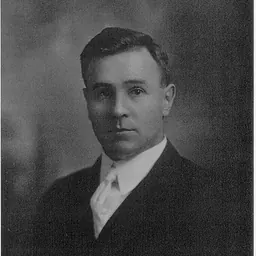
Lived 1927 – 2020 (aged 93). Pierre Sidos was a French politician.
Pierre Sidos (6 January 1927 – 4 September 2020) was a French far right nationalist, neo-Pétainist, and antisemitic activist. One of the main figures of post-WWII nationalism in France, Sidos was the founder and leader of the nationalist organizations Jeune Nation (1949–1958) and L'Œuvre Française (1968–2013).
Sidos was convicted in 1946 of joining the fascist Mouvement Franciste at 16 years old in the midst of WWII and Nazi occupation of France. After spending two years of internment in Natzweiler-Struthof, he founded in 1949 Jeune Nation, the most prominent French neo-fascist movement of the 1950s. Famous for its insurrectional violence during the Algerian war, the organization was dissolved by official decree in 1958.
Convicted a second time in 1963 of "recreating a disbanded league" and "compromising State security", Sidos founded Occident the following year, but soon broke with the group. He eventually established another Vichyist movement in 1968, L'Œuvre Française, of which he was the leader until he stepped down in 2012. The movement was banned a year later, making it the fourth association founded by Sidos to be dissolved by the French authorities, and the fifth he had been part of, in a 70-year period of political activism.
Early life and WWII Family: 1927–1938 Pierre Sidos was born on 6 January 1927 in Saint-Pierre-d'Oléron, the son of François Sidos (1891–1946) and Louise Rocchi. He grew up in a familial background strongly tainted with nationalism and far-right ideologies. As a child, he had fun recreating the March on Rome in the family house staircase Sidos was labeled the "bard of antisemitism" by historian Pierre Milza, and Le Soleil defended a form of anti-capitalist nationalism that denounced the role of Jews in finance, politics and the industries, as well as the "threat" represented by the state of Israel in geopolitics.
Leader: 1968–2012 Sidos set up L'Œuvre Française in 1968 and declared himself "presidor for life" (French: présideur, a portmanteau of président and dictateur). Closer to Francoist Spain and the Portuguese Estado Novo than fascist regimes, L'Œuvre Française was antisemitic, neo-Pétainist and nationalist. Sidos then seemed to endorse a blend of Catholicism, pan-European nationalism and anti-Semitism, with some Third Position influence, as his ideology of choice. Designed as a cult of personality, the organization was labeled a sect or "Church of Sidology" by critics even at the far right, while its adherents highlighted the discipline and determination allowed by their organizational style.
He attempted to run in the 1969 French presidential election on this platform, seeking to stand as a nationalist and anti-Zionist candidate, but his candidacy was rejected by the Constitutional Council on a technical basis. It has been argued that there was a fear any judgement in Sidos' favour would have been considered a vindication of his collaborationist background in wider society. Le Soleil, organ of L'Œuvre Française, dismissed the Jewish origin of some members in the council, namely Gaston Palewski and René Cassin, as the reason for their refusal. In 1973, Sidos was the only candidate for L'Œuvre in the legislative election. Sidos was said to have met António Salazar for a short encounter in the 1960s, king Faisal of Saudi Arabia for a one-hour meeting on 28 April 1971 in Riyadh, as well as Juan Perón on 22 October of the following year in Madrid, and former SS colonel Otto Skorzeny in the same city. According to Sidos, Perón declared to him that "Paris [had] been the world capital of subversion since 1789."
By the 1980s he had come to moderate his own position and sought to build a wider alliance with other fringe right-wing movements, including monarchists, integrists and the supporters of Marcel Lefebvre. To this end he joined François Brigneau, Pierre Pujo and Jean Madiran in a commemoration service for the tenth anniversary of the occupation of Saint-Nicolas-du-Chardonnet by the Society of St. Pius X in 1987. Sidos subsequently sought co-operation with the Front National (FN) although at other times he would dismiss the party as too moderate. In 1996, he announced the rallying of L'Œuvre to the party, despite the opposition of his right hand man Yvan Benedetti.
After negotiations with Sidos, Jean-Marie Le Pen eventually allowed some L'Œuvre militants to integrate the FN in 2007. The party however later tightened its policy regarding the association, Marine Le Pen denouncing an "operation of entryism" to facilitate the seizure of power by her rival Bruno Gollnisch in the FN. Following Jean-Marie Le Pen's departure from the leadership in 2011, replaced by his daughter Marine, Sidos severed all ties with the party, telling far-right newspaper Rivarol that he did not feel a woman should have such an important position.
In 2012, at 85, he left the presidency of L'Œuvre Française, succeeded by Yvan Benedetti.
Late life: 2013–2020 In 2013, the association he had founded 45 years earlier was dissolved by the authorities. Manuel Valls, then Minister of the Interior, denounced L'Œuvre Française as a group "spreading a xenophobic and antisemitic ideology, diffusing racist and Holocaust-denying thesis, exalting collaboration [with the Nazis] and the Vichy regime, paying regular tribute to Pétain, Brasillach or Maurras", adding that the movement was "organized like a private militia in paramilitary-like training camps."
On 28 November 2013, the association Les Amis de Pierre Sidos ("The Friends of Pierre Sidos") was created to "make the works of patriot Pierre Sidos and that of his family known".
He died in Bayeux hospital on 4 September 2020.
Controversies On 6 February 1990, he was invited on the TV talk-show Ciel, mon mardi !. To the question "are you an anti-Semite?" he famously answered: "no more no less than Saint-Louis", in reference to the king of France who forced Jews to wear a distinctive roundel and banned mixed marriages. Sidos further precised in 2013 that "Saint-Louis had a religious hostility but was the godfather of many Jews that converted [to Christianity]." Sidos was also fervently anti-Zionist, denouncing Israel as the "avowed metropolis of an invisible and harmful empire […] with dominant aims."
In a 2013 interview, he described Adolf Hitler as the "German Napoléon" and Benito Mussolini as "the last of the Caesars".
Don’t just read it —
keep it.
Full-length biographies made to live with: read them, listen on the way to work, watch them tonight.
- E-book
- Audio
- Video
Instant download · yours to keep · every purchase keeps this site free
Important facts
People in Pierre Sidos's life
Named in this biography and alive at the same time





Related people
Same field, nearest in time






Contemporaries
People whose lives overlapped Pierre Sidos's

Frequently asked questions
Who was Pierre Sidos?
French politician (1927–2020)
When was Pierre Sidos born?
Pierre Sidos was born on 6 January 1927 in Saint-Pierre-d'Oléron.
When did Pierre Sidos die?
Pierre Sidos died on 4 September 2020 in Bayeux.
What was Pierre Sidos's occupation?
Pierre Sidos was a politician.
What nationality was Pierre Sidos?
Pierre Sidos was French.
Sources & further reading
Cite this page
APA: Biography.guide. (2026). Pierre Sidos. https://biography.guide/pierre-sidos/
MLA: "Pierre Sidos." Biography.guide, https://biography.guide/pierre-sidos/.
Chicago: "Pierre Sidos." Biography.guide. https://biography.guide/pierre-sidos/.
Data last updated: 2026-09-20 · Spot an error? Report a correction.
Page generated 2026-09-27 04:59 UTC