
Pierre-Roch Vigneron
French painter, sculptor, and lithographer
About Pierre-Roch Vigneron
Lived 1789 – 1872 (aged 83). Pierre-Roch Vigneron was a French painter, printmaker, lithographer and sculptor.
Pierre-Roch Vigneron (16 August 178912 October 1872) was a French painter, sculptor, and lithographer. He was an early practitioner of lithography during its formative years in France.
Biography Early life and education Pierre-Roch Vigneron was born on 16 August 1789 in Vosnon, Aube, France.
Paris became his home after he arrived to study painting.
He attended the provincial Royal Academy of Painting and Sculpture in Toulouse, focusing on miniatures and sculpture. His talent earned him an academy prize for a bas-relief composition depicting Aristides. He exhibited for the first time at the Salon of 1812, organized by the École des Beaux-Arts.
Gros, his mentor, shut down his studio between 1814 and 1815 as a result of the political events affecting France.
Une ambulance en 1814, pendant la campagne de France
That year, Vigneron painted Une ambulance en 1814, pendant la campagne de France, illustrating an ambulance scene during the French Campaign.
His style closely resembled that of Jean-Henri Marlet. Early in his career, he collaborated in the studios of Charles Philibert de Lasteyrie, where he created his first drawing model on French stone, drawing from the lithograph of Lasteyrie.
He was awarded a gold medal at the Salon of 1817 for various lithographs, a collection of stage artist portraits, and twelve large portraits of actors and actresses.
Convoi du pauvre
His 1819 painting titled Le convoi du pauvre (Convoy of the Poor or The Poor Man's Convoy), printed by Jean-Pierre-Marie Jazet, brought him significant recognition. Popularized through lithography and engraving, the painting showed a hearse heading to the cemetery, followed only by a dog—the deceased's sole companion.
Vigneron participated in the Salon of 1819. His artwork depicted Christopher Columbus showing his irons to the Catholic Monarchs of Spain and included the description, "il montre les marques de ses fers à Ferdinand et à Isabelle" It was later acquired by the Élie, duc Decazes in 1822. The scene bore a resemblance to a Marlet work from 1810, which depicted a medical professor checking the pulse of a sick man lying in a hospital bed.
Salon of 1822 In 1822, he painted a work under the title of Le Duel which was engraved by Jazet. It was described by Charles Paul Landon as the aftermath of a fatal confrontation between a young aristocratic man and a professional swordsman. The young man dies in the arms of his two witnesses, while his ruthless opponent, rather than offering aid, coldly wipes his bloodied sword before retreating. Painted in the 1822, the Exécution militaire (Military Execution) was notably engraved in aquatint by Jean-Pierre-Marie Jazet. Vigneron also included the gambling-themed lithograph Le Joueur Ruiné (The Ruined Player). C. P. Landon wrote that the scene, likely suggested by Charles-Émile-Callande de Champmartin, portrayed "a gambler whose fate has taken away his last resources and who has just hanged himself in his attic where there are only the four walls, the floor is strewn with dice and torn cards". Among other works, his lithographed portraits of Paul Courrier, Mademoiselle Mars, and François-Joseph Talma were displayed in 1826.
The French painted completed a portrait of Louis Philippe I in 1831, following his ascent to the throne after the July Revolution of 1830.
In 1833, he exhibited les Héritiers ("the Heirs"), Avis aux mères ("Notice to Mothers"), and L'Orphelin ("the Orphan"). At Château de Compiègne, Vigneron's piece was displayed in the service lounge during the 1830s.
Absent from exhibitions between 1833 and 1846, he reemerged at the Salon of 1847 with a selection of portraits, including Jean-Pierre Moussa, Mme and Mlle Duprez, Countess Łubieńska, A. Brunet, Doctor Brunet, Augustin Thierry and Madame Thierry, and five in wash. By 1848, he was working out of a studio on 126 Rue du Faubourg Saint-Martin with his daughter Mlle Mira. In the Salon of 1848 beginning on 15 March 1848 at the Louvre, he exhibited Jadi, Aujourd'hui, a full-length portrait of Hugues Bouffé (of the Théâtre des Variétés), as well as other portraits at the Salons of 1849 and 1850.
Death Pierre-Roch Vigneron died at the age of 83 in Paris, France on 12 October 1872.
Family Vigneron married the daughter of Gautherot and had two children. His daughter, Miss Mira Vigneron, was a painter born in 1817 in Paris and learned under Pierre-Roch's guidance. Soldat laboureur I & II (Soldier Ploughman) (1818–1833) Christophe Colomb et Ferdinand (1819) Convoi du pauvre (The Poor Man's Convoy) (1819) Le Duel (The Duel) (1822) Une Mère forcée par la misère d'abandonner son enfant (1822) Exécution militaire (A Military Execution) (1824) Petits Cuisiniers (Little Cooks) (1824) L'enfant abandonné (The Abandoned Child) (1826) Talma à Brunoy (Talma in Brunoy) Le Joueur ruiné (The Ruined Player) L'Orphelin (The Orphan) (1833) Les Héritiers (The Heirs) (1833) Avis aux mères (Advice to Mothers) (1833) La Confession (The Confessional) Chiffonnier qui recueille un enfant (Ragpicker Who Takes in a Child) Marchand de vin dans son laboratoire (Wine Merchant in his Laboratory) The Billiard Player The Little Savoyard Jadi (1848) Aujourd'hui (Today) (1848)
Gallery
Don’t just read it —
keep it.
Full-length biographies made to live with: read them, listen on the way to work, watch them tonight.
- E-book
- Audio
- Video
Instant download · yours to keep · every purchase keeps this site free
Important facts
People in Pierre-Roch Vigneron's life
Named in this biography and alive at the same time
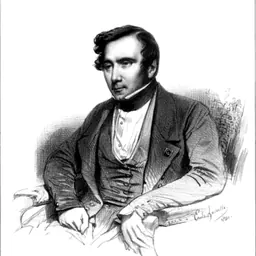



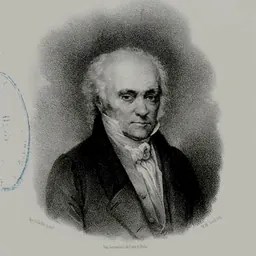
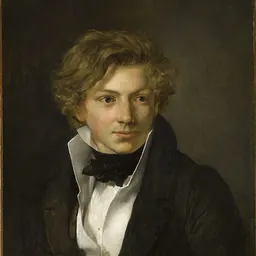

Related people
Same field, nearest in time
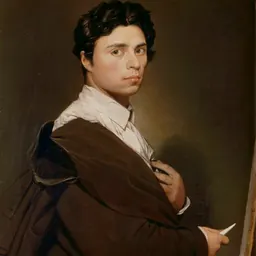

Contemporaries
People whose lives overlapped Pierre-Roch Vigneron's


Frequently asked questions
Who was Pierre-Roch Vigneron?
French painter, sculptor, and lithographer (1789-1872)
When was Pierre-Roch Vigneron born?
Pierre-Roch Vigneron was born on 16 August 1789 in Vosnon.
When did Pierre-Roch Vigneron die?
Pierre-Roch Vigneron died on 12 October 1872 in Paris.
What was Pierre-Roch Vigneron's occupation?
Pierre-Roch Vigneron was a painter, printmaker, lithographer and sculptor.
What nationality was Pierre-Roch Vigneron?
Pierre-Roch Vigneron was French.
Sources & further reading
· Wikipedia: Pierre-Roch Vigneron
· DBpedia: Pierre-Roch Vigneron
Cite this page
APA: Biography.guide. (2026). Pierre-Roch Vigneron. https://biography.guide/pierre-roch-vigneron/
MLA: "Pierre-Roch Vigneron." Biography.guide, https://biography.guide/pierre-roch-vigneron/.
Chicago: "Pierre-Roch Vigneron." Biography.guide. https://biography.guide/pierre-roch-vigneron/.
Data last updated: 2026-09-20 · Spot an error? Report a correction.
Page generated 2026-09-27 05:06 UTC