
About Pierre Pontard
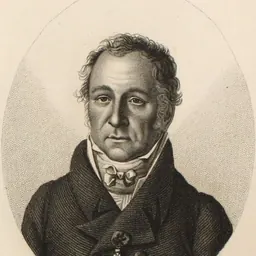
Lived 1749 – 1832 (aged 82). Pierre Pontard was a French politician, catholic priest, cleric and bishop.
Pierre Pontard (23 September 1749 – 22 January 1832) was a constitutional bishop and a deputy during the French Revolution.
Political career during the Revolution Pontard was born in Mussidan in Dordogne, France. He followed a career in the Roman Catholic priesthood and became a curé in Sarlat. Having espoused the reforming ideas of the Revolution, he was a fervent advocate of the Civil Constitution of the Clergy. In February 1791 he was elected constitutional bishop of the Dordogne, and on 8 September of that year was elected to the National Constituent Assembly as a representative of the clergy of Dordogne.
A critic of clerical celibacy, he married, and presented his wife to the Convention Nationale on 22 September 1793. He supported several measures in favour of the marriage of priests issued by the Civil Constitution of the Clergy.
Pontard was responsible for bringing to Paris the prophetess Suzette Labrousse, like him a native of the Dordogne, and remained closely associated with her subsequent career. He was also closely connected to the esoteric circles of the time, particularly to the Duchess of Bourbon, Bathilde d'Orléans, to Catherine Théot, and also Dom Gerle (presented as rivals by some contemporaries). He was also linked to the scandals associated with these circles.
He actively encouraged Suzette Labrousse while she was being sheltered and having her works published by the Duchess of Orléans (Journal prophétique, 1792; Recueil des ouvrages de la célèbre Mlle Labrousse, 1797), and supported Labrousses's journey to Rome. He brought ridicule upon himself by presenting her to several prominent religious figures. When she died he was the executor of her will, in which she left him a (contested) legacy of 3,000 francs. In Suzette Labrousse's analysis of the Apocalypse he saw the proofs that the French Revolution was initiating a "universal regeneration"..
After the Directoire Under the Consulate, Pontard ran a boarding school in Paris, but had to abandon it for financial reasons. He fell into poverty and was supported from 1820 by Bathilde d'Orléans, who gave him a life annuity. He lived for the rest of his life in the Hôpital Sainte-Périne, where he died.
In 1812 he published the Grammaire mécanique élémentaire de l'orthographe française.
Notes and references
Don’t just read it —
keep it.
Full-length biographies made to live with: read them, listen on the way to work, watch them tonight.
- E-book
- Audio
- Video
Instant download · yours to keep · every purchase keeps this site free
Important facts
People in Pierre Pontard's life
Named in this biography and alive at the same time
Related people
Same field, nearest in time



Contemporaries
People whose lives overlapped Pierre Pontard's





Frequently asked questions
Who was Pierre Pontard?
French bishop (1749-1832)
When was Pierre Pontard born?
Pierre Pontard was born on 23 September 1749 in Mussidan.
When did Pierre Pontard die?
Pierre Pontard died on 22 January 1832 in Paris.
What was Pierre Pontard's occupation?
Pierre Pontard was a politician, catholic priest, cleric and bishop.
What nationality was Pierre Pontard?
Pierre Pontard was French.
Sources & further reading
Cite this page
APA: Biography.guide. (2026). Pierre Pontard. https://biography.guide/pierre-pontard/
MLA: "Pierre Pontard." Biography.guide, https://biography.guide/pierre-pontard/.
Chicago: "Pierre Pontard." Biography.guide. https://biography.guide/pierre-pontard/.
Data last updated: 2026-09-20 · Spot an error? Report a correction.
Page generated 2026-09-27 05:22 UTC