
Pierre Martinet
French anarchist, founder of European individualist anarchism
About Pierre Martinet
Lived 1848 – 1919 (aged 71). Pierre Martinet was a French anarchist, theorist and criminal.
Pierre Martinet, nicknamed Pol or the Pariah (1848-1919), was a French anarchist and dreyfusard activist. He is best known for being one of the principal founders of European individualist anarchism and probably a police informant.
Born into a family of landowners, Martinet committed several offenses in his youth before gradually joining the anarchist movement in the 1880s. In 1884, he gained prominence as one of the key figures in the salle Lévis affair, a meeting where Blanquist socialists and anarchists clashed violently. Months later, he assaulted deputy Achille Scrépel at another meeting and fled France. Pursued by creditors in Switzerland, he returned to France, where he was arrested and imprisoned.
Upon his release from prison in the late 1880s, Martinet rejoined French and Parisian anarchist circles, becoming one of the first militants to self-identify as an individualist anarchist. He published two newspapers, L'Anarchie (1890–1891) and La Renaissance (1895–1896), which were some of the earliest European anarchist individualist publications and engaged in various demonstrations, conferences and gatherings, like the soup-conferences. Known for his reputation as a violent activist, his erratic behavior and surprising financial ease led various French anarchists to suspect him of being a police informant—a charge he denied. Jean Grave, in particular, maintained a deeply contentious relationship with him. Despite these probably accurate accusations, Martinet remained connected to prominent anarchists of the era, including Charles Malato, Vittorio Pini, and Ravachol, the latter two requesting his intervention at their trials to defend them.
After the Dreyfus affair, where he fought against antisemitism, Martinet gradually withdrew from activism, dedicating himself to acting in and writing theatrical plays. By 1918, Malato noted that he had entirely abandoned anarchism and become a property owner.
Biography
Youth and early actions Birth certificate of Pierre Martinet (6 May 1848). Archives départementales du Gard. Pierre Paul Désiré Martinet was born in Laudun on 5 May 1848. He was the son o Marie Clotilde Brache, who had no profession, and a landowner from the Gard department named Jérôme François Xavier Martinet. He began to be repeatedly sentenced by the French justice system for various offenses, in the following order:
In 1866, in Marseille, eight days in prison for carrying a prohibited weapon; In 1867, in Nîmes, two years for theft; In 1871, six months in prison for seditious crimes; In 1873, in Paris, five years in prison and five years of surveillance for theft and insults; In 1880, in Paris, fifteen months in prison for theft, breach of trust, and offenses against public morals.
He joined the anarchist movement, becoming a companion during this period, and was registered by the police as an anarchist from 1884 onward. At an anarchist meeting held in late November 1884, he gave a speech, and in the ensuing chaos, he protected the journalists present—particularly Gabriel Terrail—by shouting, 'Companions, remember, they are our guests!'
Salle Lévis affair Martinet's response to media accounts of him using a knife during the salle Lévis affair, in L'Univers (31 December 1884) Several Blanquist socialist speakers were present, including Édouard Vaillant and Jules Guesde. Meanwhile, as the socialists were preparing to bring another of their speakers to the podium, the anarchists present took the hammers they had brought, smashed the tables in front of them, armed themselves with the debris, and charged the platform and the socialist security cordon surrounding Vaillant.
In early 1885, he participated in Leboucher’s trial as a defense witness. He asserted that his arrested comrade had done nothing wrong and deserved to be acquitted by the court. While illegalism—an ideology blending crime and anarchism—was not yet established, emerging later from the actions of figures like Clément Duval and the Intransigents of London and Paris such as Vittorio Pini, Martinet faced accusations from fellow anarchists. They criticized him for being a criminal to speak in defense of a militant, deeming it unworthy. Martinet had to defend himself against accusations of immorality, asserting his poverty and insisting he did not deserve exclusion from the group. After two hours of defense, the group decided to let him remain among the anarchists but ruled that his views represented only himself and that he could not speak on behalf of the anarchist movement.
Martinet continued his activism. On 9 February 1885, accompanied by a few other anarchists, he traveled to Montreuil and Bagnolet, among other places, to recruit as many homeless and unemployed people as possible and send them to the Place de l'Opéra for a demonstration. He instructed them to flee when the police arrived but to return quickly if possible. Negative depiction of Martinet by Jean Grave, where he recounts a discussion both had, presenting him as a police informant. Le mouvement libertaire sous la IIIe République, Jean Grave (1930) On 11 February 1885, the socialist newspaper L'Intransigeant accused him of being a police informant. According to the paper, Martinet’s behavior was suspicious—his absence from anarchist dinners contrasted with his active participation in meetings during the day, and he remained free despite a surveillance order that should have confined him to Melun. The newspaper concluded that he was a provocateur protected by authorities, arrested merely to preserve his cover and explain his absence from Melun. Upon his release from prison, Martinet left the Île-de-France region and traveled to Belgium, from which he was swiftly expelled after insulting a mayor and denouncing white female slavery.
After his expulsion, he returned to France and settled in Roubaix. Between August 1885 and February 1886, he engaged in anarchist propaganda, producing posters and sometimes carrying them himself while working as a 'sandwich man'. He made public speeches that resonated with local workers. Martinet also wrote and published several texts, including Les infamies de la police de Roubaix ('The infamies of the Roubaix police'), Les deux complices ('The two accomplices'), and Le Pharisien et le gros porc ('The Pharisian and the fat pig').
On 28 September 1885, the bourgeois deputy Achille Scrépel organized a public meeting in Lys-lez-Lannoy to gain popular legitimacy. The assembly was open to debate, and Martinet decided to attend. He was joined by many fellow anarchists from Roubaix and local workers—altogether numbering several hundred—while the authorities had only the village constable present to oversee the discussions. After being acquitted for lack of evidence in the mayor’s assault case, Martinet was arrested once more—this time for targeting the central police commissaire of Roubaix in a poster.
Prison and exile On 29 December 1885, he was sentenced to three months in prison in Paris for evading surveillance. Martinet was acquitted in the Lyz-les-Lannoy case in January 1886. However, in February, he was sentenced in absentia in Douai to six months in prison and five years of banishment for assault and battery, among other charges. During his six months in prison, Martinet wrote a play in verse from Mazas prison, titled Chiens opportunistes ('Opportunistic dogs'), which he published on 1st of August 1886.
After being freed, he first fled to Metz with his partner, then to Switzerland, specifically Geneva. However, the Geneva anarchists were suspicious of him, having been warned by French militants to be wary of him as a possible police informant. Martinet was arrested in Annemasse while still within the appeal period; he filed an appeal and was released to wait for his trial, allowing him to cross back into Switzerland, this time settling in Lausanne.
In 1888, pursued by creditors, he left the city, was arrested in Marseille, and was sent to serve his prison sentence.
Return to Paris After his release from prison, Martinet returned to Paris and reintegrated into the city’s anarchist circles. Taking advantage of the debates on emerging illegalism in the years 1889-1890, he began to theorize anarchist individualism and was one of the figures of the first group to self-identify in this way. For example, during the trial of anarchist Vittorio Pini, which became one of the key catalysts for the birth of illegalism—Martinet, as a friend, offered to represent him as defense counsel in the trial. The judge denied this request. Martinet gave a speech arguing that peaceful demonstrations were useless and distracted workers from true revolutionary struggles. Although they had been released, the police wanted to arrest the two anarchists again. However, as he was in jail, he could not open the hall, leaving the militants who had come to attend stranded outside. Admission costed fifty centimes, with the proceeds going toward the defense and support of imprisoned anarchists. When the prosecutor asked if he was the author of the document, the Marquis denied it. During the debate, Martinet argued that the Church Fathers could be considered the world's first socialists—yet he claimed they had failed to fully develop their ideas and ultimately became instruments of oppression rather than liberation. Around that time, Martinet was spending time with the couple of activists Jean-Pierre François—from the Pieds plats group—and Victorine Delanoy, whom he visited every Sunday. Martinet and François were close friends. During his speech, he argued that lexicography—the science of words—was deeply shaped by bourgeois ideology, and that dictionaries should be reimagined in the future to transcend this bias. a small group of anarchists marched toward Clichy. On their way, they encountered four policemen, leading to a confrontation. Some of the anarchists entered a nearby bar to buy something to drink. Shortly after, the police stormed the bar to seize what they considered a "seditious symbol"—a red flag carried by the group. Gunfire was exchanged. Three members of the group, Henri Decamps, Charles Dardare, and Louis Léveillé, refused to surrender and were struck with sabers. They were then taken to the Clichy police station, where they were pistol-whipped and kicked before being left without medical treatment or water. Upon learning from the press that Decamps had allegedly died from his injuries in the hospital, Martinet rushed there, intent on forcibly retrieving the body—only to be calmed down after staff assured him his friend was still alive.
On 10 May 1891, he organized a rally in honor of the victims of the Fourmies massacre - an event that had occurred on the same day as the Clichy affair nine days earlier. During this gathering, anarchists laid wreaths around the Monument à la République. A month later, on 10 June, Martinet took part in a meeting on Boulevard Barbès alongside Faure and Gustave Leboucher. During this gathering, which also brought together socialists and other factions, he clashed with the socialist Gustave Rouanet, who had accused him of being an informant. The two eventually came to blows when Martinet and other anarchists stormed the stage. Rouanet was knocked over and trampled in the chaos before quickly fleeing. The anarchist appeared there with a red carnation on his lapel but merely passed by the hotel. the soup-conferences events, where companions welcomed and fed the homeless, beggars, and outcasts while delivering speeches. The first gathering drew nearly a thousand people, distributing three thousand meals and as many anarchist newspapers before he took the stage to speak.
Ère des attentats (1892–1894)
Early January 1892, Martinet was caught up in a legal case. In June 1891, four anarchists—Élisa Coquus, Louis Jacob, Chenal, and Mursch—had been tried for producing posters calling for military insubordination and denouncing the 'colonial army'. Though not initially charged, Martinet stood up during their audience and demanded to be prosecuted. The judge postponed the matter until his involvement could be confirmed. Pemjean wrote in the collaborationist and antisemitic publication Le Pays réel in 1941 that he suspected Martinet of being an informer because he had money from unknown sources. He also called his anarchist companions to seize him and beat him up, whenever he would come back from Algeria. However, Martinet announced he would appeal. At the start of the Ère des attentats (1892–1894), he was in Brest awaiting his appeal hearing, delivering several anarchist lectures and expressing his intention to flee quickly to the United Kingdom. He also stated that he refused to turn himself in because he did not want to be separated from his dog. Two days later, he was back in Paris and even announced his return in the press. He remained in hiding while awaiting the appeal verdict. His partner, who attended the hearing—which upheld the original sentence—was followed by police officers on her way back to meet him. He was part of the circles surrounding the Dreyfusard Francis de Pressensé, along with the anarchists Antoine Cyvoct and Albert Libertad during that period. Furthermore, Martinet was connected to the Ligue des droits de l'homme (Human Rights League), an organization founded by Pressensé, who was then an anarchist,
End of militancy and later years Progressively, Martinet ceased his militant activities, leaving his disciple Eugène Renard to become the principal theorist of individualist anarchism in France. In 1905-1906, during the law for the separation of Church and State, Martinet supported the measure and aligned himself with the socialist Aristide Briand and Georges Clemenceau. In 1906, he took advantage of a legal loophole to send a letter with a certain Robin, whom he presented as a news vendor, in which he requested permission to conduct a Catholic worship service with him in all the churches of Paris — since the law stated that two people would be sufficient to hold a ceremony, without clearly specifying how many churches were involved or if you had to be member of the clergy. However, when journalists went to the address he had provided as his own to question him, they only found an unhappy landlord who told them he would also like to find Martinet, as he owed him money. The following year, he played a deceived husband in Le Grand Cerf. In 1911, Martinet began writing a three-act play with Léon Michel, titled Le Droit au bonheur.
In 1918, Charles Malato wrote to Jean Grave that Martinet had become a property owner and abandoned anarchism. This observation was echoed by Les Temps nouveaux in 1920.
He died in Clermont on 6 October 1919.
Legacy Alongside Gabriel Cabot and Albert Libertad, among others, he is considered one of the leading figures of the European individualist anarchist movement. Fifteen years after his L'Anarchie, Libertad and Anna Mahé would go on to found their own L'Anarchie newspaper, becoming a famous individualist anarchist newspaper.
Publications
Les Chiens opportunistes [The Opportunistic dogs], prison of Mazas, 1885, Archives nationales de France - courtesy of Archives anarchistes. Manifeste électoral d'un Paria [Electoral Manifesto of a Pariah], 1885, Paris, Archives de la Préfecture de Police de Paris - Ba612 - courtesy of Archives anarchistes. Text calling for abstention and the people to arm themselves and various other points, such as the idea of an interior revolution.
Roubaisian period (1885) (Archives de la Préfecture de Police de Paris - Ba613 - courtesy of Archives anarchistes) Abstention - Destruction, 1885, Roubaix, a theoretical text about various subjects.
Roubaisian period (1885-1886) (Archives nationales de France - courtesy of Archives anarchistes)
L'Avenir de l'Humanité [The Future of Humankind], 1885-1886. The Crime of the Fat Pig, 1885-1886. What the Prefect did, 1885-1886. The infamies of the Roubaix police, 30 January 1886.
Press L'Anarchie (1890-1891), including, in one of the few avalaible issues : , criticism of possibilist socialism (reformism) , either a bomb making manual (?) or a neutral discussion about artificial silk La Renaissance (1895-1896), 117 issues.
Correspondence
Letter to the press at the start of the Ère des attentats (1892-1894) where he expresses his desire to come back to Paris instead of fleing.
Fragments
. A text targeting Édouard Drumont, a pioneer of antisemitism in France. Fragments extracted by journalist L. Ravaille.
Don’t just read it —
keep it.
Full-length biographies made to live with: read them, listen on the way to work, watch them tonight.
- E-book
- Audio
- Video
Instant download · yours to keep · every purchase keeps this site free
Important facts
People in Pierre Martinet's life
Named in this biography and alive at the same time
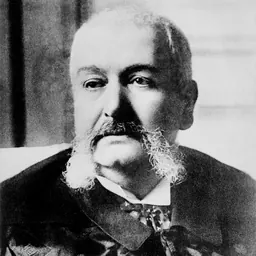

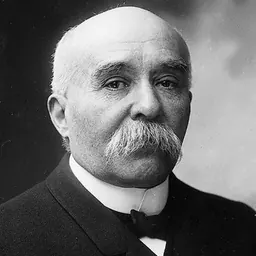

Related people
Same field, nearest in time
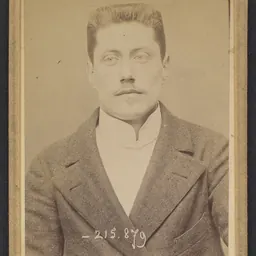

Contemporaries
People whose lives overlapped Pierre Martinet's

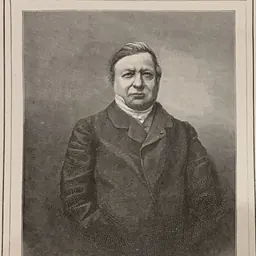



Frequently asked questions
Who was Pierre Martinet?
French anarchist, founder of European individualist anarchism (1848-1919)
When was Pierre Martinet born?
Pierre Martinet was born on 5 May 1848 in Laudun-l'Ardoise.
When did Pierre Martinet die?
Pierre Martinet died on 6 October 1919 in Clermont.
What was Pierre Martinet's occupation?
Pierre Martinet was an anarchist, theorist and criminal.
What nationality was Pierre Martinet?
Pierre Martinet was French.
Sources & further reading
· DBpedia: Pierre Martinet (anarchist)
Cite this page
APA: Biography.guide. (2026). Pierre Martinet. https://biography.guide/pierre-martinet/
MLA: "Pierre Martinet." Biography.guide, https://biography.guide/pierre-martinet/.
Chicago: "Pierre Martinet." Biography.guide. https://biography.guide/pierre-martinet/.
Data last updated: 2026-09-20 · Spot an error? Report a correction.
Page generated 2026-09-27 05:17 UTC