
Vittorio Pini
Italian anarchist
About Vittorio Pini
Lived 1859 – 1903 (aged 43). Vittorio Pini was an anarchist, robber and cobbler.
Vittorio Pini (20August 18598June 1903) was an Italian worker, activist, and theorist of individualist and illegalist anarchism. Having arrived in France during the 1880s, he was, alongside Clément Duval, one of the first anarchists to develop illegalism there. Engaged in a series of robberies and thefts with the group he founded, the Intransigents, he led a frugal life and used the proceeds of his crimes to support anarchist groups, newspapers, and printing presses.
His arrest by the French police triggered intense debates within the anarchist movement in France, which was then divided over the legitimacy of emerging illegalism. While historical figures such as Jean Grave initially refused to support this new form of militancy, Pini theorized it during his trial, presenting individual reappropriation as legitimate for four main reasons: to resolve economic inequalities directly through force, to terrorize the bourgeoisie, to pedagogically transmit anarchist ideas on property, and finally, to prepare and incite the population to rise up for the revolution.
The group he founded later influenced several illegalist associations. He was sentenced to 20 years of imprisonment and deported to the penal colony of Cayenne, from which he attempted to escape twice, once with Placide Schouppe that nearly succeeded, before being recaptured and eventually dying there.
Biography
Youth and militantism Vittorio Achillo Pini was born in Reggio Emilia on 20 August 1859. His mother was named Anna Marzucchi, while his father, Mauro Marzucchi, was a Garibaldian volunteer. Pini and Parmeggiani managed to escape after engaging in a shootout with the police. Pini returned to France, while Parmeggiani fled back to the United Kingdom. The judge denied this request.
During the trial, Pini theorized the practice of 'individual reclamation' for four main reasons: To directly correct economic inequalities through force, to terrorize the bourgeoisie, to pedagogically convey anarchist ideas about property, to prepare and incite the population to rise up and carry out the Revolution. His trial created a rift among anarchists in France. Established figures in the movement, such as Jean Grave, editor-in-chief of Le Révolté, initially refused to consider this new form of anarchist activism—illegalism—as legitimate. Grave's stance was viewed as authoritarian and mistaken by several militants, something noted by a police informant, who reported:
The trials of Pini and Clément Duval gave rise to the notion of 'bandit justice', a practice that would persist in French anarchist circles up until the Bonnot Gang. Jean-Marc Delpech observed that, like other anarchists of his time—Duval and Émile Henry—Pini fully assumed responsibility for his actions during the trial. He declared:
His arrest and trial sparked a major debate within anarchist circles regarding the legitimacy of revolutionary banditry, the emerging ideology of illegalism, and the practice of individual reclamation. While some anarchists agreed with the ideology developed by the Intransigents and Pini, others were skeptical or outright opposed. Francesco Saverio Merlino, for instance, viewed these practices as either useless or selfish—questioning both the self-serving nature of how some illegalists used the proceeds of their thefts and the broader social impact of such actions. He argued that carrying out a series of isolated, individual acts could not bring about systemic change, which needed to be pursued on a broader scale.
He was sentenced to 20 years of penal labor and responded to the sentence by exclaiming:
Before his transfer to the penal colony of Cayenne on 15 August 1890, he attempted an escape but failed. At the penal colony, he met and befriended Clément Duval. The following year, alongside Placide Schouppe, he successfully escaped, traveling up the Maroni river in a canoe. They then attempted to cross into Venezuela on foot, but Pini had to stop due to severe swelling in his feet. While he was painting a boat, the Dutch army arrested them and sent them back to the penal colony.
Pini died in the penal colony of Cayenne on 8 June 1903.
Legacy
Legend The series of sensational robberies undertaken by Pini made him famous. Thus, he was used as the model of the 'born criminal' in the racialist theories of the Italian criminologist Cesare Lombroso.
Historiography Jean Grave depicted Pini and the Intransigents in a highly negative light, writing about them:It was only later that I learned that, associated with the Schouppe brothers, Pini and Parmeggiani formed a gang of burglars whose operations amounted to hundreds of thousands of francs.
The Schouppes, it seems, prided themselves on being anarchists, but in reality, they were nothing more than pleasure-seekers and common thieves. I never heard that even the slightest portion of their fruitful thefts went to any propaganda work. Yet, I was well-placed to learn many things, even those meant to remain secret.
As for Pini, his admirers extolled his generosity, proclaiming far and wide the sums he supposedly spent on propaganda, but I have yet to find the works he and Parmeggiani subsidized. The five posters—more personal discussions than actual propaganda—and the issue of Il Ciclone are all I know to their credit in terms of propaganda.However, this portrayal by Grave was later challenged by historian Jean Maitron, who, after studying Pini's life, found no reason to doubt the sincerity of his anarchist convictions.
Works , 2 issues in April and August 1889 (he was already arrested at the time of the 2nd issue). In Italian on Wikisource.
Don’t just read it —
keep it.
Full-length biographies made to live with: read them, listen on the way to work, watch them tonight.
- E-book
- Audio
- Video
Instant download · yours to keep · every purchase keeps this site free
Important facts
People in Vittorio Pini's life
Named in this biography and alive at the same time

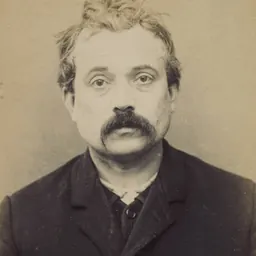

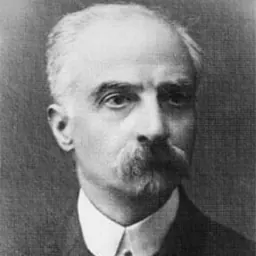

Related people
Same field, nearest in time

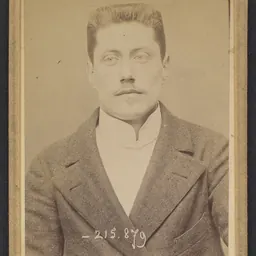
Contemporaries
People whose lives overlapped Vittorio Pini's
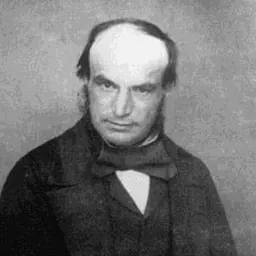


Frequently asked questions
Who was Vittorio Pini?
Italian anarchist (1859-1903)
When was Vittorio Pini born?
Vittorio Pini was born on 20 August 1859 in Reggio Emilia.
When did Vittorio Pini die?
Vittorio Pini died on 8 June 1903 in Cayenne.
What was Vittorio Pini's occupation?
Vittorio Pini was an anarchist, robber and cobbler.
Sources & further reading
Cite this page
APA: Biography.guide. (2026). Vittorio Pini. https://biography.guide/vittorio-pini/
MLA: "Vittorio Pini." Biography.guide, https://biography.guide/vittorio-pini/.
Chicago: "Vittorio Pini." Biography.guide. https://biography.guide/vittorio-pini/.
Data last updated: 2026-09-26 · Spot an error? Report a correction.
Page generated 2026-09-27 05:16 UTC