
About Pierre Maillard
Lived 1710 – 1762 (aged 51–52). Pierre Maillard was a French catholic priest.
Pierre Maillard, negotiator for the Mi'kmaq, plaque, St. Mary's Basilica (Halifax), Nova Scotia. He is reported to be buried on the grounds of St. Paul's Church (Halifax). Abbé Pierre Antoine Simon Maillard (; 1710 – 12 August 1762) was a French-born priest. He is noted for his contributions to the creation of a writing system for the Mi'kmaq people of Île Royale, New France (now Cape Breton Island, Canada). He is also credited with helping negotiate a peace treaty between the British and the Mi'kmaq that resulted in the Burying the Hatchet ceremony (Nova Scotia). He was the first Catholic priest in Halifax, Nova Scotia, and is buried in the St. Peter's Cemetery, in Downtown Halifax.
Early life and career Maillard was born in the diocese of Chartres, France, around 1710. He received his ecclesiastical training at the Séminaire de Saint-Esprit, in Paris. In 1734, the Abbé de L'Isle-Dieu selected Maillard in a group of seminarists lent to the Séminaire des Missions Étrangeres, which was short of personnel. After eight months in that institution, Maillard was selected in 1735 for the Mi'kmaq missions on Île Royale (now Cape Breton Island). His recommendation letter stated that "he is a young priest who has greatly edified us. ...full of zeal and piety."
Maillard arrived at Fortress Louisbourg on the ship Rubis on 13 August 1735. He worked extensively with the Mi'kmaq people. He became a witness to and eventually a reluctant participant in the ongoing struggles between the French and the British forces for control of the area.
Maillard quickly immersed himself in learning and becoming proficient in the language of the natives. He also devoted himself to missionary work by visiting all the settlements on Île Royale, Île Saint-Jean (now called Prince Edward Island) and English Acadia (now called Nova Scotia). He pleaded for additional assistance from his French superiors, who responded by sending Jean-Louis Le Loutre. The two worked together on developing the written language.
In 1740, Maillard was appointed Bishop of Quebec's vicar-general for Île Royale. In 1742, the position created friction between his superiors and the provincial of the Recollets of Brittany, who wanted his men to be independent of Maillard's control. Maillard took every opportunity to criticize the conduct of those workers. His severity led Duquesnel (Le Prévost) and François Bigot to demand Maillard's recall, In light of that acceptance, the French military officer Jean-François Bourdon de Dombourg dispatched an accusatory dossier against the missionaries to the French governor of the Canada, who thereupon accused the missionaries of treason and dispatched in spring 1760 a military officer to Restigouche to investigate. To that officer, Maillard sent a letter detailing the near-hopeless situation of the Mi'kmaq in which he opened "by summing up 23 years... spent in this country in the service of our Religion and our Prince." He had indeed treated for peace with the British because of the hopeless situation, as he tried to explain.
Shortly afterward, Maillard accepted an invitation from Nova Scotia Governor Charles Lawrence to travel to Halifax and to assist in pacifying the Mi'kmaq peoples. He became a British official ("Government Agent to the Indians" with an annual salary of £150). He asked for and received permission to maintain an oratory at a Halifax battery, where he held Catholic services for the Acadians and the Mi'kmaqs in the area. In his official capacity, Maillard obtained the agreement from most of the tribal chiefs to sign peace treaties with the British in Halifax.
Death Reverend Thomas Wood at St. Paul's Church (Halifax) (1751-1764) In July 1762 Maillard fell seriously ill. On 12 August, he died and was attended, at his request, by the Anglican clergyman Thomas Wood. Maillard was accorded a state funeral by the Nova Scotia governor; his pallbearers included the Council President and the Speaker of the Assembly. The government thus recognized his role in negotiating peace treaties between the Mi'kmaq and the British (see Burying the Hatchet ceremony (Nova Scotia)) and his forceful personality. Maillard was buried in an unmarked grave in the Old Burying Ground, in Downtown Halifax.
After the St. Peter's Cemetery opened in 1784 as Halifax's first Catholic cemetery, Maillard's grave was moved to St. Peter's, where it remains unmarked today under the parking lot that was built on top of the cemetery.
Reverend Wood wrote of Maillard: "He was a very sensible, polite, well bred man, an excellent scholar and a good sociable companion, and was much respected by the better sort of people here as it appeared." His other belongings were bequeathed to Louis Petitpas, his only companion and confidential agent since 1749 and in whose home he lived in Halifax. of setting down short messages by using pictograms. There is no direct evidence that Maillard was aware of Le Clercq's work; in any event, Maillard's work is outstanding in that he left numerous works in the language, which continued in use among the Mi'kmaq into the 20th century.
Don’t just read it —
keep it.
Full-length biographies made to live with: read them, listen on the way to work, watch them tonight.
- E-book
- Audio
- Video
Instant download · yours to keep · every purchase keeps this site free
Important facts
People in Pierre Maillard's life
Named in this biography and alive at the same time

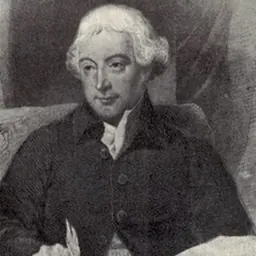
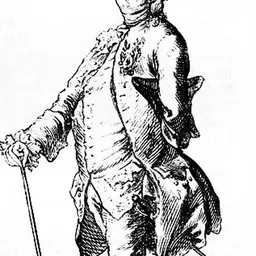
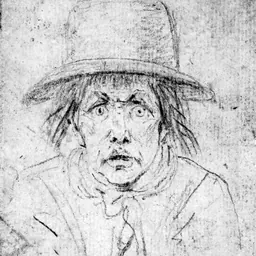

Related people
Same field, nearest in time
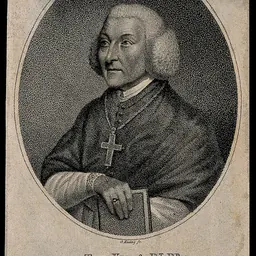


Contemporaries
People whose lives overlapped Pierre Maillard's




Frequently asked questions
Who was Pierre Maillard?
French priest (1710-1762)
When was Pierre Maillard born?
Pierre Maillard was born in 1710 in Chartres.
When did Pierre Maillard die?
Pierre Maillard died on 12 August 1762 in Halifax.
What was Pierre Maillard's occupation?
Pierre Maillard was a catholic priest.
What nationality was Pierre Maillard?
Pierre Maillard was French.
Sources & further reading
Cite this page
APA: Biography.guide. (2026). Pierre Maillard. https://biography.guide/pierre-maillard/
MLA: "Pierre Maillard." Biography.guide, https://biography.guide/pierre-maillard/.
Chicago: "Pierre Maillard." Biography.guide. https://biography.guide/pierre-maillard/.
Data last updated: 2026-09-20 · Spot an error? Report a correction.
Page generated 2026-09-27 04:57 UTC