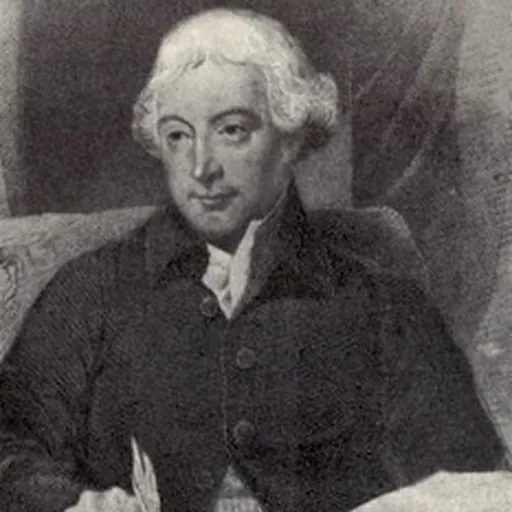
Charles Lawrence
British Army officer
About Charles Lawrence
Lived 1709 – 1760 (aged 50). Charles Lawrence was a British military personnel and list of lieutenant governors of Nova Scotia.
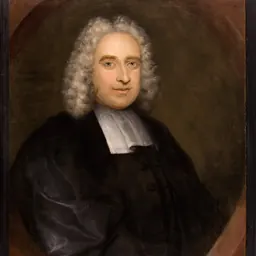
Brigadier-General Charles Lawrence (14 December 1709 – 19 October 1760) was a British Army officer who, as lieutenant governor and subsequently governor of Nova Scotia, is perhaps best known for overseeing the Expulsion of the Acadians and settling the New England Planters in Nova Scotia. He was born in Plymouth, England, and died in Halifax, Nova Scotia. According to historian Elizabeth Griffiths, Lawrence was seen as a "competent", "efficient" officer with a "service record that had earned him fairly rapid promotion, a person of considerable administrative talent who was trusted by both Cornwallis and Hopson." He is buried in the crypt of St. Paul's Church (Halifax).
Early career Lawrence was born in Plymouth (Devon) on 14 December 1709. He followed his father, General Charles John Lawrence, who is said to have served in Flanders under John Churchill, 1st Duke of Marlborough, into a military career.
Charles Lawrence's earlier life is obscure. He was commissioned in the 11th Regiment of Foot and served in the West Indies from 1733 until 1737. He then served in the War Office. He was made lieutenant in 1731 and then captain in 1745. He was wounded while serving with the 54th Foot in the Battle of Fontenoy in 1745.
Father Le Loutre's War Governor Lawrence's residence (built 1749). (Located on the site of Province House, which still is furnished with his Nova Scotia Council table) During Father Le Loutre's War, in 1749 he transferred again, to the 40th Foot. He participated in the Battle at Chignecto (1749) and then built Fort Lawrence on the south bank of the Missaguash River in the fall of 1750, and was promoted lieutenant-colonel the same year. In 1753, he directed the settlement of the Foreign Protestants at Lunenburg, Nova Scotia, and suppressed the settlers' rebellion there. Lawrence mobilized rangers to prevent the Acadian Exodus as well as fight the Mi'kmaq.
French and Indian War
During the French and Indian War, in conjunction with Governor William Shirley of Massachusetts, he helped raise forces for the Battle of Fort Beauséjour on 16 June 1755. He wrote the deportation order, and orchestrated the various campaigns of the Expulsion of the Acadians, beginning with the Bay of Fundy Campaign (1755). After the native Raid on Lunenburg (1756), he placed a bounty on male native scalps.
Lawrence commissioned several armed patrol vessels to patrol the Nova Scotia coast as part of a provincial marine, including the ten-gun brigantine Montague in 1759.
As governor of Nova Scotia, Lawrence saw the settlement of the Acadian lands by New England Planters. In 1757, Lawrence was further promoted to the title of brigadier general and commanded one of the three divisions at the successful siege of the French fortress at Louisbourg on Île Royale (Cape Breton Island) in 1758.
He is said to have died of pneumonia in 1760 in Halifax, Nova Scotia and is buried under St. Paul's Church (Halifax). Charles Lawrence hatchment, St. Paul's Church, Halifax, Nova Scotia According to his biographer, Dominique Graham,
Legacy He is the namesake of Fort Lawrence, Nova Scotia and Lawrencetown, Nova Scotia, and Lawrence Street in Lunenburg He is the namesake of a British privateer Lawrence
Don’t just read it —
keep it.
Full-length biographies made to live with: read them, listen on the way to work, watch them tonight.
- E-book
- Audio
- Video
Instant download · yours to keep · every purchase keeps this site free
Important facts
People in Charles Lawrence's life
Named in this biography and alive at the same time
Related people
Same field, nearest in time
Contemporaries
People whose lives overlapped Charles Lawrence's

Frequently asked questions
Who was Charles Lawrence?
British Army officer (1709–1760)
When was Charles Lawrence born?
Charles Lawrence was born on 14 December 1709 in Plymouth.
When did Charles Lawrence die?
Charles Lawrence died on 19 October 1760 in Halifax.
What was Charles Lawrence's occupation?
Charles Lawrence was a military personnel and list of lieutenant governors of Nova Scotia.
What nationality was Charles Lawrence?
Charles Lawrence was British.
Sources & further reading
· DBpedia: Charles Lawrence (British Army officer)
Cite this page
APA: Biography.guide. (2026). Charles Lawrence. https://biography.guide/charles-lawrence-military-personnel/
MLA: "Charles Lawrence." Biography.guide, https://biography.guide/charles-lawrence-military-personnel/.
Chicago: "Charles Lawrence." Biography.guide. https://biography.guide/charles-lawrence-military-personnel/.
Data last updated: 2026-09-25 · Spot an error? Report a correction.
Portrait: Wikimedia Commons · author & licence
Page generated 2026-10-04 09:58 UTC