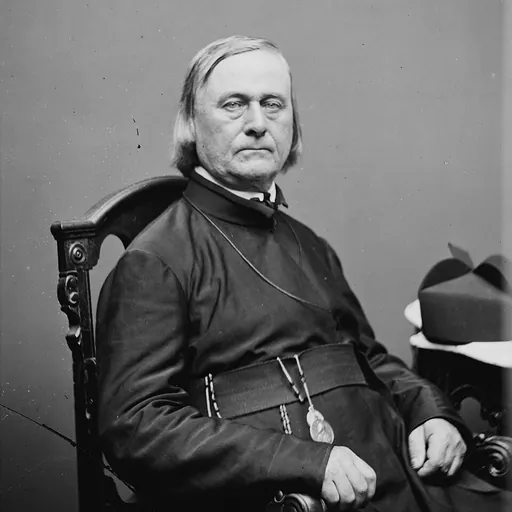
About Pierre-Jean De Smet
Lived 1801 – 1873 (aged 72). Pierre-Jean De Smet was a Belgian explorer, catholic priest and missionary.
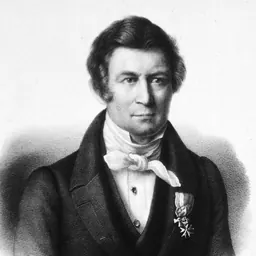
Pierre-Jean De Smet, SJ ( ; 30 January 1801 – 23 May 1873), also known as Pieter-Jan De Smet, was a Flemish Catholic priest and member of the Society of Jesus (Jesuits). He is known primarily for his widespread missionary work in the mid-19th century among the Native American peoples, in the midwestern and northwestern United States and western Canada.
His extensive travels as a missionary were said to total . He was affectionately known as "Friend of Sitting Bull", as he persuaded the Sioux war chief to participate in negotiations with the American government for the 1868 Treaty of Fort Laramie. The Native Americans gave him the affectionate nickname De Grote Zwartrok ("The Great Black Skirt").
Early life De Smet was born in Dendermonde, in what is now Belgium in 1801, and entered the Petit Séminaire at Mechelen at the age of nineteen. De Smet first came to the United States with eleven other Belgian Jesuits in 1821, intending to become a missionary to Native Americans. He began his novitiate at White Marsh, a Jesuit estate near Baltimore, Maryland. Part of the complex survives today as Sacred Heart Church in Bowie.
In 1823, De Smet was transferred to Florissant, Missouri, just north of St. Louis, to complete his theological studies and to begin his studies of Native American languages. He brought with him six enslaved African Americans. He was ordained a priest on 23 September 1827.
De Smet and five other Belgian novices, led by Charles Van Quickenborne, moved to Florissant at the invitation of bishop Louis William Valentine DuBourg. They founded several academic institutions, among which was the St. Regis Seminary, where De Smet had his first contacts with indigenous students. He learned about various Indian tribal customs and languages while serving as a prefect at the seminary.
Around 1830, De Smet went to St. Louis to serve as treasurer at the College of St. Louis. On 23 September 1833, De Smet became a US citizen. He returned to Flanders that same year due to health problems and did not return to St. Louis until 1837.
Mission work in Iowa Territory
In 1838 and 1839, De Smet helped to establish St. Joseph's Mission in what is now Council Bluffs, Iowa, in Potawatomi territory along the Upper Missouri River.
First missionary tour
After discussion with Iroquois fur trappers who had come from the Montreal area to the Pacific Northwest, the Salish Native Americans had gained a slight knowledge of Christianity. At a time when their people were afflicted by illnesses, they thought the new religion might help. Three times they sent delegations of their tribe more than to St. Louis to request "black-robes" from the Catholic Church to come to baptize their children, sick, and dying. The first two delegations reached St. Louis after being devastated by sickness, and although Bishop Joseph Rosati promised to send missionaries when funds were available, he never did. A third delegation was massacred by enemy Sioux. In 1839, a fourth delegation traveled down the Missouri River by canoe and stopped at Council Bluffs. There, they met De Smet. When De Smet arrived at Pierre's Hole, 1,600 Salish and Pend d'Oreilles greeted him. He baptized 350 people and then returned to the eastern United States to raise funds for the mission.
He persuaded a band of Nimíipuu to reside at St. Mary's for a period of two months; all of the people had received baptism before they left. Near the end of his time with the Salish, De Smet sent out an appeal to the United States public for financial aid to bolster his missionary efforts. He thought the Salish habit of seasonal nomadic movement made it "impossible to do any solid and permanent good among these poor people..." In the spring of 1846, De Smet began his return westward, following the established York Factory Express trade route to the Columbia District. He went west to Jasper House, and with considerable hardships completed the trek. He then crossed the Great Divide by Athabaska Pass, traveling to the Canoe River, the northernmost tributary of the Columbia River, and eventually on to Fort Vancouver, some thousand miles (1600 km) to the southwest. He eventually arrived at his mission at Sainte-Marie on the Bitterroot River.
His book Oregon Missions and Travels over the Rocky Mountains in 1845 to 1846 was published in 1847.
Later years and death
In 1854, De Smet helped establish the mission in St. Ignatius, Montana. It is located on the Flathead Indian Reservation. The current building was added to the National Register of Historic Places 100 years after his death. In his remaining years, De Smet was active in work related to the missions which he helped establish and fund. During his career, he sailed back to Europe eight times to raise money for the missions among supporters there. In 1868 he persuaded Sitting Bull to send a delegation to meet the U.S. peace commissioners, leading to the Treaty of Fort Laramie. De Smet returned to St. Louis and from there made several trips to the north country helping Indians and teaching Christianity. In 1850 he cruised from St. Louis to the Dakota territory aboard the steamboat Saint Agne, piloted by Joseph LaBarge. LaBarge was a close friend of De Smet, and always offered the services of his steamboat to the Catholic missionary effort. De Smet died in St. Louis on 23 May 1873. He was originally buried at St. Stanislaus Seminary near Florissant, as were some fellow early Jesuit explorers. In 2003, the remains in that cemetery were moved to Calvary Cemetery in St. Louis, at the newer burial site for Jesuits of the Missouri Province.
Legacy De Smet's papers, with accounts of his travels and missionary work with Native American nations, are held at two separate locations: Jesuit Archives - De Smetiana series in St. Louis, Missouri Pierre Jean De Smet Papers at the Washington State University archives in Pullman, Washington De Smet was featured as a major figure in the exhibition, Crossing the Divide: Jesuits on the Frontier (26 February - 27 June 2010), held at St. Louis University Museum of Art in St. Louis. The exhibit A Complex Vision: De Smet and the American Frontier (17 December 2014 – 2015), at St. Louis University Museum of Art, focused on him and his work. In 1968, he was inducted into the Hall of Great Westerners of the National Cowboy & Western Heritage Museum.
Namesake places Several places are named in honor of De Smet, including:
De Smet, Idaho, a populated place Tensed, Idaho, a populated place bordering De Smet, Idaho. The founders wanted to name their town De Smet, but when they discovered the name was taken, they chose to spell it backwards. A clerical error resulted in the "m" being changed to an "n." DeSmet, Montana, a populated place between Wye and the Missoula International Airport DeSmet Junction, near Wye, where U.S. 10, U.S. 93 and Montana Highway 200 met (and where I-90 meets them today) De Smet, South Dakota, the later childhood home of Laura Ingalls Wilder De Smet Jesuit High School in Creve Coeur, Missouri De Smet Range and Roche de Smet in Jasper National Park, Alberta, Canada Lake Desmet, between Buffalo and Sheridan, Wyoming DeSmet Hall, the largest and oldest all-men's residence hall on the Gonzaga University campus in Spokane, Washington. DeSmet Hall, First Year residence hall at Regis University campus in Denver, Colorado
Don’t just read it —
keep it.
Full-length biographies made to live with: read them, listen on the way to work, watch them tonight.
- E-book
- Audio
- Video
Instant download · yours to keep · every purchase keeps this site free
Important facts
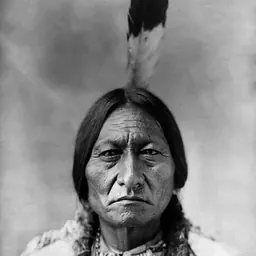
People in Pierre-Jean De Smet's life
Named in this biography and alive at the same time

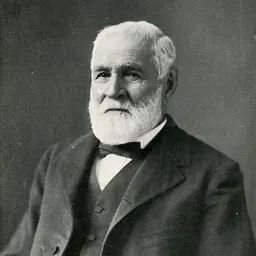


Related people
Same field, nearest in time


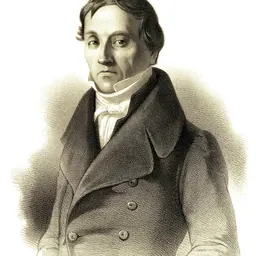
Contemporaries
People whose lives overlapped Pierre-Jean De Smet's





Frequently asked questions
Who was Pierre-Jean De Smet?
Jesuit priest and missionary (1801–1873)
When was Pierre-Jean De Smet born?
Pierre-Jean De Smet was born on 30 January 1801 in Dendermonde.
When did Pierre-Jean De Smet die?
Pierre-Jean De Smet died on 23 May 1873 in St. Louis.
What was Pierre-Jean De Smet's occupation?
Pierre-Jean De Smet was an explorer, catholic priest and missionary.
What nationality was Pierre-Jean De Smet?
Pierre-Jean De Smet was Belgian.
Sources & further reading
· Wikipedia: Pierre-Jean De Smet
· DBpedia: Pierre-Jean De Smet
Cite this page
APA: Biography.guide. (2026). Pierre-Jean De Smet. https://biography.guide/pierre-jean-de-smet/
MLA: "Pierre-Jean De Smet." Biography.guide, https://biography.guide/pierre-jean-de-smet/.
Chicago: "Pierre-Jean De Smet." Biography.guide. https://biography.guide/pierre-jean-de-smet/.
Data last updated: 2026-09-21 · Spot an error? Report a correction.
Portrait: Wikimedia Commons · author & licence
Page generated 2026-09-27 05:00 UTC