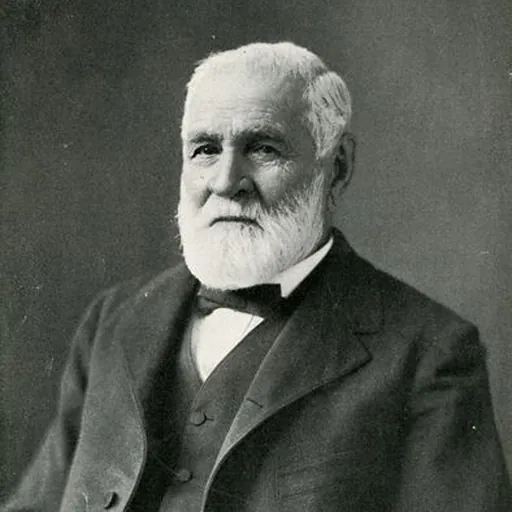
Joseph LaBarge
Steamboat captain
About Joseph LaBarge
Lived 1815 – 1899 (aged 83).
Joseph Marie LaBarge (October 1, 1815 – April 3, 1899) was an American steamboat captain, most notably of the steamboats Yellowstone and Emilie, that saw service on the Mississippi and Missouri rivers, bringing fur traders, miners, goods and supplies up and down these rivers to their destinations. During much of his career LaBarge was in the employ of the American Fur Company, a giant in the fur trading business, before building his own steamboat, the Emilie, to become an independent riverman. During his career he exceeded several existing speed and distance records for steamboats on the Missouri River. Passengers aboard his vessels sometimes included notable people, including Abraham Lincoln. LaBarge routinely offered his steamboat services gratis to Jesuit missionaries throughout his career.
LaBarge managed to avoid the first cholera epidemic in the United States, which at that time killed half the crew aboard the Yellowstone. After years of success in the shipping business, LaBarge, his brother, and other partners formed their own trading firm on the upper Missouri River. A steamboat captain for more than fifty years, LaBarge was considered the greatest steamboat man on the Missouri River, and was among the first steamboat pilots to navigate the uppermost Missouri River in the 1830s. His long career as a riverboat captain exceeded 50 years and spanned the entire era of active riverboat business on the Missouri River.
Early life
Joseph LaBarge was born on Sunday, October 1, 1815, in St. Louis, Missouri. His father was Joseph Marie LaBarge, Senior and his mother was Eulalie Hortiz LaBarge. He was the second of seven children, three boys and four girls, who all survived to adulthood. His father, at the age of 21, traveled from Quebec in a birch-bark canoe over lakes and rivers and settled in St. Louis at a time when the city was the center of the enormous fur trade. LaBarge Senior fought in the War of 1812, most notably at the Battle of Frenchtown where he lost two fingers during the battle. LaBarge Senior was a trapper who also worked as a guide and engaged in many trapping expeditions in the upper Missouri River. He was considered a riverman in his own right; subsequently all three of his sons, Joseph, John and Charles, aspired to the trade and became riverboat pilots.
Not long after Joseph was born his parents bought and moved to a farm in Baden, Missouri, six miles distant from St. Louis. The area was mostly unsettled at the time and Sac and Fox Indians roamed the area and were at times aggressive and hostile. The infant LaBarge and his mother were once accosted by Indians while she was working in the garden, with LaBarge's father fending them off by presenting gun in hand. As a young lad, LaBarge was said to have exceptional ability as a runner and swimmer, and excelled in the various games and sports of the day.
Joseph LaBarge's early education was somewhat limited given the basic and unrefined schools in St. Louis during his childhood days. He first attended classes at the residence of Jean Baptiste Trudeau, a noted and reputable teacher in St. Louis, where he studied the common branches in education, all in French. Knowing that their son needed to speak English fluently in order to make his way in America, his parents sent him to schools where instruction was given in English. To that end Joseph's next teacher was Salmon Giddings, the founder of the First Presbyterian Church in St. Louis, and after, to a more prestigious school taught by Elihu H. Shephard, considered an excellent teacher. His command of English would come slowly, but eventually he mastered the language. At age twelve Joseph attended Saint Mary's College in Perry County for three years. His parents had intended to educate their son for the priesthood, and Joseph's curriculum at Saint Mary's was selected for that purpose. However, the young LaBarge did not aspire to such vocation and began associating with young ladies to the extent where he was not allowed to finish school at Saint Mary's. At age fifteen he began working as a store clerk in a clothing store.
Among the prominent events LaBarge witnessed in his childhood, was the celebrated visit to the United States by Lafayette in 1825, while he was in St. Louis. Lafayette was greeted by the Mayor and escorted by a company of cavalry on horseback, along with a company of uniformed boys, of whom the ten-year-old LaBarge was one. Lafayette shook hands and spoke inquisitively with each of the youths, which would prove to be an event LaBarge would reminisce about into his old age.
LaBarge wore a full beard most of his adult life and in his later years was said to bear a striking resemblance to General Ulysses S. Grant. LaBarge married Pelagie Guerette on August 17, 1842, whom he knew since his childhood. Pelagie was also born in St. Louis, on January 10, 1825. One of the first water-driven mills in St. Louis was built and operated by her father, a millwright and architect. They had seven children. LaBarge was a lifelong Catholic in religion, and in politics, a lifelong Democrat.
Career on the river
The demands of the fur trade were largely responsible for the advent of steamboat use on the Missouri River, and by 1830 the young LaBarge bore witness to the steamboats coming to and departing Saint Louis, which were employed in the service of this trade, their principal business in the mid-nineteenth century. Answering the high demand for furs in the East and in Europe, the American Fur Company, dominated the fur trade and made regular and frequent use of steamboats. From 1831 to 1846 steamboat navigation on the upper Missouri River was confined almost entirely to riverboats owned by the American Fur Company. Among these vessels were the Yellowstone, and the Spread Eagle, both of which would eventually be piloted by LaBarge during the course of events.
Not content working as a shop clerk, the young LaBarge joined the crew of the steamboat Yellowstone, serving as a clerk, when the vessel was engaged in the sugar trade in the lower Mississippi River. In 1831 the Yellowstone made her first trip up the Missouri River, and was now in the employ of the American Fur Company. The Yellowstone was to proceed to the lower Mississippi to the bayou La Fourche. Since LaBarge spoke both English and French, his services were found useful. The following spring, LaBarge signed a three-year contract to serve as a clerk for the American Fur Company at a salary of $700. He returned to the Yellowstone and traveled up the Missouri River to Council Bluffs, Iowa, where he worked in the flourishing fur trade along the Missouri River. LaBarge earned his Master's license for piloting riverboats at the age of 25.
Journeys aboard the Yellowstone
In 1833 LaBarge, aboard the steamship Yellowstone, left Saint Louis and was headed for Fort Pierre on the upper Missouri River. One of the passengers aboard was Prince Maximilian, a German explorer and naturalist. Returning to Saint Louis, another cargo was loaded, to be taken to Council Bluffs. During this voyage an epidemic of cholera broke out in the general area (1833 was the year in which cholera made its first appearance in the United States.)
While Bennett was away, the remainder of the crew died; LaBarge buried their bodies in a trench-grave alongside the Missouri. When news of the cholera outbreak aboard the Yellowstone spread, a pro tempore board of health from Jackson County ordered the boat to move on, threatening to burn the craft if it remained. Now acting as both pilot and engineer, and realizing the danger, LaBarge took the boat up a short distance from the mouth of the Kansas on the west shore of the Missouri, where there were no inhabitants.
The cargo aboard was consigned to Cyprian Chouteau who owned a trading post ten miles up the Kansas River. Captain Bennett gave orders to LaBarge to turn over the cargo to the consignees before he left. LaBarge, accordingly, set off on foot to find the trading post and tell Chouteau to come and get his goods. About a mile from the trading post, which had quarantined itself from the cholera epidemic, LaBarge was intercepted by a man stationed there, wary of the outbreak, and watching for anyone coming from Missouri. LaBarge was not permitted to proceed and was threatened to be shot if he persisted. LaBarge agreed to remain where he was if the man would inform Chouteau of the purpose of his arrival. On Captain Bennett's return the boat proceeded on her voyage up the Missouri and arrived at the mouth of the Yellowstone on June 17, becoming the first steamboat to reach the mouth of the Yellowstone.
In 1850 LaBarge was making a voyage aboard the steamer Saint Ange heading for Fort Union, on the upper Missouri River in the dense wilderness of north-west North Dakota. LaBarge's wife and other ladies were aboard, his wife being among the first white women to ever see the fort. Along the way a boy fell overboard from the forecastle. LaBarge was nearby and immediately dove into the river and seized him, keeping the boy from being taken in by the steamboat's sidewheel and got the youth safely to shore, an event that again demonstrated LaBarge's ability as a skilled swimmer.
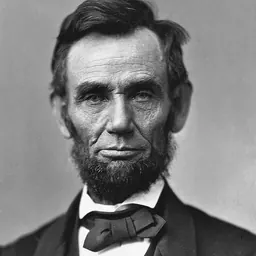
LaBarge exceeded the existing speed record for steamboats on the Missouri that year when he piloted Saint Ange, with more than a hundred passengers aboard, from Saint Louis to Fort Union at the mouth of the Yellowstone River in twenty-eight days. The next year, departing from Saint Louis, he set yet another record with the same steamboat to the Poplar River, the farthest point north on the Missouri river ever reached by a steamboat. Aboard were the notable Jesuit missionaries, Fathers Pierre-Jean De Smet and Christian Hoecken, Catholic missionaries who were working with and teaching Christianity to the various Indian tribes in the North country. The riverboat proved to be an exceedingly beautiful vessel. LaBarge embarked on Emilie's maiden voyage on October 1, 1859, which happened to be his forty-fourth birthday. In the summer of 1859 Abraham Lincoln came west and toured the Missouri River looking into real estate investments, where LaBarge saw the future president for the first time. Lincoln was a passenger on the Emilie, which carried him to Council Bluffs.
Civil War era When the Civil War broke out in 1861, people along the Missouri River were largely sympathetic to the South. Although somewhat sympathetic also, Captain LaBarge remained loyal to the Union and took an oath of allegiance to the Union, not wanting to see the nation divided.
In the winter of 1861–1862 LaBarge and several partners formed the firm of LaBarge, Harkness & Co., based in Saint Louis, for purposes of trading on the upper Missouri River. Members of the firm included LaBarge, his brother John, James Harkness, William Galpin and Eugene Jaccard. Each member put up $10,000 with which two steamboats were purchased; The Emilie, a large steamer, and the Shreveport, a shallow draft vessel. The LaBarge brothers managed affairs concerning the steamboats, while Harkness went to Washington to obtain the necessary permits from the Interior Department, and to establish friendly relations with the Office of Indian Affairs.
On April 30, John LaBarge, aboard the Shreveport, embarked northward for Fort Benton with 75 passengers aboard and all the cargo the vessel could carry. Two weeks later LaBarge, piloting the Emilie, set out, loaded with 160 passengers and 350 tons of freight, and in the process set speed and distance records. The Emilie completed its trip upriver, covering in thirty-two days. (On the return trip, going down-stream, the Emilie made it to Saint Louis in fifteen days.) Her speed going up-stream averaged a day-speed going down-stream averaged per day. (LaBarge's close friend, Father Pierre-Jean De Smet, was also aboard the Spread Eagle during the race.)
On August 13, because of low water levels, LaBarge was only able to travel some . The next day the party stopped to investigate a broken-down hospital ship abandoned on the shore, which was found to have been used by Major Marcus Reno's troops who were now pursuing the Indians. As they proceeded on, LaBarge came upon a small party coming down the river from Montana who brought news of Reno and his encounter with the Indians. The party boarded LaBarge's vessel and the next day made the return trip down the Missouri. On the 15th LaBarge arrived at Reno's camp. The Indians had already crossed the river, and Captain LaBarge immediately began the task of ferrying Reno's troops over, which was accomplished before nightfall. LaBarge then left for Buford the next morning, with General Terry, his staff, and 270 troops. LaBarge reached Fort Buford on August 17, and the John M. Chambers was discharged.
In 1896, LaBarge biographer Hiram M. Chittenden, an officer in the Army Corps of Engineers, decided to publish an account of steamboat wrecks that occurred on the Missouri River in an attempt to determine which types of improvements for navigation were needed. Searching for information he sought out LaBarge, who was now retired, and who possessed an extensive and often first-hand knowledge of steamboat history from his many years of navigating on the Missouri River. Though LaBarge was willing to work at no cost, Chittenden hired him as his consultant and assistant. In the process, Chittenden soon discovered how knowledgeable and involved LaBarge was with Missouri River history overall and decided to do a biography about the man himself, asking him to compile his documents and correspondence and offer his personal recollections of his lifetime career as a riverman, trader and riverboat captain on the Missouri River. Work was moving along steadily until Chittenden was interrupted when he was called away during the Spanish–American War of 1898. While stationed in Huntsville, Alabama, Chittenden received news in 1899 from Saint Louis that LaBarge had taken ill and was dying. He immediately telegraphed LaBarge's son asking him to assure LaBarge that "...I shall faithfully finish his work. It will take me a long time, but I shall not fail to do it." Chittenden's pledge reached LaBarge, who had been suffering from a tumor on his neck, just before he died one and a half hours later, after an unsuccessful surgery, from blood poisoning on April 3, 1899, in Saint Louis. LaBarge was 83. In Volume II of his work he quotes LaBarge expressing his love of the Missouri River.
A natural and prominent rock formation rising above the Missouri River in Chouteau County, Montana, was named LaBarge Rock, in his honor. In 2002, Joseph LaBarge was inducted into the National Rivers Hall of Fame, sponsored by The National Mississippi River Museum, as "The most renowned mountain boat pilot on the upper Missouri River."
Don’t just read it —
keep it.
Full-length biographies made to live with: read them, listen on the way to work, watch them tonight.
- E-book
- Audio
- Video
Instant download · yours to keep · every purchase keeps this site free
Important facts
People in Joseph LaBarge's life
Named in this biography and alive at the same time



Contemporaries
People whose lives overlapped Joseph LaBarge's





Frequently asked questions
Who was Joseph LaBarge?
steamboat captain
When was Joseph LaBarge born?
Joseph LaBarge was born on 1 October 1815 in St. Louis.
When did Joseph LaBarge die?
Joseph LaBarge died on 3 April 1899 in Missouri River, St. Louis.
What was Joseph LaBarge known for?
Joseph LaBarge was known for Missouri River.
Sources & further reading
Cite this page
APA: Biography.guide. (2026). Joseph LaBarge. https://biography.guide/joseph-labarge/
MLA: "Joseph LaBarge." Biography.guide, https://biography.guide/joseph-labarge/.
Chicago: "Joseph LaBarge." Biography.guide. https://biography.guide/joseph-labarge/.
Data last updated: 2026-09-22 · Spot an error? Report a correction.
Portrait: Wikimedia Commons · author & licence
Page generated 2026-09-27 04:57 UTC