
About Pierre Henry-Larivière
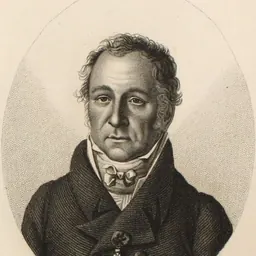
Lived 1761 – 1838 (aged 76). Pierre Henry-Larivière was a French politician and member of parliament.
Pierre François Joachim Henry Larivière or La Rivière, known as Henry-Larivière, (b. Falaise, 6 December 1761, d. Paris 3 November 1838), was a French politician and député for Calvados to the Convention.
Revolution and Convention A lawyer in Falaise, he espoused the ideas of the Jacobins. Elected to the National Assembly by the département of Calvados, he was noted for his hostile attitude towards the court and the king’s ministers. He favoured war, and émigrés as well as to the monarchy after the demonstration of 20 June 1792.
Re-elected as a député of Calvados to the Convention nationale, he took his seat with the Girondins, becoming an increasingly vocal critic of The Mountain. He became a member of the Legislative Committee, and began to adopt a more conciliatory position towards the monarchy. During the trial of Louis XVI, he recused himself on the vote on the king’s guilt, because “having taken part in the drafting of the decree that brought him to trial, but then having opposed the amendment to that decree which brought him to trial before the Convention, I am not obliged to give a view on the outcome; it is repugnant to my conscience to be at one and the same time a legislator and a jury member on a matter which, I furthermore insist, should be ultimately decided by the sovereign people.” Placed under house arrest, he managed to escape, and reached Caen, where he managed to hide. He tried, unsuccessfully, to foment revolt in the provinces against Paris. Declared a traitor on 28 July 1793, he managed to remain in hiding until after the Thermidorian Reaction. he chose to take his seat for Calvados and became one of the leading lights of the Club de Clichy, a royalist club under the Directory. President of the Council (19 June - 18 July) after the royalist victory in the 1797 elections, his name was included in a list of those to be deported to Guiana after the anti-royalist coup of 18 Fructidor on 4 September, and he was obliged to flee the country. He managed to reach Switzerland first, and then England, where he joined the entourage of the comte d'Artois (later Charles X de France).
After the Revolution Returning to France after the First Restoration, he became Advocate General at the Court of Cassation, went back into exile during the Hundred Days and came back again after the Second Restoration. Refusing the recognise the July Monarchy, he left France for Florence, only returning in 1837.
Don’t just read it —
keep it.
Full-length biographies made to live with: read them, listen on the way to work, watch them tonight.
- E-book
- Audio
- Video
Instant download · yours to keep · every purchase keeps this site free
Important facts
Related people
Same field, nearest in time



Contemporaries
People whose lives overlapped Pierre Henry-Larivière's





Frequently asked questions
Who was Pierre Henry-Larivière?
French politician
When was Pierre Henry-Larivière born?
Pierre Henry-Larivière was born on 6 December 1761 in Falaise.
When did Pierre Henry-Larivière die?
Pierre Henry-Larivière died on 3 November 1838 in Paris.
What was Pierre Henry-Larivière's occupation?
Pierre Henry-Larivière was a politician and member of parliament.
What nationality was Pierre Henry-Larivière?
Pierre Henry-Larivière was French.
Sources & further reading
· Wikipedia: Pierre Henry-Larivière
· DBpedia: Pierre Henry-Larivière
Cite this page
APA: Biography.guide. (2026). Pierre Henry-Larivière. https://biography.guide/pierre-henry-lariviere/
MLA: "Pierre Henry-Larivière." Biography.guide, https://biography.guide/pierre-henry-lariviere/.
Chicago: "Pierre Henry-Larivière." Biography.guide. https://biography.guide/pierre-henry-lariviere/.
Data last updated: 2026-09-20 · Spot an error? Report a correction.
Page generated 2026-09-27 05:28 UTC