
About Pierre Fauchard
Lived 1679 – 1761 (aged 82). Pierre Fauchard was a French dentist, physician and surgeon.
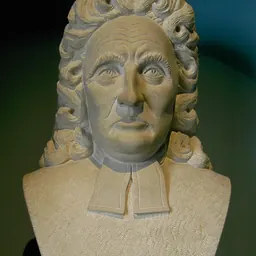
Pierre Fauchard (; 2 January 1679 – 21 March 1761) was a French physician, credited as being the "father of modern dentistry". He is widely known for writing the first complete scientific description of dentistry, Le Chirurgien Dentiste ("The Surgeon Dentist"), published in 1728.
Literature on teeth was generally found in treatises on surgery, as there were no books written explicitly on teeth at the time.
There was no regulation on who could do work on teeth until the Paris Medical Faculty issued the Edict of 1699, which created the title of expert pour les dents, or "tooth expert," for people certified to do dental work.
From craft to science Fauchard bemoaned how the medical community had largely ignored teeth. He said that "The most famous surgeons having abandoned this part of the art, or at least having paid little attention to it, have caused by this negligence, the rise of people who without theory or experience, have degraded it, and practiced haphazard, without principles or method." He believed that too many tooth-pullers were spending too much time learning how to pull teeth through trial and error, and he believed that people who worked with teeth ought to spend more time learning how to preserve teeth instead.
Fauchard noted that common dentrifice ingredients such as brick, porcelain, pumic stone, calcined talc, calcined aluminum do more harm than good. The juice of sorrel, lemon juice, spirits of vitriol, and salt were also observed to destroy the enamel. The dentrifice Fauchard recommends is a mixture of coral, dragon's blood, burnt honey, seed pearls, cuttle fish bone, crayfish eyes, bol d'armerie, terre sigillee, terre hematite, canelle, calcined alum, completely reduced to a fine powder and mixed together. However, he recommended only using such a dentrifice if brushing and rinsing with water were not enough. Pierre Fauchard engraved in his books many of his inventions of instruments made for oral surgery, such as the obturator and the now famous dentist's drill. The drill Fauchard developed was manual and powered by a catgut twisted around a cylinder. He also suggested in his book that oil of cloves and cinnamon be used for pulpitis.
Etienne Bourdet (1722–1789), who is said to be one of France's best dentists after Fauchard, based his work mainly on dental prosthesis (a concept introduced by Pierre), he also improved the way the amalgams were made and was the first physician to do gingivectomy on his patients when required.
Don’t just read it —
keep it.
Full-length biographies made to live with: read them, listen on the way to work, watch them tonight.
- E-book
- Audio
- Video
Instant download · yours to keep · every purchase keeps this site free
Important facts
Related people
Same field, nearest in time






Contemporaries
People whose lives overlapped Pierre Fauchard's



Frequently asked questions
Who was Pierre Fauchard?
French dentist (1679-1761)
When was Pierre Fauchard born?
Pierre Fauchard was born on 2 January 1679 in Saint-Denis-de-Gastines.
When did Pierre Fauchard die?
Pierre Fauchard died on 21 March 1761 in Paris.
What was Pierre Fauchard's occupation?
Pierre Fauchard was a dentist, physician and surgeon.
What nationality was Pierre Fauchard?
Pierre Fauchard was French.
Sources & further reading
Cite this page
APA: Biography.guide. (2026). Pierre Fauchard. https://biography.guide/pierre-fauchard/
MLA: "Pierre Fauchard." Biography.guide, https://biography.guide/pierre-fauchard/.
Chicago: "Pierre Fauchard." Biography.guide. https://biography.guide/pierre-fauchard/.
Data last updated: 2026-09-20 · Spot an error? Report a correction.
Page generated 2026-09-27 05:33 UTC